 Guide On Map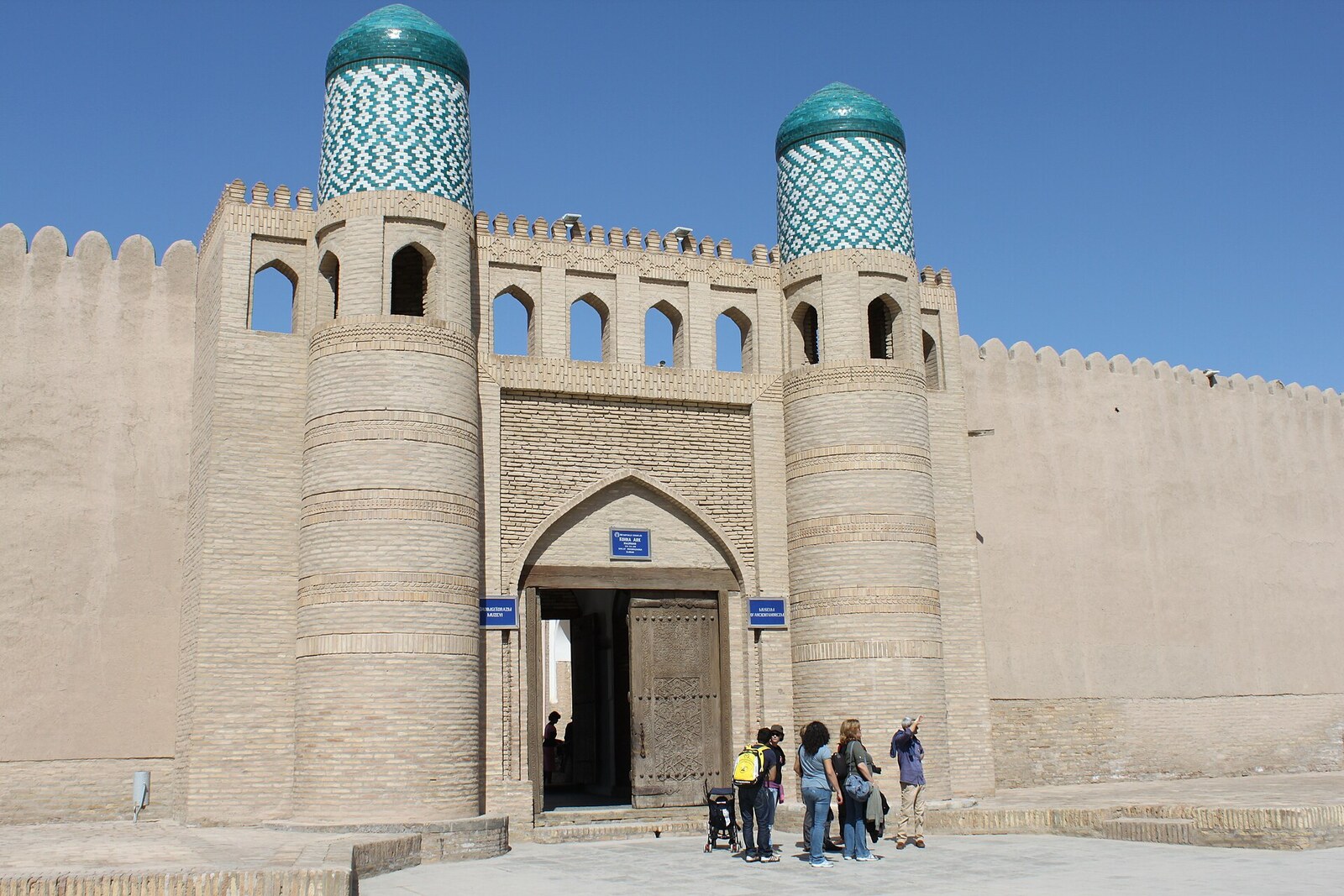
Look around first
What to notice
- Courtyard of the Kurinishkhana
- Iwan on two wooden columns
- Stone platform
- Chair in the southern niche
The story of the place
The name Kunya Ark translates as “old citadel”: the former palace complex retained it after the new residence, Tash Hauli, appeared. The stone platform and iwan on two wooden columns stand in the courtyard where the ruler held ceremonial audiences. Nearby, the treasury and business papers concerning land and taxes were kept, while mint workers struck coins for the khan's court. The chair in the southern niche merely replicates the khan's throne, while the real silver chair is kept in the Armoury Chamber of the Moscow Kremlin.
In eighteen seventy-three, Konstantin von Kaufman, commander in chief of the Russian campaign, entered Khiva and headed straight for Kunya Ark. The day before, Muhammad Rahim Khan II, ruler of the Khanate of Khiva, had left the city with a Turkmen detachment. Khivan officials remained to negotiate the surrender and opened the gates.
The Russian column stopped in the square before the khan's palace. Kaufman left one company on guard and went into the inner courtyard himself. A narrow door led to a stone platform and an iwan on two wooden columns. The khan's throne stood here. Kaufman climbed onto the iwan and received delegations of residents in exactly the place where the khan had previously received ambassadors and subjects.
This courtyard was called the Kurinishkhana—a place for official receptions. In the neighboring rooms, the treasury, manuscripts, and documents concerning taxes and land were kept; a mint operated nearby. Muhammad Rahim Khan administered the khanate's revenues from here and supported the court with them. After fleeing, he risked his title, his home, and the whole establishment that served his family and officials.
Kunya Ark means “old citadel.” The palace received this name after the new khan's residence, Tash Hauli, appeared. However, official receptions continued to be held here, which is why Kaufman chose this iwan for his meeting with the townspeople. He took over an established place of public decision-making: the courtyard in front of it accommodated petitioners and delegations, while the throne indicated who was to answer them on behalf of the khanate.
A few days later, Muhammad Rahim Khan returned and submitted to the victor. Kaufman preserved Muhammad Rahim Khan II's title as khan. Under the subsequent treaty, the ruler ceded to the Russian Empire lands on the right bank of the Amu Darya, lost the ability to conduct foreign affairs independently, and undertook to pay two million rubles. He continued to rule until his death in nineteen ten, already at the head of a Russian protectorate.
The chair was treated differently. It was made in eighteen sixteen for Muhammad Rahim Khan I: its wooden base was covered with silver plates bearing an embossed pattern. On the backrest, the craftsman Yusuf Muhammad left his own name and that of the patron. After the capture of Khiva, the Russians removed the throne as a war trophy, and the following year transferred it to the Armoury Chamber of the Moscow Kremlin. The chair in the southern niche of the Kurinishkhana is a copy; the original remained in Moscow.
Useful on site
Museum site; a permanent year-round schedule has not been published on the official page. Check the opening hours and whether it is included in your ticket on the day of your visit.
Checked: date not specified. Check the official source before visiting.Part of the meaning is lost when you pass through quickly: pause at the thresholds and trace how each courtyard limits the view.