 Guide On Map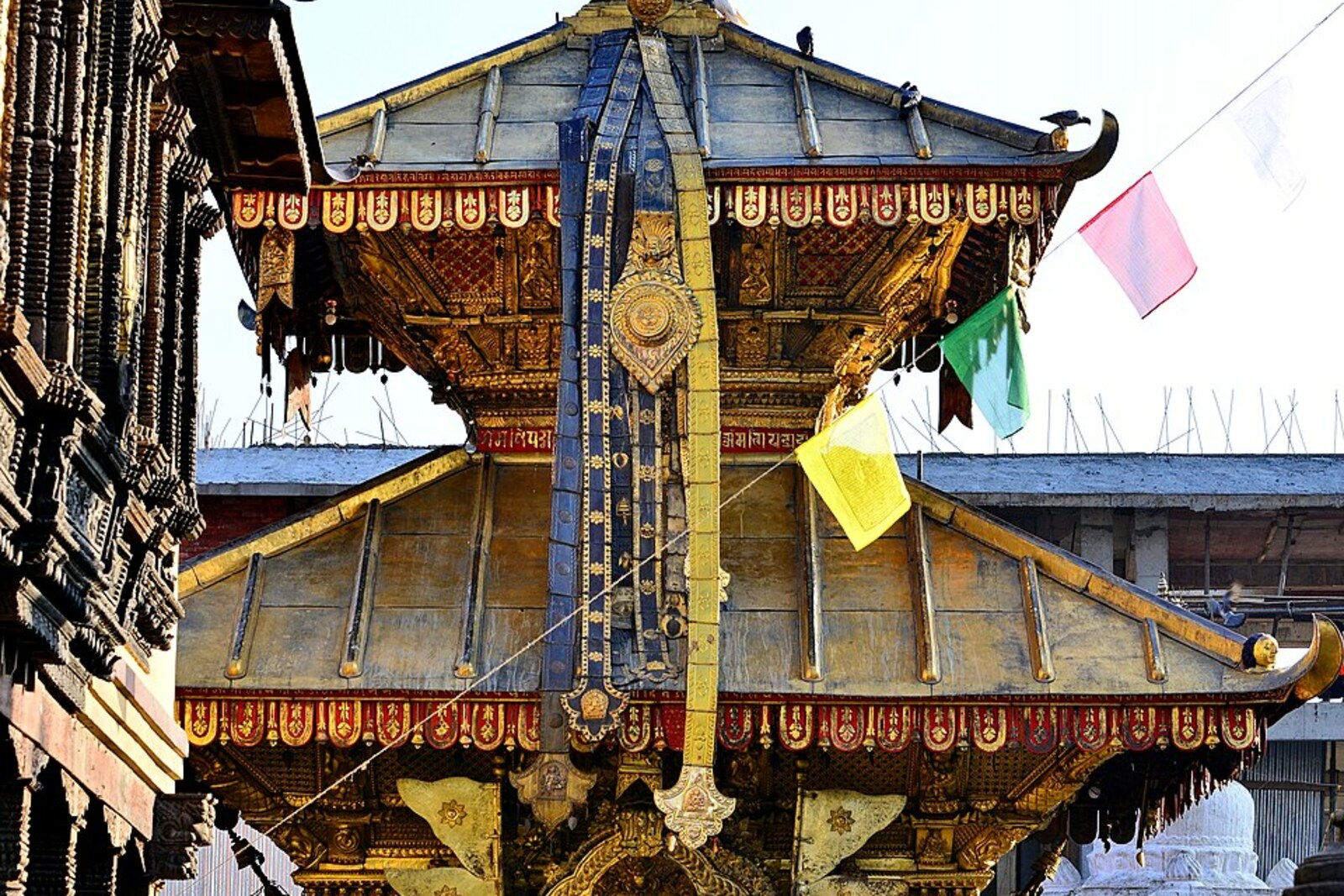
Look around first
What to notice
- Two-tiered shrine
- Stone image of Hariti
- Five child figures
The story of the place
On the slope of Swayambhunath, beneath a two-tiered roof, stands a stone Hariti with five child figures beside her. Newar tradition assigned the formidable goddess the role of guardian of the hill and children. The name Ajima sounds like an address to the senior woman of the family, a grandmother. Grain, yogurt, and duck eggs are brought to her image, while Buddhacharya priests serve here.
Inside the two-tiered shrine, Hariti sits among five children. This stone image replaced a statue that was once destroyed on the orders of a man who had previously prayed to the goddess for help.
A Buddhist legend tells that Hariti once abducted and devoured other people's children. The Buddha hid one of her own children under an alms bowl. Having endured the loss, Hariti promised to protect those she had once hunted. According to the legend, this meeting took place in Rajgir, India. Newar tradition assigned Hariti a place at Swayambhunath as the protector of children and guardian of the hill. Ajima means “grandmother”: the formidable goddess is addressed as the senior woman of the family, capable both of inflicting illness and of delivering people from it.
In seventeen ninety-nine, Nepal’s king Rana Bahadur Shah tried to save his beloved wife Kantavati, the mother of their young son Girvan, from smallpox. The stakes were both familial and dynastic. So that Kantavati might live to see her son as king, Rana Bahadur handed the throne to the two-year-old boy and devoted himself to prayers and healing rituals.
Kantavati died. Rana Bahadur then decided that the deities had deceived him. Hariti was responsible for protecting children and saving people from smallpox, so at Swayambhunath the king ordered her image dragged from the shrine, defiled with human excrement, and smashed. He banned worship of the goddess. At the same time, families with sick children began to be driven from Kathmandu Valley: the king sought to protect young Girvan from contagion.
Girvan kept the throne, but in eighteen sixteen, at the age of nineteen, he too died of smallpox. The ban on worshipping Hariti had been lifted earlier: the shrine was cleansed and reopened. At the beginning of the nineteenth century, another image of the goddess was installed here—the very one with five children placed beside her.
Smallpox disappeared, but offerings are still brought to Hariti for children’s health. Buddhacharya priests take turns serving in the temple; offerings can include grain, yogurt, and duck eggs. Nothing remains of the statue Rana Bahadur ordered punished. Parents stand before its replacement.
Useful on site
Active shrine; current entry arrangements are not confirmed. Plan your visit as an exterior viewing.
Checked: June 28, 2026. Check the official source before visiting.This is a place of living worship: keep the passage clear and observe rituals from a respectful distance.