 Guide On Map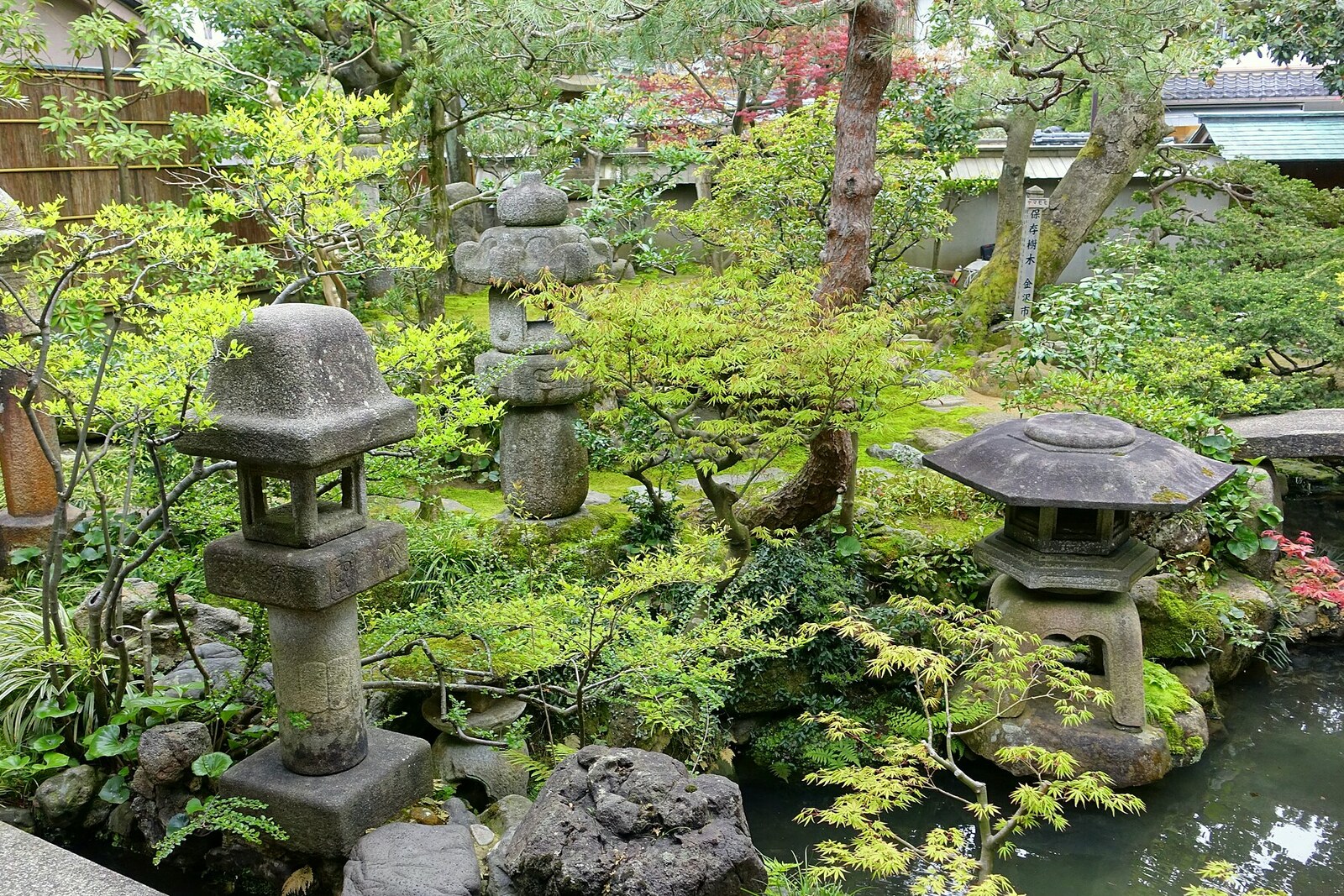
Look around first
What to notice
- The yamamomo tree
- The cypress ceiling
- Painted partitions
- The winding watercourse
The story of the place
Of the Nomura Samurai Residence, the plot, part of the garden, old trees, and a winding watercourse remain here. The rooms visitors now pass through belonged to another family and stood in another town. The present museum was assembled from surviving parts of two houses.
In fifteen eighty-three, Nomura Denbei Nobusada came to Kanazawa following his lord, Maeda Toshiie. Denbei was Maeda Toshiie's personal retainer and wanted to establish himself in his new service. Later, the heads of the family led the Maeda clan's mounted escort and became bugyo—officials entrusted with particular affairs of the domain.
The Nomura family lived on an income calculated in rice. Their stipend rose from one thousand to one thousand two hundred koku; one koku was considered enough to feed an adult for a year. The family could maintain its own servants and was granted a plot here of about three thousand three hundred square meters. The size of the garden resulted from the office and the stipend.
Denbei himself came from Owari Province. On the new plot, he tried to establish trees from his homeland. Most could not withstand Kanazawa's climate. One survived: the yamamomo, an evergreen fruit tree now more than four hundred years old. It grew here while Denbei's descendants, generation after generation, held offices under the Maeda clan.
In eighteen seventy-one, the domains were abolished. Along with the offices disappeared the rice stipend on which the Nomura household rested. The house was dismantled, part of the land became a vegetable garden, and the rest was gradually sold off. Of the large property, a fragment of the garden, the watercourse, and several old trees remained.
In nineteen forty-one, the new owner of the plot decided to restore the garden and moved part of Kubo Hikobee's house here. Kubo was a wealthy shipowner from Hashidate; his merchant ships sailed along the coast of the Sea of Japan. In the eighteen forties, he built special rooms to receive his lord. They included an audience hall and the jodan-no-ma—a room with a place of honor for the highest-ranking guest. Japanese cypress was used for the ceiling, rosewood and ebony for the finish, and the sliding partitions were painted by artists serving the lord's household.
The main part of the Kubo house was taken elsewhere; later it was reassembled again in Kaga City. Kanazawa received the formal wing. It was connected to the garden of the Nomura Samurai Residence, and a tea room was arranged upstairs, where matcha is now served.
Behind the sliding partitions of the Kubo hall, Denbei's yamamomo is visible. The cypress ceiling was intended for receiving the lord in Hashidate, while the tree grew on the plot of a retainer in Kanazawa. The cypress ceiling and the tree came together in one house only in nineteen forty-one.
Useful on site
8:30–17:30; from October through March until 16:30. Closed December 26–27 and January 1–2; adult admission 550 yen.
Checked: date not specified. Check the official source before visiting.The interior is visited separately; in the cramped rooms and by the garden, do not block other visitors' view. Remember that the building was moved here later: before you is an assembled historic setting, not an untouched ancestral home.