 Guide On Map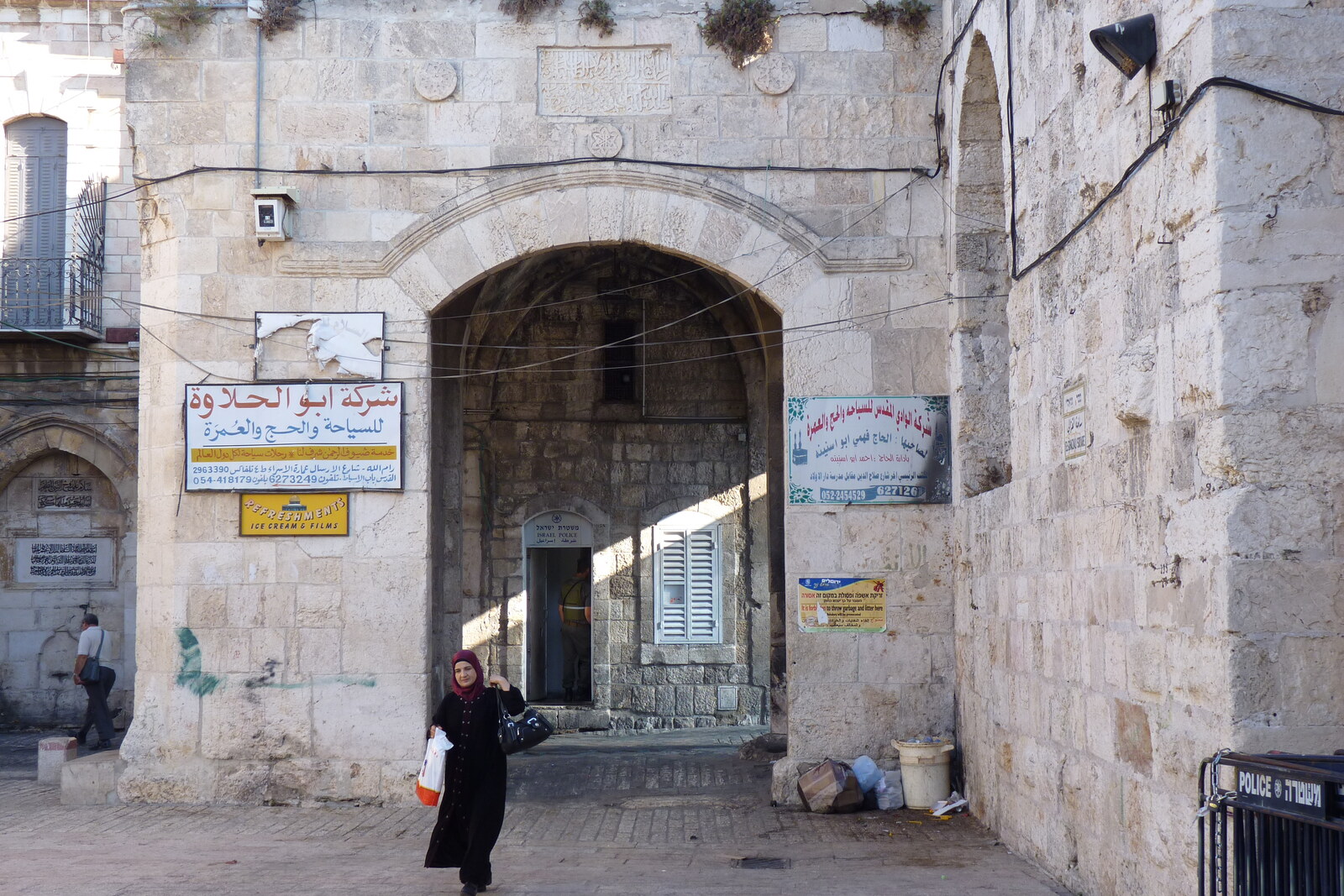
Look around first
What to notice
- Four animals above the arch
- Inscription inside the passage
- Vaulted chamber
- Straight passage
The story of the place
Lions' Gate cuts through the eastern wall of the Old City and today serves as its only open entrance. Now people pass straight through the arch, but the passage was deliberately bent inside: anyone entering first turned north and only then reached the city. This cramped turn prevented attackers from gaining speed before the inner opening. During the British Mandate, the inner wall was dismantled for automobiles, and a vaulted chamber remains from the former defensive route.
Four animals are carved above the arch—two on each side. They have long been called lions, although historians of Islamic art identify them as panthers: the personal emblem of the Mamluk sultan Baybars, who ruled in the thirteenth century. He used this emblem to mark coins and buildings commissioned by him.
The gate itself appeared almost three centuries after Baybars. The Ottoman sultan Suleiman the Magnificent ordered Jerusalem to be enclosed by a wall again, and in the fifteen thirties local craftsmen began the work together with builders from Aleppo. The sultan's official Muhammad Çelebi al-Naqqash controlled the funds and deadlines. When he was accused of allowing construction to drag on, al-Naqqash's assistant, the master Darwish al-Halabi, testified and confirmed that his superior had hastened the work as much as he could. The accusation was dropped. For al-Naqqash, it was a dispute over funds spent from the treasury and his own position; for the residents, it was a question of whether the city would finally receive continuous protection.
Between fifteen thirty-eight and fifteen thirty-nine, the builders completed the eastern gate. They set two old stone blocks bearing Baybars's panthers into the new masonry. These reliefs were reused, but the building for which they were originally carved has not been reliably identified. An inscription bearing Suleiman's name survives inside the passage, while outside there is the signature of another sultan who died two and a half centuries before construction began.
A legend later arose that Suleiman saw lions in a dream, ready to tear him apart for neglecting Jerusalem, and that afterward he ordered the walls built. It is only a legend: documents link the gate to Suleiman's construction order and the animals to Baybars's emblem. Yet the legend explains well how the panthers became lions and gave the gate its present name.
Originally, it was impossible to pass straight through beyond the arch. A person entered a cramped vestibule, turned north, and only then entered the city: this bend delayed attackers and prevented them from gaining speed before the inner opening. During the British Mandate, the inner western wall was dismantled so that automobiles could pass through without turning. That is why the only open gate in the eastern wall now appears as a straight passage. Part of the vaulted chamber remains from the defensive bend, and four of Baybars's panthers still stand above the straightened passage.
Useful on site
City gate with no ticketing; actual access depends on security
Checked: June 28, 2026. Check the official source before visiting.This is an active city passage: do not stand beneath the arch or obstruct pedestrians or traffic. View the reliefs from a safe place in front of the gate.