 Guide On Map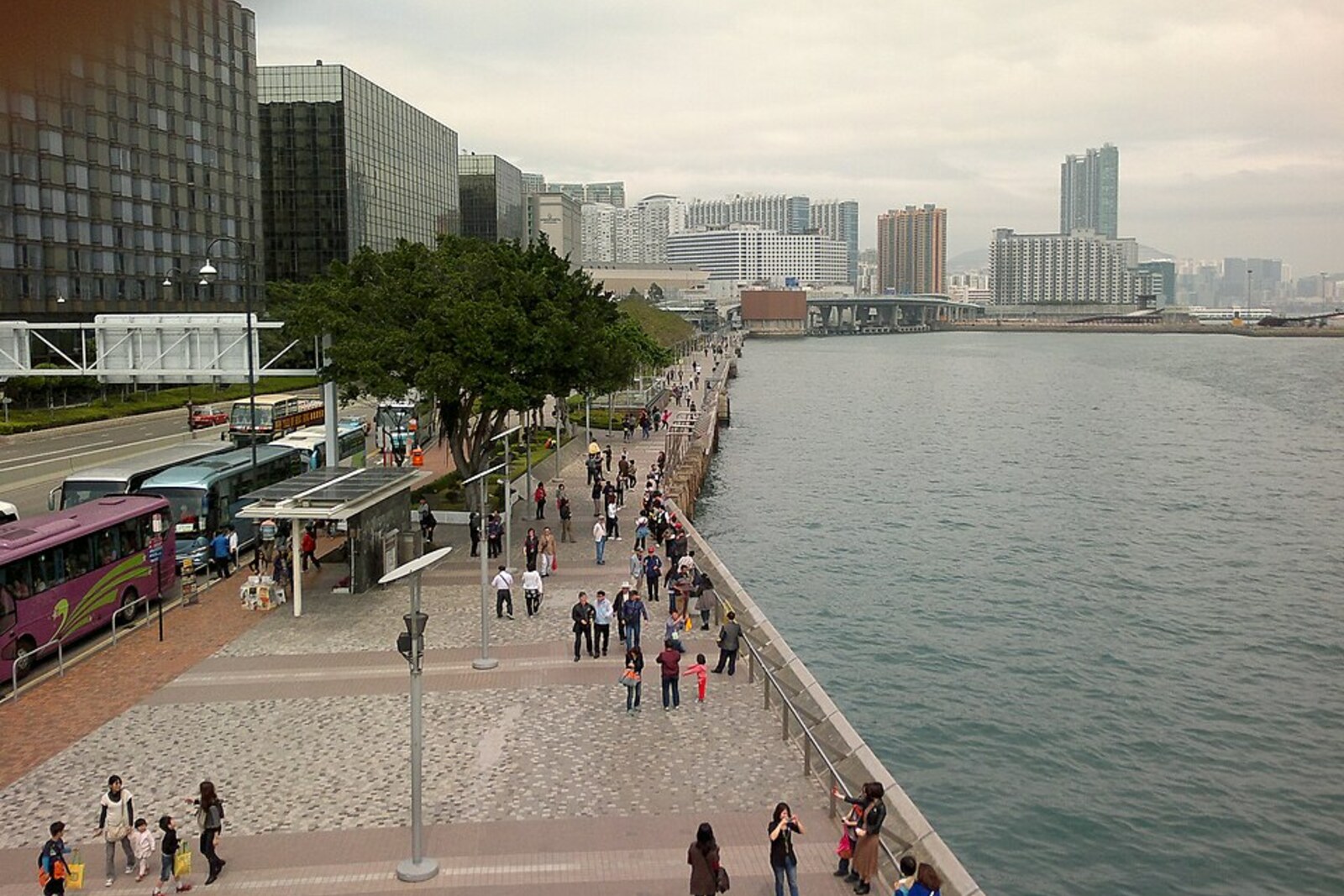
Look around first
What to notice
- The straight line of the promenade
- The stretch of open water
- The promenade railing
The story of the place
In the spring of nineteen seventy-eight, John Payne sought permission to move dragon boat races from a fishing harbour to the waters off Tsim Sha Tsui. Payne headed the Hong Kong Tourist Association and was looking for an event for the summer season, when there were fewer visitors. Repulse Bay and Sok Kwu Wan were not suitable for a large race. On April sixth, Payne approached the Chief Secretary for Administration, Denys Roberts: the course was proposed to run between New World Centre and the entrance to the Cross-Harbour Tunnel—along today’s East Tsim Sha Tsui Promenade.
Payne had begun this experiment two years earlier in Shau Kei Wan. There, nine Hong Kong teams of fishermen competed against fishermen from Nagasaki. Members of the local crews earned their living from fishing, and festive races belonged to the life of coastal communities. Payne invited a foreign team to turn a familiar competition into an international event. Japanese newspapers and television gave the race extensive coverage; the following year, a crew from Penang joined Nagasaki.
On June eleventh, nineteen seventy-eight, the race was held here, in the central part of the harbour, for the first time. Six crews took to the water: three from Hong Kong and teams from Nagasaki, Penang, and Singapore. Twenty-five Japanese television stations received the satellite broadcast. Payne had secured a venue where spectators on shore and a television audience beyond Hong Kong could watch the competition at the same time.
In the final, the boat of the Sai Kung team collided with the Nagasaki boat. The Japanese had won the previous race and were considered the favourites. After the collision, the rowers fought; then the Sai Kung crew scuffled with the Hong Kong team from Aberdeen, which had come in first. The live broadcast showed both the race and what followed after the finish.
Shortly before the competition, Bob Wilson became head of the newly created Hong Kong Amateur Rowing Association. He needed to prove that the new organization could run serious competitions on the water. After the fight, Wilson proposed to the tourist association that he and the rowing association take control of the races. Payne agreed.
For the next eighteen years, the rowing association organized international races. Wilson and his colleagues drew up uniform rules, trained judges, learned to line up the boats before the start, and introduced a photo finish. After the races, Wilson gathered representatives of foreign crews and discussed disputed incidents with them. There were significantly fewer protests.
For the course, the judges used the entire straight stretch of water along the East Tsim Sha Tsui Promenade. Once the start and finish were set, it came to six hundred forty meters—longer than the usual course at the time. The long race became a distinctive feature of the Hong Kong competition, and the tourist association began inviting teams from ever more countries and sending dragon boats abroad for exhibition races.
There is no memorial here to the fight in the final. The stretch of water itself remains, between the eastern shore of Tsim Sha Tsui and the exit to the tunnel. International races still return here; before the start, the boats now stand in one line, the winner is checked by photo finish, and the rules appeared after the nineteen seventy-eight final on these waters refused to end at the finish line.
Useful on site
The outdoor promenade is usually accessible around the clock and free of charge; access may change temporarily during events, repairs, or weather-related restrictions.
Checked: June 29, 2026. Check the official source before visiting.There are fewer individual sights here and more distance, so choose a comfortable spot by the water and let the final story unfold without rushing.