 Guide On Map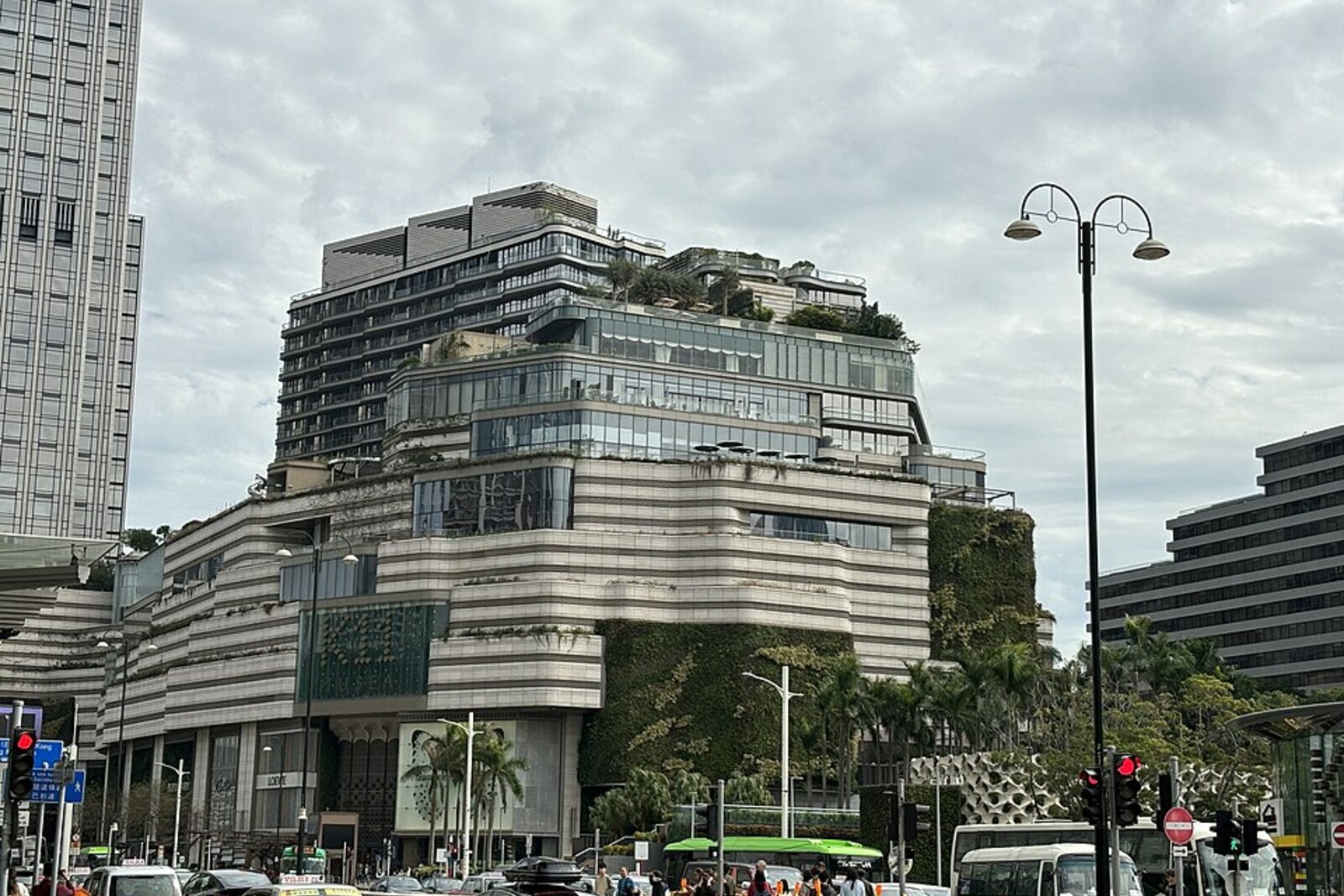
Look around first
What to notice
- The complex facades by the water
- Artworks between the retail floors
- The coffered ceiling on the lower level
The story of the place
Behind the facades by Victoria Harbour, shops and restaurants operate, while works by artists are placed among the retail floors, stairways, and interior plazas. At the beginning of the twentieth century, Holt's Wharf occupied the shore, with warehouses for ships. The former center was closed, most of its buildings were dismantled, and then, over ten years, more than one hundred architects, artists, and designers incorporated their works into the new building. On the lower level, a concrete ceiling with square recesses, made in the late nineteen seventies, was retained: a hotel swimming pool is above it, and contemporary design objects are sold beneath it.
In nineteen seventy-one, Cheng Yu-tung made the largest deal of his career through his recently established company: he bought this site for one hundred thirty-one million Hong Kong dollars. Cheng came to real estate from the jewelry trade. At fifteen, he began as an apprentice in a Macau shop, then took charge of it, expanded the Chow Tai Fook chain in Hong Kong, and decided that the jewelry business had a limit to its growth, while urban land did not. Here he staked on that conviction a sum his contemporaries considered excessive.
The site was then called Holt's Wharf. Cargo warehouses had stood here since nineteen ten. Ships came up to the shore, and the terminus of the Kowloon-Canton Railway stood nearby: goods could be transferred from ship straight onto train. When the railway terminal was to be moved and sea freight began shifting to new container ports, the British owners sold the wharf to Cheng’s company.
In February nineteen seventy-three, builders began putting up New World Centre, the New World Centre, on the site of the warehouses. That same year, the Hong Kong stock exchange index collapsed by more than ninety percent. The company continued with the project. The first phase opened in nineteen seventy-eight; by nineteen eighty-two, there were hotels, shops, offices, and serviced apartments here. That same year, Cheng Yu-tung took the company chairman’s seat. The deal called too expensive brought New World Development among Hong Kong’s largest developers. By nineteen ninety-three, the site and the complex built on it were valued at about fifteen billion Hong Kong dollars.
The old New World Centre operated for about three decades. In nineteen ten, it was closed and most of its buildings were dismantled. A new project on the family site was led by Cheng’s grandson, collector and founder of the K11 brand Adrian Cheng. He wanted to combine the sale of things with exhibitions and public art. Over ten years, Cheng brought in more than one hundred architects, artists, and designers: their works were to become part of the building itself—in its facades, stairways, retail floors, interior plazas, and exhibition spaces.
K11 MUSEA opened in nineteen nineteen. The name MUSEA was coined from the English phrase “muse by the sea.” Shops and restaurants still operate here, but among them are works from the art collection, halls for temporary exhibitions, and venues for cultural events. “Victoria” in the name of the whole complex refers to Victoria Harbour, and the word “dockside” to the cargo wharf that occupied this shore before Cheng’s purchase.
A concrete coffered ceiling from the late nineteen seventies was retained from the former New World Centre. It is on the lower level in the MUSE EDITION area, between the new center and Regent Hong Kong. The structure was restored and fitted with modern lighting. A hotel swimming pool lies above the old slab, so during the redevelopment the ceiling continued to perform its original function. Contemporary design objects are now sold beneath it.
Useful on site
Main hours are usually 10:00–22:00; individual tenants, restaurants, exhibitions, and events may operate on different schedules.
Checked: June 29, 2026. Check the official source before visiting.In the publicly accessible areas, you can follow the complex’s concept without making purchases; plan separately for closed exhibitions and events.