 Guide On Map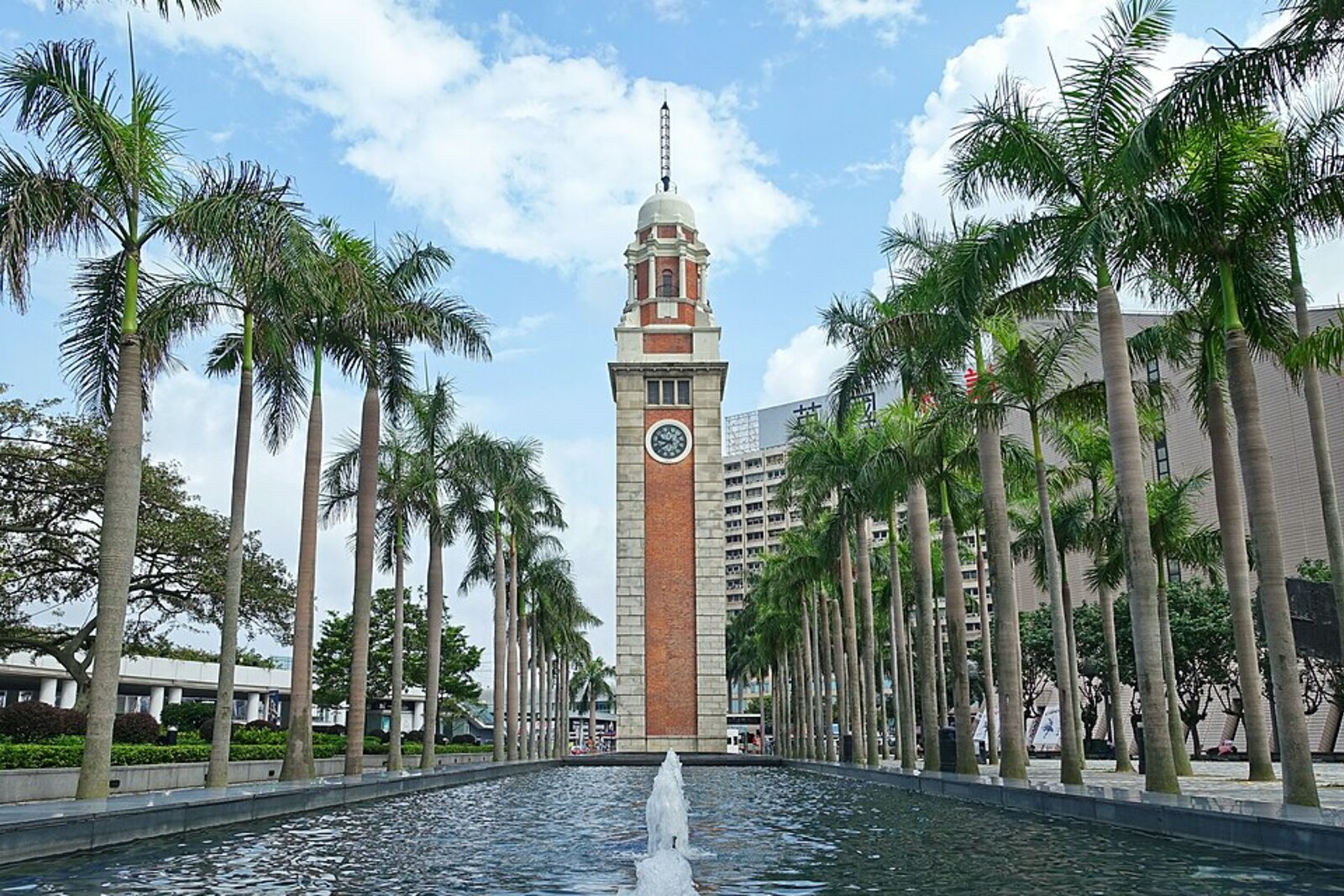
Look around first
What to notice
- Red-brick tower
- Four clock faces
- Arched windows
The story of the place
The passenger route ended here at the very edge of the peninsula: the final station of the Kowloon-Canton Railway connected arriving trains with the ferry crossing the harbor. In nineteen fifteen, a tower rose above the terminus, and six years later its clock began to work in its four faces. The red brick and arched windows recall that it was once a corner of a large building. The Hong Kong Cultural Centre now stands behind the tower.
In the spring of nineteen seventy-seven, the architect David Russell brought together the Hong Kong Heritage Society. Its first major campaign began here. By then, trains had already been arriving at the new station in Hung Hom, east of Tsim Sha Tsui, for two years, and the Former Kowloon-Canton Railway Terminus behind the Former Kowloon-Canton Railway Clock Tower was being prepared for demolition.
This terminus was the final station of the Kowloon-Canton Railway; Canton is the former European name for Guangzhou. Trains came right to the edge of the peninsula, and nearby passengers transferred to a ferry across the harbor. The tower was built together with the terminus in nineteen fifteen, and its four-sided clock was set in motion six years later. It marked the place where the railway met the sea-ferry hub.
The government planned to clear the site for a new cultural complex. Russell and his associates proposed incorporating the terminus into the future development. The society's committee had only fourteen members—architects, teachers, and urban-planning specialists; half of them were Chinese. They argued that the city needed not a model of the old station, but the authentic building that several generations of passengers had used.
Governor Murray MacLehose, who was seeking to build a large concert hall, replied that the terminus would take up the necessary space and delay the project. The society sent him a petition, demanded an independent review of the plan, and, after being refused, appealed to Queen Elizabeth the Second. In June nineteen seventy-eight, the final reply arrived: there would be no intervention. Two days later, workers began dismantling the terminus.
The campaign lost the dispute over the entire building. The tower was the only concession: it was decided to leave it in its original place and incorporate it into the new complex. For David Russell and his society, this meant that the main subject of their first campaign had disappeared, while the preserved fragment made the scale of the loss even clearer.
The Hong Kong Cultural Centre now stands behind the tower—exactly where the station halls and platforms were. Of the station in its original location, only one red-brick corner with a clock remains. That is why the tower stands alone: the neighboring building of which it was a part was dismantled around it.
Useful on site
The square is accessible from outside. The tower is undergoing maintenance until the end of 2026; during this period, barriers and scaffolding are in place, and the tower may not be visible to the public.
Checked: June 29, 2026. Check the official source before visiting.There is no need to go inside: step back and imagine the volume of the former terminus around the tower.