 Guide On Map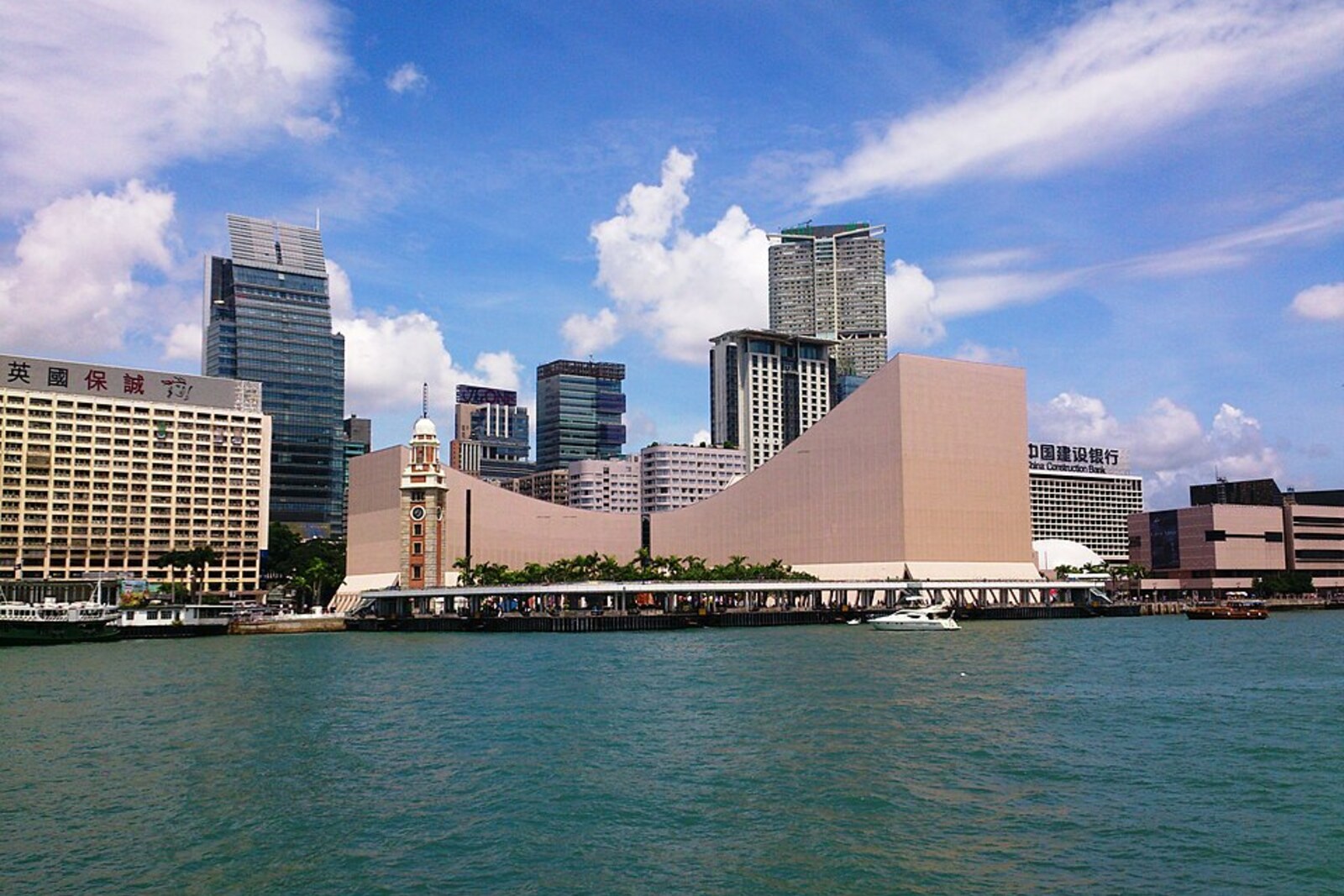
Look around first
What to notice
- Light-colored windowless facade
- Entrances to the concert halls
- Organ pipes in the concert hall
The story of the place
In the autumn of nineteen eighty-nine, William Wun was called to the not-yet-open concert hall of the Hong Kong Cultural Centre. He was studying at the Hong Kong Academy for Performing Arts and was one of the few local musicians proficient in the organ. He was asked to test the new instrument before the grand opening. The hall was dark; at first, Wun could make out only the keyboards. As he came closer, he saw what they were connected to: an organ four stories high.
The Austrian firm Rieger Orgelbau made it by hand. Behind the four rows of keys were ninety-three stops and eight thousand pipes of wood and metal. A mechanical action connected the organist's fingers directly to the pipes' valves. The instrument was intended for the large concert hall and made it possible to play music from different traditions, including jazz. Next to it, the Hong Kong Cultural Centre included the Grand Theatre for opera, ballet, and musicals, as well as a small hall with an adjustable stage. Local ensembles and touring performers were meant to appear here, but the largest instrument required people able to work with it constantly.
After the opening, a local profession was needed that had barely existed in Hong Kong. The pipes are easy to damage: it is cramped inside, and a careless turn can catch them with clothing. Without regular playing and tuning, the keys and components become stiff. Wun traveled to European organ builders, learned maintenance, and became a professional organ technician. At the same time, his main income continued to come from teaching music.
Once a month, checking this organ took him up to five hours. First, Wun climbed inside while an assistant outside pressed the necessary keys. In two thousand ten, an electric coupling system was installed, and the technician could send commands to the keyboard from a phone while remaining among the pipes.
The organist and teacher Chiu Siu-ling decided that the instrument could not be preserved through repairs alone. Since nineteen ninety-nine, the Hong Kong Cultural Centre has held annual courses for local organists. By the building's thirtieth anniversary, more than three hundred musicians had been trained here. Wun himself, who had once been brought in to test the keyboards in the unfinished hall, gave a free concert at them in two thousand twenty-two.
Today, behind the concert hall wall, stand the same four keyboards and eight thousand fragile pipes that student William Wun first tested before the opening of the Hong Kong Cultural Centre.
Useful on site
The building is usually open daily 09:00–23:00. Box offices and ticket outlets operate on separate schedules; check the venue page before a performance.
Checked: June 29, 2026. Check the official source before visiting.From outside, the building's role in the new cultural quarter is clear; the organ is accessible only with a separate visit to the hall or an event.