 Guide On Map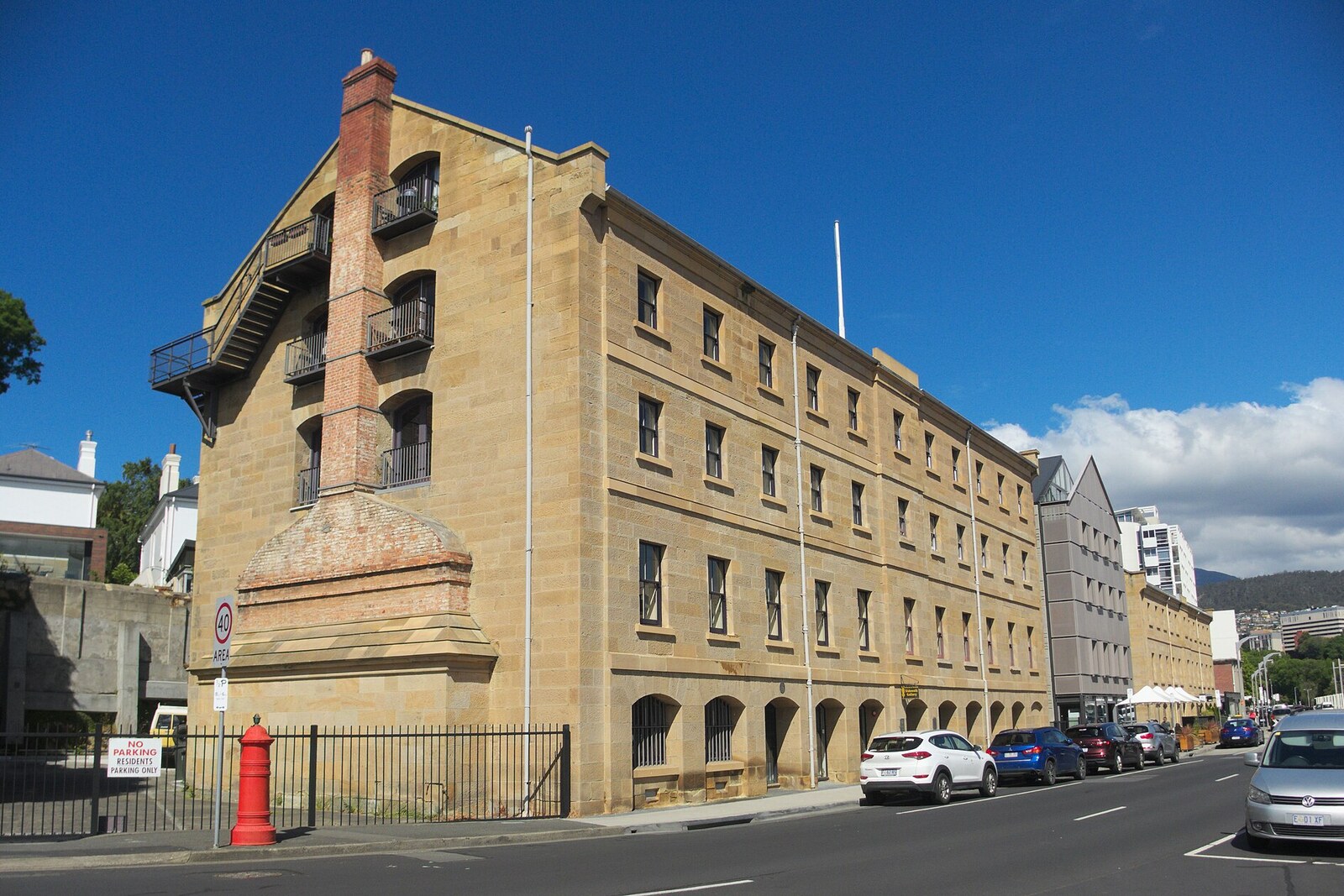
Look around first
What to notice
- The lawn of the former gun positions
- The iron grate at the foot of the slope
- The two stone wings of the artillery storehouse
- The slope above the water
The story of the place
The green space at the edge of the headland stands on the site of a battery where six naval guns faced the entrance to Sullivans Cove. The garrison was meant to spot a foreign vessel in time and prevent convicts from leaving the port aboard a seized ship. The grate at the foot of the slope covers an underground powder magazine, and the two stone buildings on Castray Esplanade served as a storehouse for guns, their equipment, and government supplies.
In eighteen twenty-nine, timber from Macquarie Harbour was brought here to refit gun carriages. Military engineers judged them dangerous for the artillerymen who were meant to load the guns and return them to their original position after firing. The battery was a place of service and a source of pay for these men, but when firing, they risked being injured by their own gun. Two years later, they had managed to repair the carriage of only one gun.
Six naval guns were installed on this headland by order of Lieutenant-Governor William Sorell in eighteen eighteen. They were meant to cover the entrance to Sullivans Cove, warn off foreign ships, and prevent convicts from seizing a vessel to escape. The fortification was named Mulgrave Battery, after Henry Phipps, the first Earl Mulgrave, who oversaw British artillery, military stores, and the construction of fortifications.
The dangerous carriages were only part of the problem. The guns stood too close to the town and controlled the river poorly. The military answered each new fear with another construction project. In eighteen forty-one to eighteen forty-two, the battery was rebuilt and named after Albert Edward, Prince of Wales, the future King Edward VII. In eighteen fifty-four, during the Crimean War, Albert Battery was built farther up the slope, in honor of his father, Queen Victoria’s husband. The plural in the name Princes Park refers to these two princes.
A large storehouse on Castray Esplanade helped maintain the fortifications. It was built from eighteen thirty-five to eighteen thirty-seven. The basement held gun barrels, carriages, ropes, and blocks for Prince of Wales Battery; the other rooms held government stores delivered from England or made in the colony.
In the late eighteen seventies, the British military engineer William Jervois inspected Hobart’s defenses. He was to determine which fortifications would truly protect the port. His conclusion decided the fate of this place: while silencing the batteries on the headland, an enemy would also shell the residential neighborhoods around them. In eighteen seventy-eight, the batteries were declared unsuitable; by eighteen eighty, they had been dismantled, and some of the stone was moved to the new Alexandra Battery farther south. Two years later, the site was handed over to the city as a recreation ground.
The lawn of Princes Park occupies the former gun positions. An iron grate at the foot of the slope closes off the surviving underground powder magazine. The two stone wings on Castray Esplanade are the former storehouse, from which gun crews received barrels, carriages, ropes, and blocks.
Useful on site
The park is open as a public space; the underground powder magazine is accessible only during separately announced programs.
Checked: date not specified. Check the official source before visiting.The park and the exterior of the storehouse are available for ordinary viewing; entry to the powder magazine is possible only as part of separately announced access.