 Guide On Map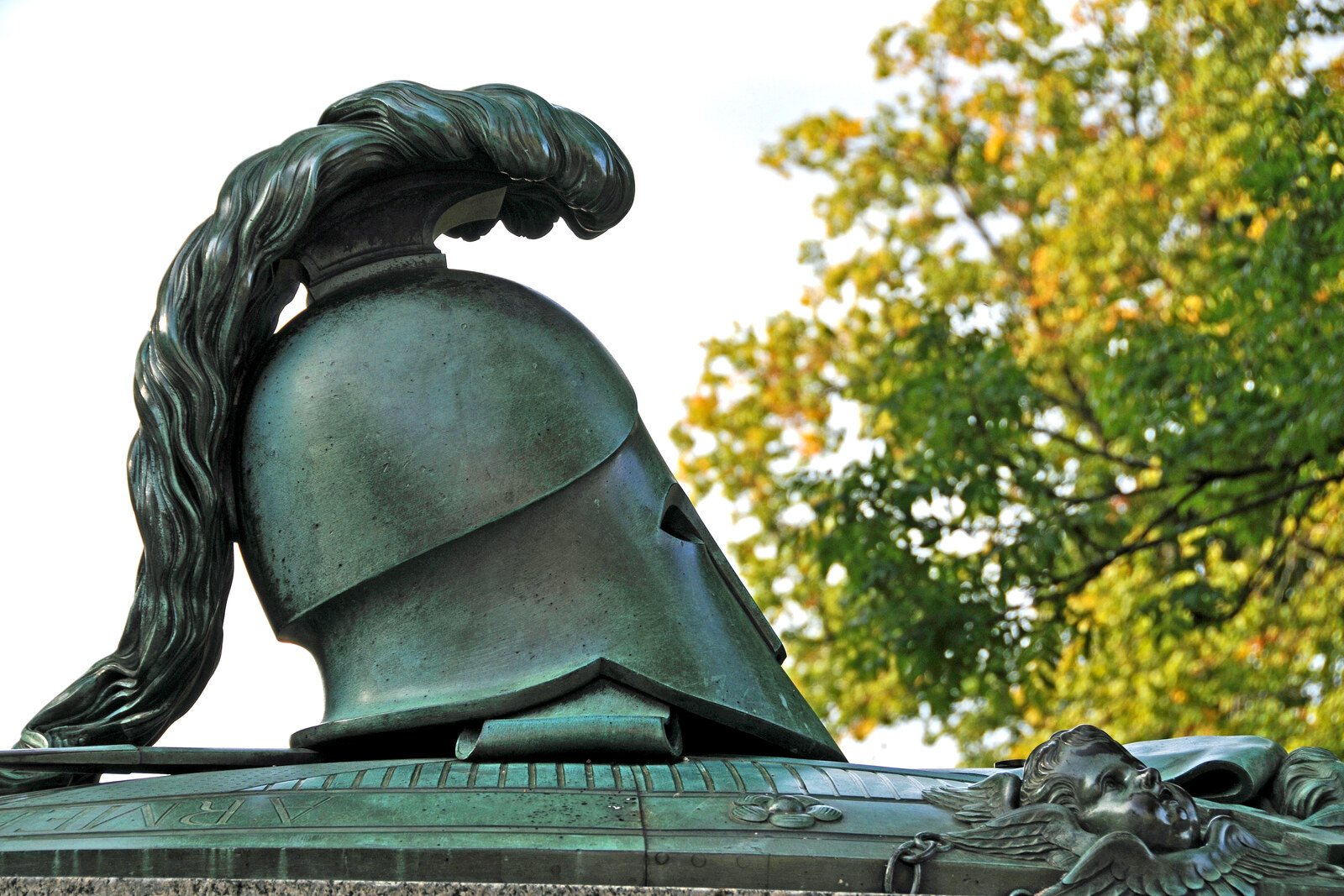
Look around first
What to notice
- Granite base of the monument
- Bronze military emblems
- Swedish inscription
- Former commandant’s house
The story of the place
For the first ten years after his death, Augustin Ehrensvärd lay not beneath the monument in the middle of the Great Courtyard, but in a temporary vault in Helsinki. The site for his grave had already been chosen, but the tomb was not yet ready.
Ehrensvärd was a career artillery officer tasked with creating a naval fortress to defend Sweden’s eastern lands. The country had lost important border fortifications in wars with Russia, and in seventeen forty-seven the deputies of the Riksdag of the Estates approved his project. A year later, Ehrensvärd began building Suomenlinna.
He laid out the Great Courtyard at the very center of the fortress administration. The commandant’s house and the main guardhouse opened onto it. The arrangement of the buildings and the curved façades created a false perspective: the courtyard appeared more spacious and ceremonial. Commanders lived here, duty officers reported here, and orders were issued to the garrison from here.
For Ehrensvärd, construction was military service, a source of rank, and the work on which his professional reputation rested. His unusual engineering solutions were criticized, and in the mid-seventeen sixties a new parliamentary majority almost stopped funding the fortress. Ehrensvärd was removed from leadership. In seventeen seventy, after another shift in political course, he was reinstated, but a wound sustained in war had already undermined his health. A year later, he asked to resign from construction work while retaining command of the Army Fleet. Shortly before his death, he was made a field marshal.
After his death in seventeen seventy-two, King Gustav III ordered Ehrensvärd to be buried in the Great Courtyard he had created. In the summer of seventeen eighty-three, the coffin was finally transferred here; the king was present when the vault was sealed. Thus, the place from which Ehrensvärd directed the fortress became his grave.
Gustav III sketched the monument himself. Ehrensvärd’s son, the naval officer and artist Carl August Ehrensvärd, reworked the king’s drawing, and the sculptor Johan Tobias Sergel carried out the design. The work dragged on until the beginning of the nineteenth century; neither the king nor the son was still alive by its completion.
Bronze military emblems and an inscription in Swedish remain on the granite base. It states that Ehrensvärd rests “surrounded by his works” and names two of them: the fortress of Suomenlinna and the Army Fleet. Behind the tomb stands the former commandant’s house, now home to Ehrensvärd Museum.
Useful on site
Open urban space, accessible from outside. Ehrensvärd Museum follows a separate seasonal schedule; as of 2026-06-30, Suomenlinna’s current-hours page listed daytime opening, but the museum’s hours must be checked again before integration.
Checked: June 30, 2026. Check the official source before visiting.View the monument from the path and keep the passage clear. After rain, the courtyard’s stone paving may be slippery.