 Guide On Map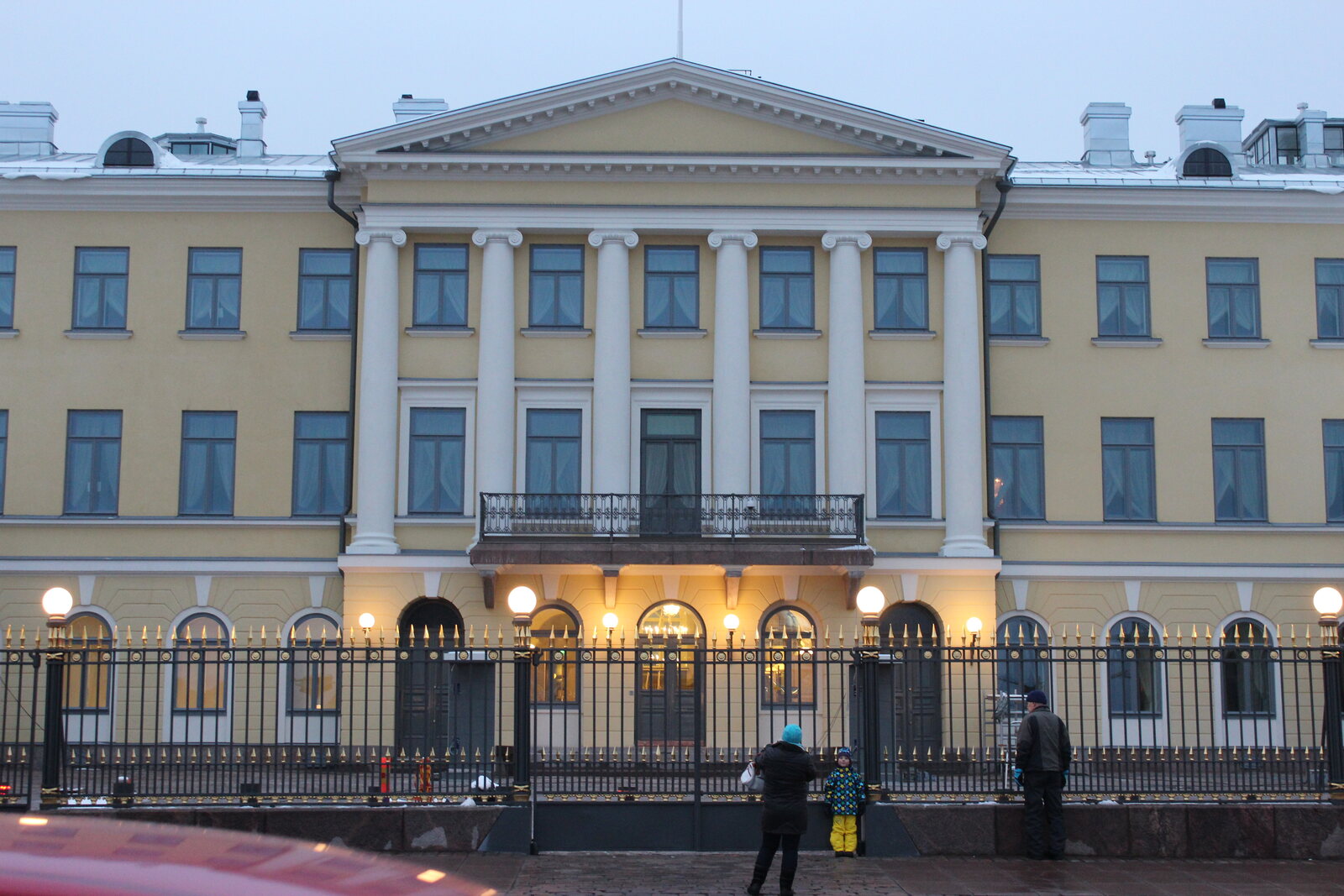
Look around first
What to notice
- Ceremonial facade
- Rows of windows
- Flagpole
The story of the place
The long, light-colored facade with rows of windows faces Market Square, with a flagpole rising above it. Inside the former town residence of the Russian emperors, ceremonial rooms, the throne room, and rooms for a large retinue have been preserved. The president's office and chancellery are now located here, while the halls host meetings, diplomatic receptions, and state banquets.
In the autumn of nineteen eighteen, furniture was being bought for this palace to furnish the home of Finland's king. The king himself had not yet been to Finland.
After the Civil War, the country was deciding whether to be a monarchy or a republic. Germany had helped the Whites win, its troops remained in Finland, and right-wing members of parliament expected that a German monarch would preserve this support. Parliament convened without many representatives of the defeated side: some left-wing deputies had died, fled, or ended up in camps. The king was elected by sixty-four votes to forty-one; ninety-five deputies were absent.
On October ninth, nineteen eighteen, the crown was offered to the Hessian prince Frederick Charles, son-in-law of the German emperor. In Finland, his name was rendered as Fredrik Kaarle. He was meant to link the young state with Germany, but he accepted the election only conditionally: a German king could hinder Finland in gaining recognition from countries that had fought against Germany.
The former town palace of the Russian emperors by Market Square was set aside for his family. The choice was practical: ceremonial halls, the former throne room, and rooms for the retinue were already inside. What was lacking was furnishings for everyday life. Two architects from the Stockmann department store went around Europe to look for furniture. They selected simple pieces of redwood and walnut and ordered Finnish woven rugs. Officials drew up an arrival program, while teachers sent from Helsinki taught the fifty-year-old prince Finnish history, the structure of the state, and the cases of the Finnish language.
While Frederick Charles was preparing to move, Germany lost the World War. The German emperor abdicated, the troops left Finland, and the patronage of a defeated country became an obstacle for the new state. On December fourteenth, the prince renounced the crown and remained at his German estate. He never saw the palace. The Finnish state did not buy the furniture procured for him: Stockmann sold the wardrobes, tables, and armchairs to private buyers.
At the next election, supporters of the republic won a majority. The lawyer Kaarlo Juho Ståhlberg, who had taken part in drafting the republican constitution, became Finland's first president. On July thirtieth, nineteen nineteen, he held the first government meeting here under the chairmanship of the president, then received senior officials and diplomats. After renovations completed in nineteen twenty-one, the former imperial and unrealized royal palace officially became the Presidential Palace.
Finnish presidents no longer live here: since nineteen ninety-three, their residence has been Mäntyniemi. Behind this facade are the president's office, the chancellery, and halls for meetings and receptions. The Hall of State hosts banquets in honor of state visits and handshakes at the annual reception on December sixth. The furniture for Fredrik Kaarle remained in private homes; the first presidential hall is here.
Useful on site
This is a working government building: listen to the story from outside and do not count on entering on your own. Access may be restricted during official events.