 Guide On Map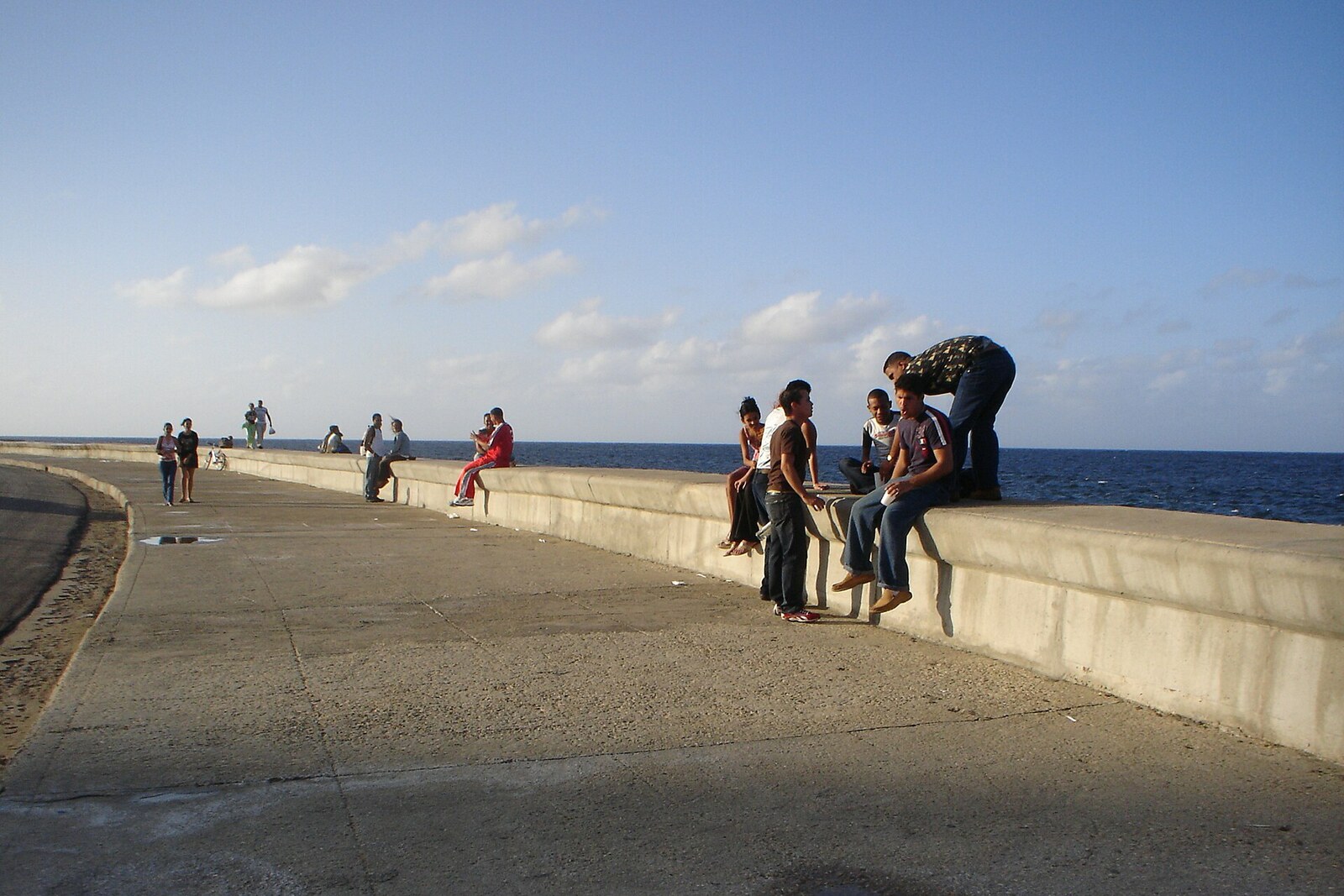
Look around first
What to notice
- The low concrete wall of the Malecón
- The intersection of the Malecón and 23rd Street
- The steep rise of La Rampa
- The sidewalk at the seaward end of the street
The story of the place
23rd Street meets the Malecón exactly where its best-known stretch, La Rampa, begins. Up to L Street, it rises steeply from the sea, hence the popular name: “ramp,” meaning a sloping approach. One of Vedado’s main roads ends at the concrete wall, yet there is neither a statue nor a memorial marker on its axis. A monument once stood right here.
In nineteen twenty-five, Gerardo Machado, a former general in the War of Independence, became president of Cuba. He came in with a program of roads, waterworks, and schools, then secured an extension of his presidential term. For Machado, the stakes were the office that he no longer intended to leave at the promised time. Havana’s municipal authorities renamed 23rd Street Avenida General Machado and placed a memorial marker to the president at its seaward end. The Malecón had not yet been extended this far, so the structure closed off the street’s vista right at the shore.
In August nineteen thirty-three, Machado lost the army’s support and fled by plane to Nassau. His monument by the sea was destroyed, and the street was given back its number. In accounts of this spot, the first monument is often confused with the second: soon, an eclectic obelisk with a lantern at the top appeared on the former base. According to a widespread version, it was dedicated to José Martí, the organizer of Cuba’s struggle for independence, but no undisputed inscription or document confirming the dedication has survived.
Havana residents nicknamed the new obelisk La Farola. Its upper lantern was lost among the Malecón’s streetlights and distracted drivers, while the mixture of decorative styles drew ridicule. In nineteen fifty-one, the journalist and essayist Jorge Mañach, who made his living through public words and his reputation as a critic, demanded that the Ministry of Public Works remove the structure. Officials left his proposal unanswered. La Farola stood for about another decade, fell into disrepair, and city services demolished it in the early nineteen sixties.
No new monument was placed on this base. Today, the roadway, sidewalk, and low wall of the Malecón, where people gather, remain here. The street is called 23rd Street, its rise to L Street is La Rampa, and nothing marks the site of the two vanished monuments.
Useful on site
Open urban space. Checked 2026-06-29; in heavy seas, stay on the building side and do not sit on the edge of the wall.
Checked: June 29, 2026. Check the official source before visiting.Stand on the sidewalk side, where you can see both the street and the water at once. In heavy surf, do not approach the wall; the vanished monuments and obelisk can only be imagined from the stories.