 Guide On Map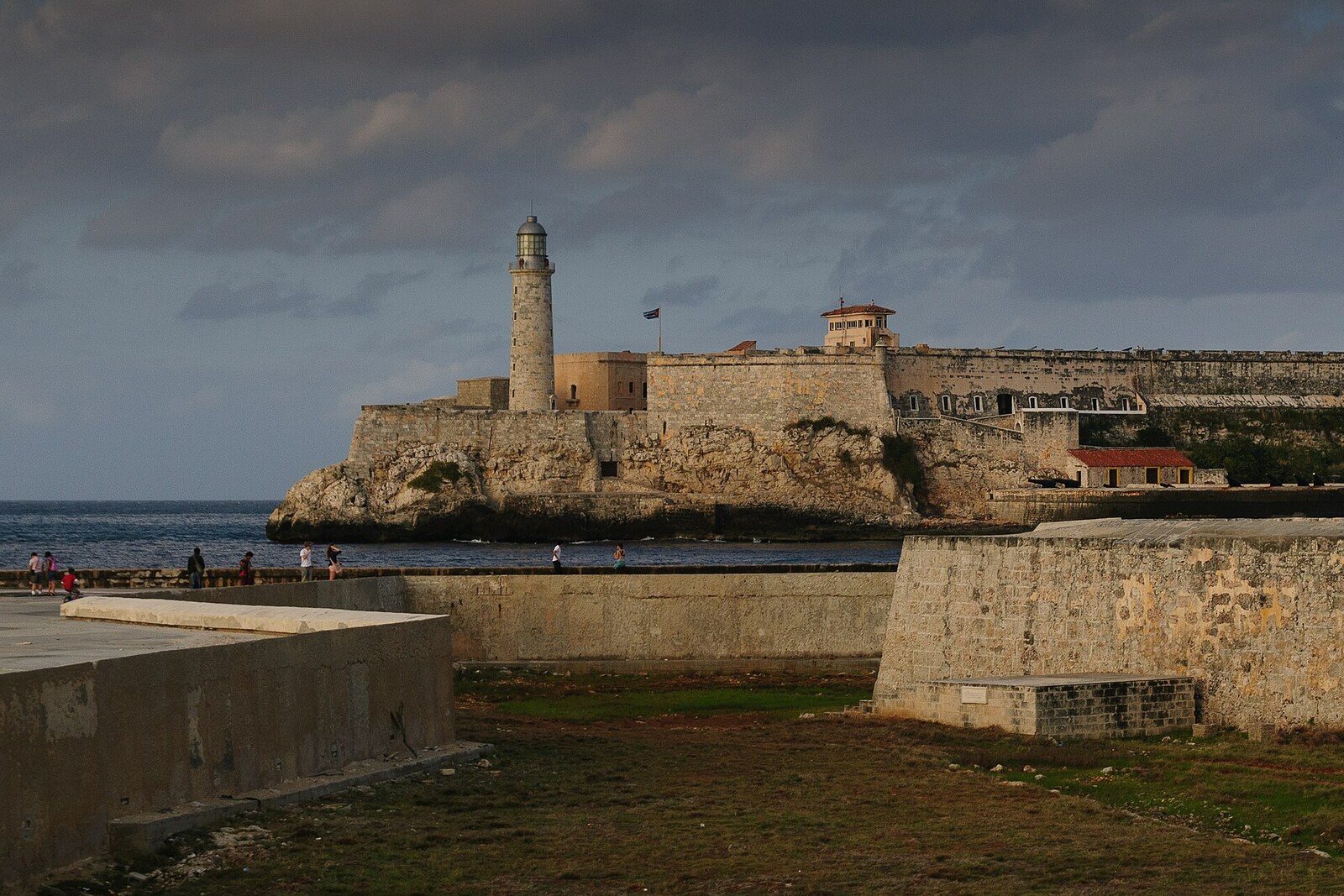
Look around first
What to notice
- Low stone walls
- The entrance to Havana Bay
- El Morro fortress on the opposite shore
The story of the place
From the shore, La Punta looks more modest than El Morro on the other side of the water, yet the two fortresses functioned as a single set of harbor gates. Their cannons covered the narrow channel with fire, and a heavy chain between the shores was meant to stop a ship at the very entrance to the bay. The western end of this barrier came here, to La Punta's stone walls. Spanish vessels carrying cargoes from the Americas gathered in the harbor before crossing the Atlantic Ocean, and this passage was guarded with particular care.
The low stone fortress occupies the western shore at the very entrance to Havana Bay. La Punta means “the point”: this tip of land was called that even before the walls appeared. San Salvador is a dedication to Christ as the Holy Savior. The fortress's full name combines a Catholic dedication with a precise indication of its location.
In fifteen fifty-five, the French corsair Jacques de Sores passed through the unprotected entrance to the bay, captured Havana, killed prisoners, looted homes, and set the city on fire. After he left, Havana's councillors posted watchmen on the point, then added a tower and several cannons. That proved insufficient. King Philip II wanted to preserve the harbor where Spanish ships carrying cargoes from the Americas gathered before crossing the Atlantic Ocean, and he instructed the military engineer Bautista Antonelli to seal off the entrance to the bay.
Antonelli positioned two fortresses opposite each other: La Punta on this shore and El Morro on the other. Their cannons could cover the narrow channel with fire, and a heavy chain was stretched between the shores to prevent a ship from entering the harbor. That is why La Punta remained comparatively small: it made up one half of the harbor gates.
In the summer of seventeen sixty-two, a British fleet approached these gates. Havana was commanded by Governor and Marshal Juan de Prado, who was required to hold the city and the Spanish squadron anchored in the bay. He had thirty-four years of military service and two serious wounds behind him. Surrender threatened him with the loss of his only profession, his rank, and his property.
Prado and the commanders he had assembled ordered the chain to be stretched between La Punta and El Morro, and three old warships were sunk behind it. The channel became almost impassable. At the same time, the Spaniards deprived their own squadron of the chance to put to sea and join the fighting.
Lord Albemarle, the commander of the British army, did not try to break through the chain. His soldiers landed east of the bay and took La Cabaña hill, which the Spanish commanders considered impossible to fortify in the time remaining. From that height, the British began the siege of El Morro. When the eastern fortress fell, the chain lost its purpose: one of its ends was in enemy hands.
La Punta was then commanded by frigate captain Fernando de Lortia, who was replacing the ill commander of the garrison. He ordered fire across the channel at the captured El Morro. The British artillerymen then turned their fire on this shore. On August eleventh, they shattered the parapets, put most of the cannons out of action, and made several breaches in the walls. There were dead and wounded inside. The head of the artillery reported to Prado that enough powder remained for four or five hours of firing, and the engineer reported that an assault could already be made through the breaches.
Prado requested capitulation. For the surviving defenders of La Punta, he separately secured the right to leave with military honors through one of those very breaches. The British occupied Havana for eleven months; to get the city back, Spain ceded Florida to them.
Prado was sent to Spain and put on trial. Among the charges were two decisions made at the entrance to this bay: he had not fortified La Cabaña hill, and he had sunk the ships, rendering his own squadron useless. The military court stripped him of his post, sentenced him to ten years of exile, and ordered him to compensate the treasury and the merchants for their losses. The former governor had almost no money. He gave up his remaining property, lived with the help of his brother and a small secret allowance from the king, and died in exile.
After their return, the Spaniards restored the shattered walls. The chain is no longer stretched across the water, but its supports can still be read in the geography itself: La Punta remains at one end of the narrow channel, and El Morro at the other.
Useful on site
Wed–Sun 10:00–18:00, Mon–Tue closed
Checked: June 19, 2026. Check the official source before visiting.The site's main idea is clear from outside as well: stand where you can see both shores at the entrance to the bay at once. Do not approach closed sections of the fortifications, and take the wind by the water into account.