 Guide On Map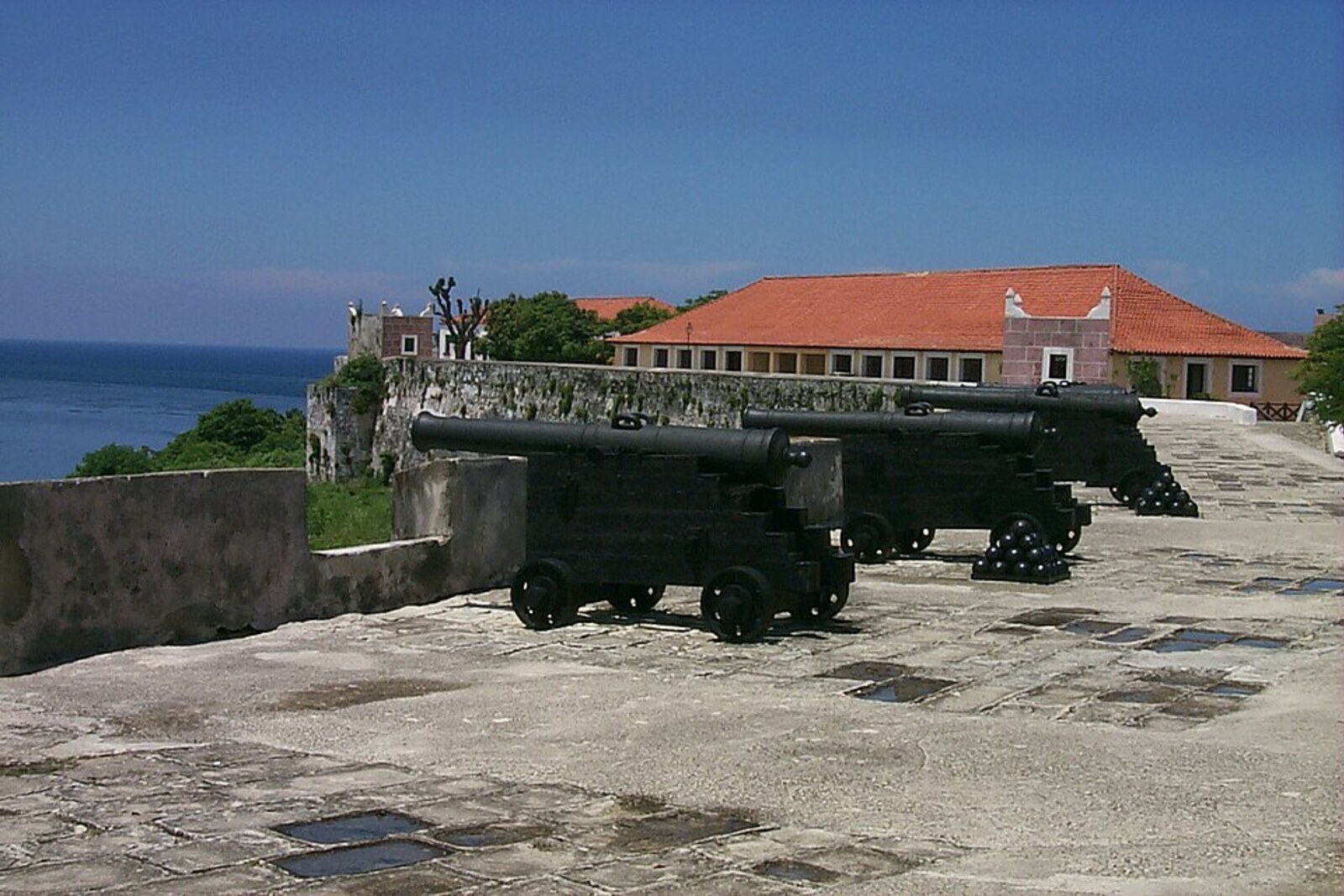
Look around first
What to notice
- The stone lighthouse tower
- The plaque marking the place of the mortal wound
- The plaque above the entrance
- The narrow entrance channel
The story of the place
The stone tower on the rocky promontory by the walls of Morro Castle serves as Morro Lighthouse. Before it, El Morrillo stood here, a watchtower: its watch noticed ships, rang the bell, and gave signals. The present tower was built after the temporary lantern, fueled with firewood and candles, proved too weak for the growing ship traffic. French rotating lenses were installed inside: a weight-driven mechanism turned the optics, and they gathered the light into a distant beam at sea.
On July thirtieth, seventeen sixty-two, Spanish naval captain Luis Vicente de Velasco, who commanded Morro Castle and was trying to hold the entrance to the bay, ordered the rope ladders by El Morrillo tower to be pulled up or cut. The defenders could use them to descend to the boats. Velasco wanted to deprive the garrison of a route of retreat.
By then, British sappers had already placed a mine beneath the seaside bastion. The explosion brought down two sections of the wall and opened a way for the assault. Some soldiers and sailors disobeyed Velasco: they reached the remaining ladders, descended to the water, and crossed to the opposite shore. The rest retreated inside the fortress. Velasco remained by the flag and tried to gather the men at the earthen barricades until a bullet pierced his chest.
British officers ordered the wounded man taken to Havana and provided him with doctors. Velasco died the next day. Both sides ceased fire for the duration of his funeral. Spain's King Carlos III granted the dead man's brother the title of Marquess of Velasco del Morro and ordered that Velasco's name be preserved among the names of naval ships from then on. In the fortress itself, a marble plaque marks the place where he was mortally wounded.
Such stubborn defense was necessary because of the shape of the bay. A ship can enter it only through the narrow channel between Morro Castle and La Punta Fortress on the opposite shore. As long as Morro's guns covered that passage, the British fleet could not safely bring ships inside. After Velasco's death, the garrison's resistance ceased, and the attackers gained the key to the channel.
Morro Castle's full name is the Fortress of the Three Kings. Spain's King Felipe II established it in a royal decree as early as fifteen eighty-eight. The kings here are the Magi of the Gospel: the fortress chapel contained an altarpiece depicting their adoration of the infant Christ. The Spanish used the word “morro” for a high rocky promontory by the sea. It describes precisely the headland on which the walls were built.
Velasco's order at El Morrillo connects the siege with the lighthouse. El Morrillo was an old watch and signal tower: from it, people watched the sea, rang a bell when ships appeared, and gave light signals. The tower was destroyed during the siege. Two years later, a temporary lighthouse was built in its place, fueled with firewood and candles. Its light was too weak to guide ships to the narrow entrance in time.
By the beginning of the nineteenth century, ship traffic had increased and the old lantern had worn out. Captains of naval and merchant vessels complained of an unreliable navigational marker. In eighteen thirty-nine, Havana's chief naval commander Juan Bautista Topete, who was responsible for the safety of the approach to the port, set out the problem in an official report. A commission confirmed that the old tower could not safely be heightened and fitted with a new optical apparatus.
Military engineers dismantled it and built the present stone tower. The work was directed by the colonial administration under Captain General Leopoldo O'Donnell. In December eighteen forty-four, commemorative documents were placed in the foundation, and an inscription bearing O'Donnell's name and the date was installed. Soon, a lantern with Fresnel system lenses and a rotating mechanism arrived from France. A representative of the manufacturer, mechanic Antoine Frédéric Menu, accompanied the fragile equipment across the Atlantic Ocean and spent several weeks assembling it inside the tower.
On July twenty-fourth, eighteen forty-five, the keepers lit lamps fueled by rapeseed oil. The lenses gathered their light into a distant beam, while a weight-driven mechanism turned the optics evenly. Ships could distinguish it from about eighteen nautical miles away. Later, the keepers switched to acetylene, and in nineteen forty-five sailors converted the lantern to electricity—the plaque above the entrance says so.
The year construction began—eighteen forty-four—remains on the stone tower. Morro Lighthouse is still operating: above the place where Morro's defenders tried to escape by rope ladders, it gives two white flashes every fifteen seconds.
Useful on site
Check hours, last entry, tickets, and access to the lighthouse on site; do not treat old guidebook prices as current.
Checked: June 25, 2026. Check the official source before visiting.Even without going inside, you can clearly see the relative positions of the fortress, the lighthouse, and the sea passage; take care near the edges of the cliff.