 Guide On Map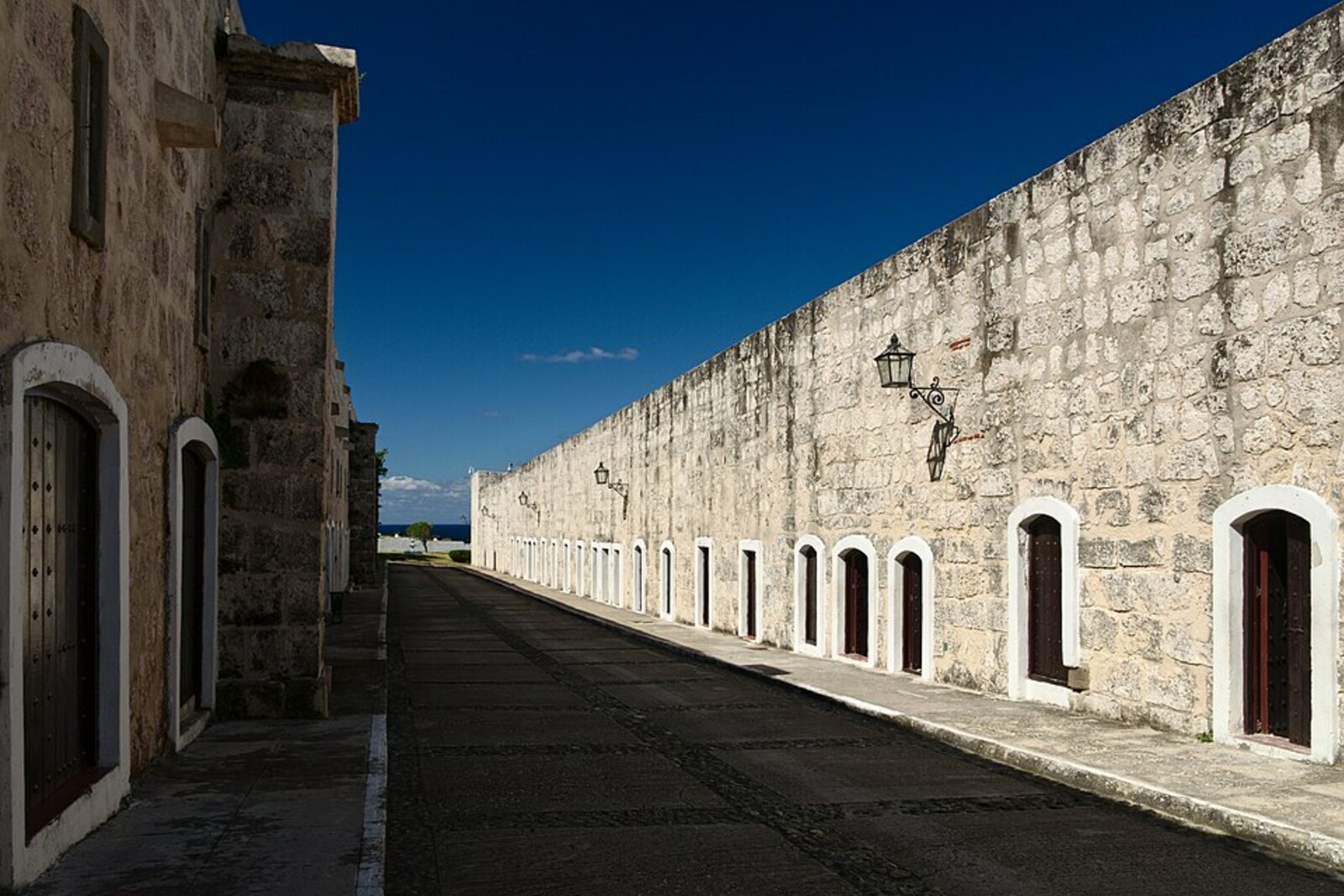
Look around first
What to notice
- Fortress walls
- Barracks
- Gun positions
- La Cabaña ridge
The story of the place
San Carlos de la Cabaña Fortress runs along the ridge above Havana Bay in a long line of stone walls. Behind them are barracks for six thousand soldiers and positions for one hundred twenty bronze cannons; museum galleries now operate in the barracks. The fortifications were built over eleven years by about two thousand enslaved Cubans and prisoners brought from Mexico, and the fortress was named in honor of the Spanish king Carlos III.
On June sixth, seventeen sixty-two, the British fleet approached Havana. Nearly a third of Spain's warships stood in Havana Bay, and the governor of Cuba, Juan de Prado, had to hold the port and the city. Morro Castle protected the sea entrance. Behind it stretched the undeveloped La Cabaña ridge—the name this height bore even before the fortress appeared.
Prado knew the ridge was dangerous. He tried to begin the fortifications in advance, but there were not enough men or materials; an epidemic took part of the garrison and the chief engineer. When the British ships appeared, the governor ordered La Cabaña occupied immediately. The military council he assembled decided it was already too late to build defenses: the work would take too much time, and experienced soldiers were needed more at Morro Castle and behind the city walls. A small detachment of militia was left on the height.
A few days later, British soldiers drove them out. The expedition's commander, Lord Albemarle, gained a position from which Morro Castle could be besieged from land. His men cleared the brush, brought heavy guns up the ridge, and built batteries. The guns now stood higher than the fortifications at the entrance to Havana Bay, and British engineers could run a mine under their walls.
The siege lasted sixty-five days. Disease had reduced the British army by almost half, yet Albemarle ordered the mine blown up. After Morro Castle fell, artillery fired on Havana, and on August thirteenth the city capitulated. The British occupied it for eleven months. To get Havana and Cuba back, Spain ceded Florida to Great Britain.
De Prado was sent to Spain on a British ship and court-martialed. Among the main charges were the unfinished fortifications at La Cabaña and the decision to abandon the height too quickly. The governor reminded the judges of his thirty-four years of service and two severe wounds, calling his decisions unintended errors. He was stripped of his post, barred from the royal court for ten years, and required to compensate for the damage from his own property. De Prado gave up the little he had and lived with his brother; the very king whose court had passed the sentence secretly granted him a small allowance.
Carlos III ordered the breach through which Havana had been lost closed. The military engineer Silvestre Abarca fortified the entire ridge. About two thousand enslaved Cubans and prisoners brought from Mexico built the fortifications over eleven years—from seventeen sixty-three to seventeen seventy-four. “San Carlos” in the fortress's full name honors Carlos III.
The walls extended for about seven hundred meters. Behind them were barracks for six thousand soldiers and positions for one hundred twenty bronze cannons. Museum galleries are now housed in the barracks, while the fortifications still occupy the very ridge that De Prado's council decided not to defend. After San Carlos de la Cabaña Fortress was completed, it was never attacked again, and the guns prepared for the next siege never received a target.
Useful on site
Check hours, prices, and access to the cañonazo on site; the ceremony is traditionally associated with 21:00, but the schedule may change.
Checked: June 25, 2026. Check the official source before visiting.Watch out for uneven stone and exposed edges; plan the evening cannon ceremony separately and confirm it on site.