 Guide On Map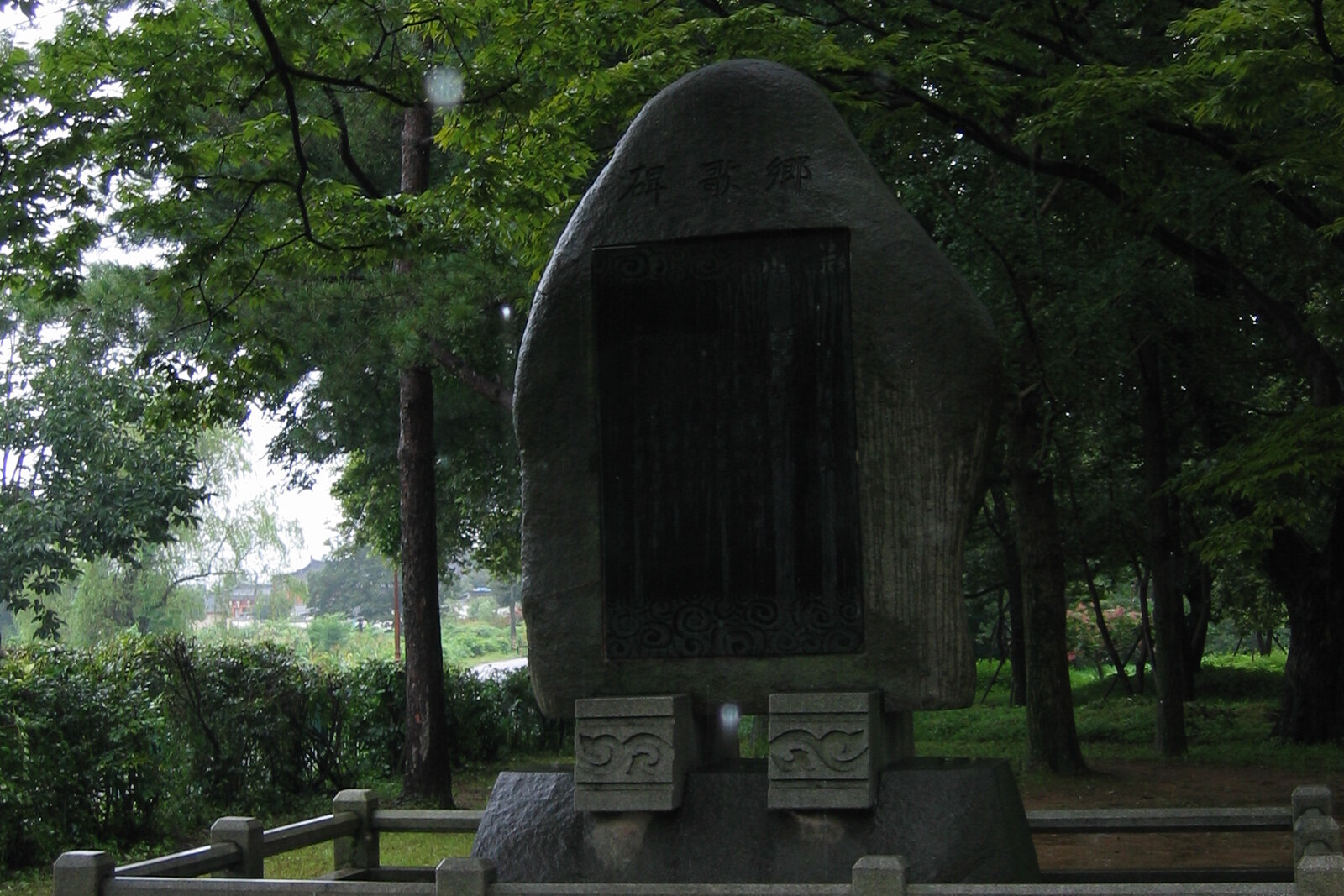
Look around first
What to notice
- Dense grove
- Pavilion
- Stone stele
The story of the place
Gyerim Forest is preserved as a historic grove, where memory is marked by a later commemorative monument. Beneath the dense trees stands a pavilion with a stone stele, erected in the early nineteenth century. None of the objects mentioned in the legend remain here; the forest recalls them through its name and this stone.
In the first century, this forest was called Sirim. According to legend, King Talhae of Silla heard a rooster crowing at night and sent Hogong, his senior adviser, to find out what was happening at the palace’s western boundary. Hogong found a small golden casket on a branch and a white rooster beneath the tree. He returned with a report, and King Talhae came to the forest himself.
A boy lay in the casket. King Talhae declared him a son sent by heaven, took him to the palace, and gave him the name Alji—“child.” The Kim clan’s name was associated with the golden casket: gold was denoted by the same Chinese character. After the discovery, Sirim was renamed Gyerim—“rooster forest.” Medieval chronicles recorded this story many centuries later and disagree even about its date, so the casket, the bird, and the found infant belong to legend.
At court, Alji rose to become a senior official and was named heir. However, he later yielded his place to Pasa, a claimant from the Pak clan, and did not become king. The chronicles do not say why he declined. According to the genealogy they preserved, only Alji’s seventh descendant, King Michu, was the first of the Kim clan to ascend the throne. The Kims then gave Silla thirty-eight rulers out of fifty-six, and Gyerim came to be used as a name for the state itself.
The golden casket, the white rooster, and the tree from which it supposedly hung are not here. Among the trees stands a pavilion with a stone stele, erected in eighteen oh three to commemorate Alji’s birth. The stone appeared almost eighteen centuries after the supposed event, but it records the same connection: this forest is preserved as the place where legend brought the future royal Kim clan out of a golden casket and left the rooster in its name.
Useful on site
Open year-round; admission free.
Checked: date not specified. Check the official source before visiting.Do not look here for the tree from the legend: the value of the place lies in the preserved grove, not in a single ancient trunk.