 Guide On Map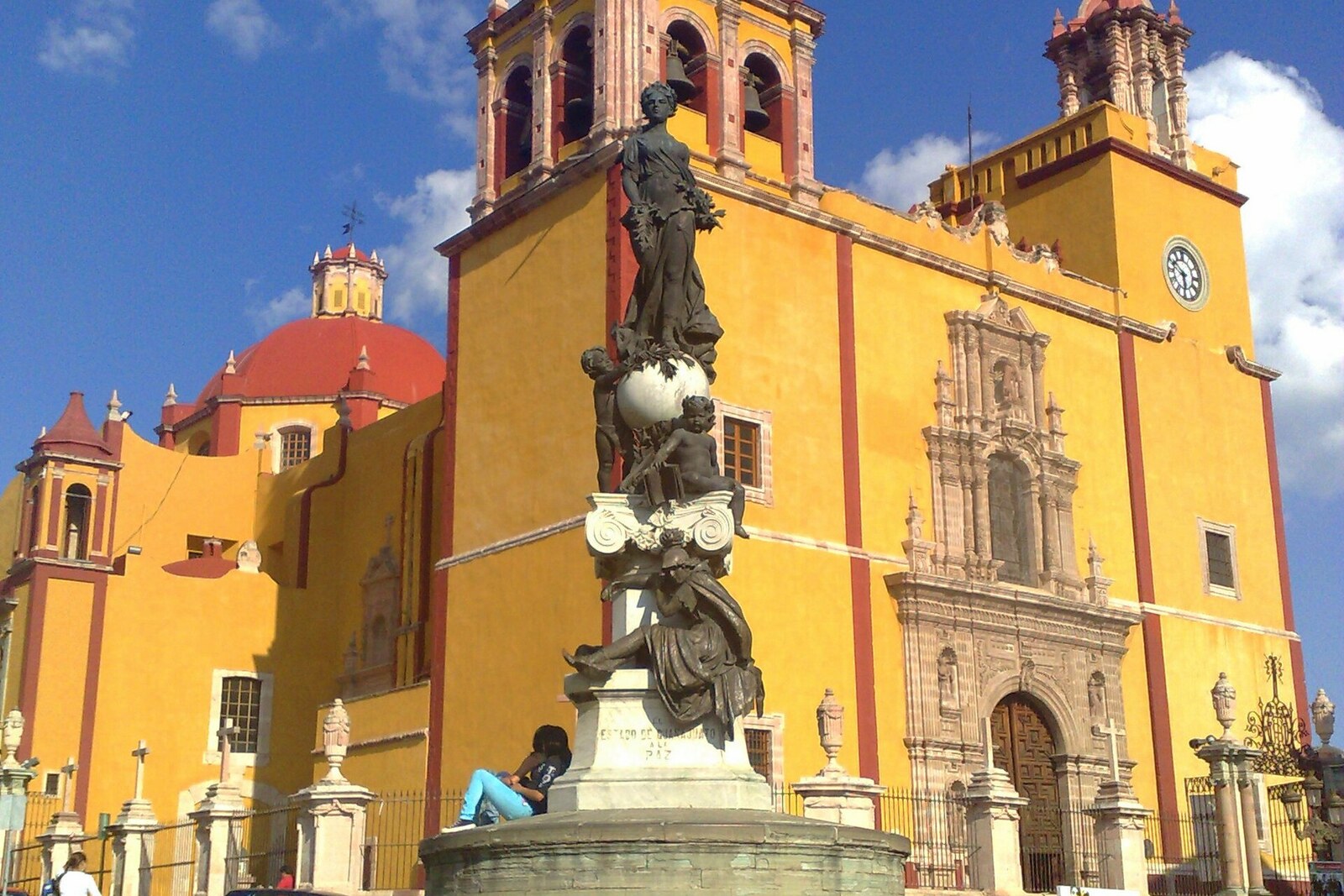
Look around first
What to notice
- Wooden figure of Our Lady with the Child
- Silver Baroque pedestal
- Rose in the right hand
- Green bird with the Child
The story of the place
On the main altar stands a wooden figure of Our Lady with the Child. It gave the church its name: Our Lady of Guanajuato is not an appearance of the Virgin Mary in the city, but a particular sculpture brought here in the middle of the sixteenth century.
At that time, Guanajuato consisted of several fortified mining settlements. After silver veins were discovered, prospectors, merchants, and mine owners poured in, and the Spanish king needed someone able to settle disputes over mining. In fifteen fifty-seven, Philip II appointed Perafán de Ribera the first judge and overseer of the local mines. Along with the post, Ribera received a separate assignment: to deliver a royal gift to the mining settlement—a wooden figure of Our Lady.
After that, documents give way to local tradition. In the mountains near Yerbabuena, Ribera and his companions lost their way. He was traveling here to take up his new post and was also responsible for a valuable sacred object: returning without carrying out either assignment would have meant failing at his service just as it began. Ribera took the figure from its traveling chest, placed it on a military drum, lit two large candles, and asked for the way to be shown. In the morning, the travelers saw two doves, followed the direction of their flight, and reached Guanajuato.
The gift was not placed here. First, the figure was given to a chapel serving a community of Mexican Indians, then moved to the church of the Purépecha community, which served as the first parish. It remained there for more than a century and gradually acquired its local name—Our Lady of Guanajuato. The royal gift to the miners became the patroness of the entire city.
Meanwhile, the old parish church was in danger of collapsing. In sixteen seventy-one, the parish priest José Hurtado de Castilla secured the start of construction on a new church. The residents of the now-wealthy mining settlement raised the money; the work took twenty-five years. In sixteen ninety-six, the church was consecrated and the figure around which an urban community had already formed was moved here. The former parish received the title of minor basilica later, in nineteen fifty-seven.
Today, the wooden sculpture stands on a silver Baroque pedestal. A rose is carved in Our Lady's right hand; the Child sits on her left hand with a green bird. On August ninth, pilgrims once again travel the route from Yerbabuena to the basilica, retracing Perafán de Ribera's journey. The route ends before that same figure that he carried to the mines in a traveling chest.
Useful on site
Active church; tourist access depends on services and church rules.
Checked: date not specified. Check the official source before visiting.Enter only if appropriate during a service, speak quietly, and do not approach the altar for a photograph.