 Guide On Map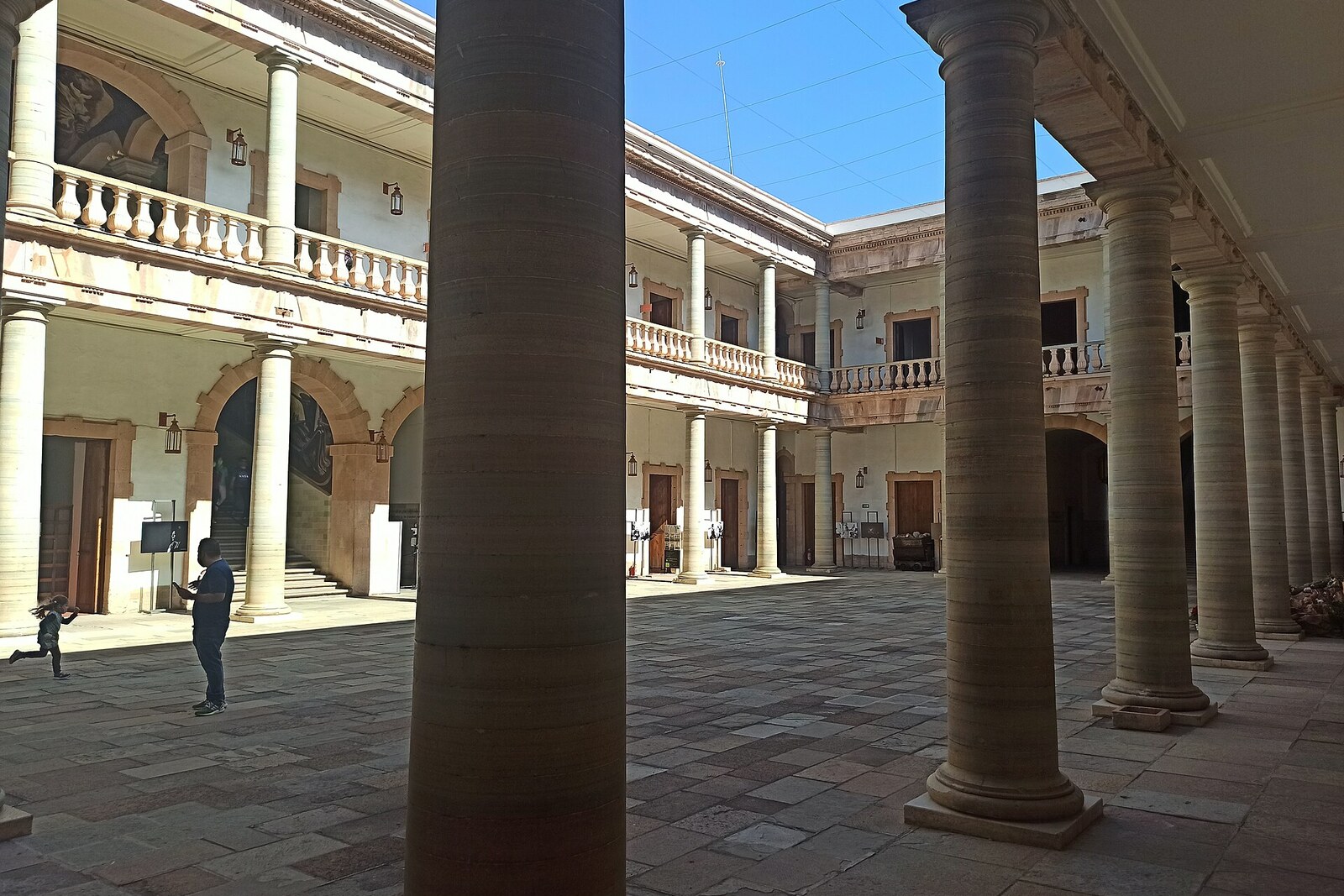
Look around first
What to notice
- Stone walls
- Small, high windows
- Hooks on the four corners
The story of the place
The corn in these storerooms was the city's insurance: it fed residents and pack animals, without which the silver mines would have fallen silent. In New Spain, Alhóndiga was the name given to places where grain was traded and stored, and Granaditas was the name of this district. Thick stonework and small windows high above the ground protected the supplies from dampness and thieves. The Regional Museum of Guanajuato now operates inside, and iron hooks remain on the four corners.
A few days before the assault, Juan Antonio Riaño, the intendant of Guanajuato—the head of the provincial administration, treasury, and garrison—ordered silver, gold, archives, weapons, and food brought here at night. Soldiers, Spanish merchants, and their families entered after them. Riaño intended to hold the building until reinforcements arrived.
For the defense, he chose the city's grain storehouse, completed less than a year before these events. “Alhóndiga” was an old name for a place where grain was bought, sold, and stored; Granaditas was the name of this district. The storerooms held corn for city residents and pack animals: without it, the silver mines would have stopped. Thick walls and small, high windows were meant to protect the supplies from dampness and theft. Now those same walls protected people, the treasury, and gunpowder.
Miguel Hidalgo y Costilla was approaching Guanajuato, a parish priest from nearby Dolores who had launched an uprising for the independence of New Spain—colonial Mexico. Soldiers, peasants, and miners followed him. Taking Guanajuato meant gaining the capital of a rich silver province and the money in its treasury.
Hidalgo and Riaño had known and respected each other for a long time. On the morning of September twenty-eighth, eighteen ten, Hidalgo offered Riaño the chance to surrender. He promised the Spaniards sheltering in the Alhóndiga their lives and treatment as prisoners; he intended to take their property temporarily for the needs of the uprising. If they refused, he warned, there would be no mercy. In a separate personal note, Hidalgo promised shelter to Riaño's sick wife.
Riaño replied that he recognized only the Spanish viceroy as his lawful superior and would fight as a soldier. Concern for his family, he wrote, did not change his decision. After that, he read Hidalgo's demand to the Spaniards gathered on the roof. They, too, chose resistance.
The stone storehouse seemed secure, but Riaño could not remove the slopes and houses rising around it. From there, Hidalgo's men fired and threw stones onto the roof and into the courtyard. Street barricades had to be abandoned one after another. Riaño went out with a detachment to support the defenders and was killed by a bullet at the entrance. His son Gilberto continued the fight, while two senior officers began arguing over who should command now.
The defenders slammed the gates shut, leaving some of their own soldiers outside. The miners tried to breach the walls with crowbars, then someone set the wooden door on fire. A later legend named the miner El Pípila as the arsonist and added a stone slab that he supposedly used to cover his back. The door really was burned, but there is no reliable evidence that would allow this act to be attributed to one known person.
When the situation became hopeless, one of the commanders ordered a white handkerchief raised. Some of the defenders did not see the signal and continued firing and throwing homemade grenades. The attackers decided they had been deceived. They broke through the already burning gates, stormed into the courtyard, and killed soldiers and civilians indiscriminately. The storerooms and treasury were looted. Riaño died in the building he had built to save the city from food shortages; Hidalgo gained Guanajuato but could not stop the massacre.
A year later, Hidalgo, Ignacio Allende, Juan Aldama, and Mariano Jiménez were captured, shot, and beheaded. Their heads were sent precisely here—to the site of the uprising's first major victory. Each was placed in an iron cage and hung from a separate corner of the Alhóndiga, so that residents would see the fate of its captors. The cages remained here for almost ten years, until March eighteen twenty-one, when supporters of independence removed and buried the remains.
Since nineteen fifty-eight, the Regional Museum of Guanajuato has been housed inside. The burned gates and iron cages have long been gone. Hooks remain on the four stone corners from which the heads of Hidalgo, Allende, Aldama, and Jiménez hung.
Useful on site
Tue–Sat 10:00–18:00; Sun 10:00–15:00; Mon closed. Ticket on the verification date: 80 Mexican pesos for Mexican citizens, 145 for foreign visitors.
Checked: date not specified. Check the official source before visiting.The story works from outside; do not linger in the passages, and distinguish the visible traces of the events from the later legend of El Pípila.