 Guide On Map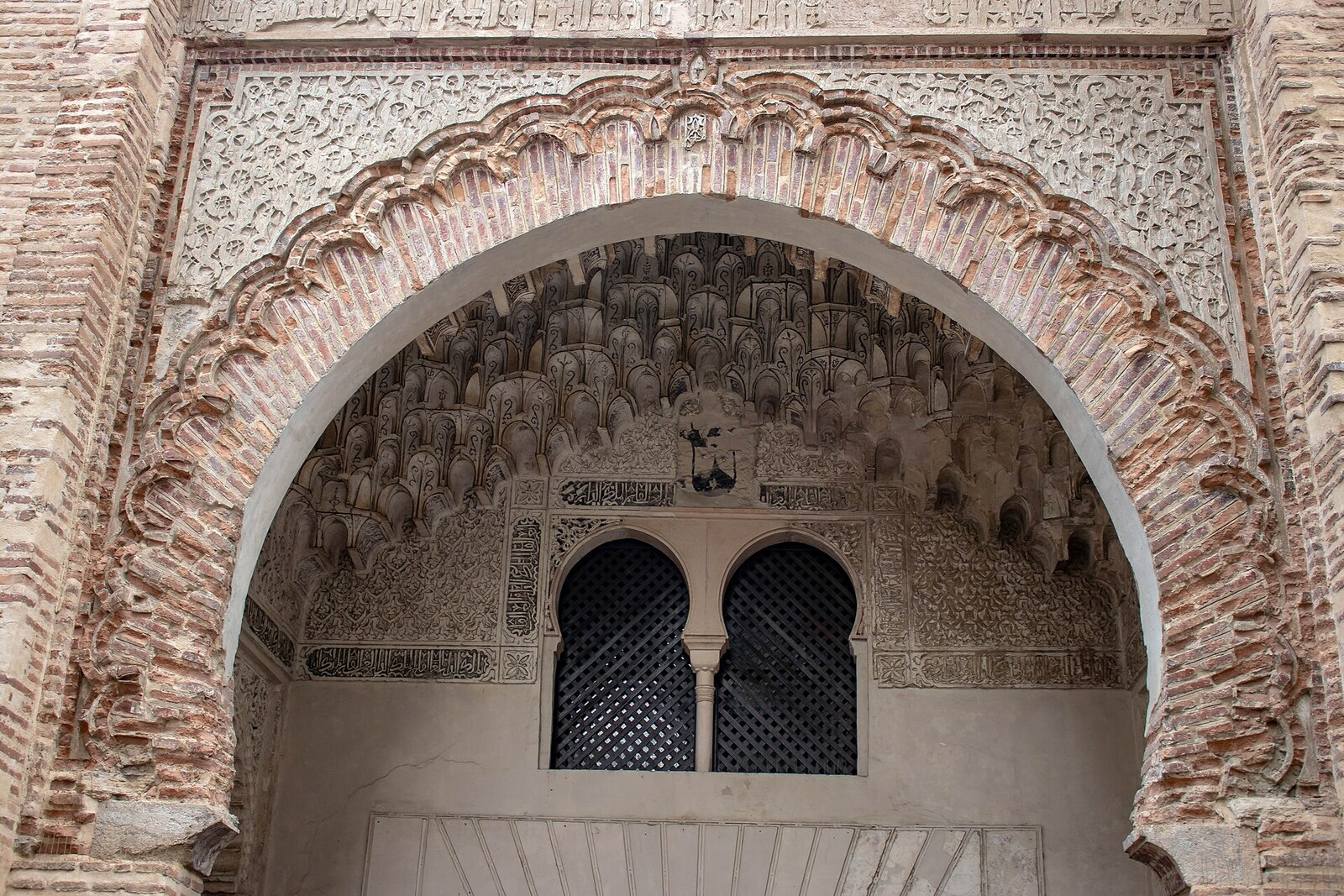
Look around first
What to notice
- The only decorated gate
- Upper galleries with rooms
- Lower storage rooms
- Stone basin
The story of the place
In the center of the courtyard stands a stone basin where animals were once watered; upper galleries with cramped rooms run along the sides, and storerooms lie below. In the first half of the fourteenth century, this courtyard was called the New alhóndiga, a lodging courtyard for visiting merchants. Later, charcoal sellers brought goods and animals here, then took the charcoal to the city scales; this daily activity gave rise to the present name, Corral del Carbón. Although charcoal is no longer brought here, the stone basin, galleries, and lower rooms still show the layout of the former trading courtyard.
Above the only gate lived the alhondiguero, the manager of the merchants’ lodging courtyard. He made sure that no load entered or left without being recorded. From each load, depending on its goods and its size, the manager collected the alcabala, a commercial levy for the treasury of the Nasrid court. The rooms above the entrance allowed him to watch the gate, and there were no other gates here.
In the first half of the fourteenth century, this place was called al-Funduq al-Jadida—the New alhóndiga. Nasrid sultanas owned the building and received income from it. That explains the unusually rich stucco decoration above the entrance for a merchants’ lodging courtyard. Beyond the decorated gate began an establishment with a very modest way of life.
Merchants came here from beyond Granada, mainly with grain. At that time, the Darro River had not yet been hidden beneath the street: a bridge crossed the river, carrying goods to the city markets and the Alcaicería. The merchant lived by selling the grain he had brought and risked at once his load, his pack animals, and his earnings for the entire journey. The alhóndiga gave him a guarded place near buyers, and gave the treasury the opportunity to levy a charge on those goods.
The order of arrival explains the layout of the courtyard. The animals were left below, and the sacks were stored there as well. The merchant was assigned one of the rooms in the upper galleries—about nine square meters, without a bed. He was given a lamp, a bucket, a mat, and a coverlet. No food was served here; they could prepare only what the lodger had brought with him.
At sunset, the manager locked the gate and did not open it until dawn. The outer walls had almost no windows, so that the goods could not be reached from the street. The merchant spent the night upstairs, his grain remained below, and in the center of the courtyard the animals were watered from a stone basin. In the morning, the gate was opened again: part of the grain was sold here, while the rest was carried to the city markets. The merchant received a place for trade and lodging beside his goods; the manager rented out rooms and recorded the loads; the treasury took the levy.
After Granada passed to the Christians, merchants were no longer housed here, but the lower rooms retained their commercial purpose. In the seventeenth century, charcoal sellers kept animals in the courtyard, stored charcoal below, and brought it here to the city scales. This activity, repeated every day, gave the building its present name, Corral del Carbón, the Coal Courtyard.
There has been no charcoal here for a long time. What remains of it is the name, and what remains of the grain alhóndiga is the only gate, the rooms above the galleries, the storerooms below, and the stone basin in the middle of the courtyard.
Useful on site
Daily 09:00–20:00 (summer) / 10:00–18:00 (winter); free admission.
Checked: June 17, 2026. Check the official source before visiting.Once inside the courtyard, step away from the gate and do not linger in the passageway. It is best to listen at the edge of the gallery, from where the building’s entire structure is visible.