 Guide On Map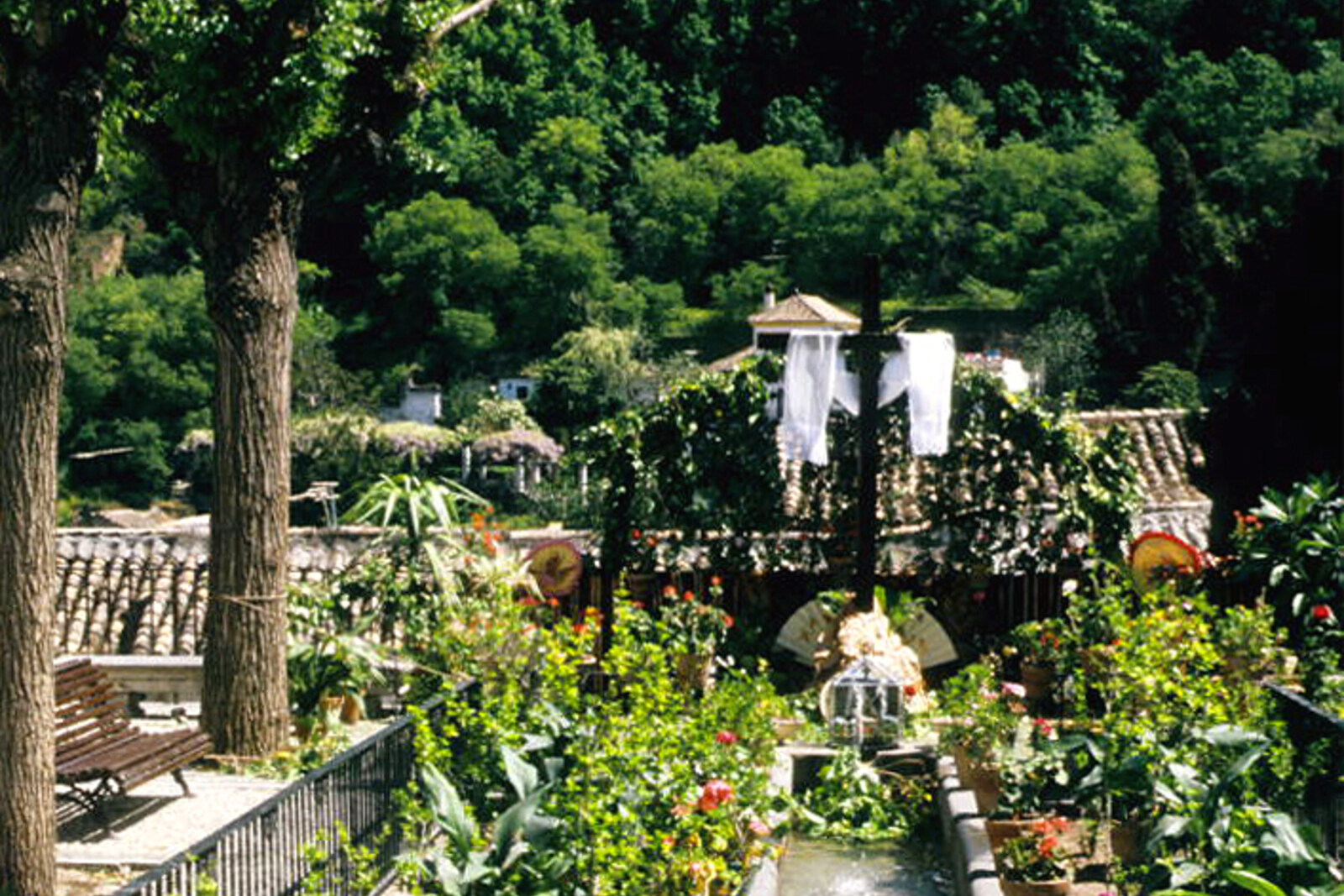
Look around first
What to notice
- Long water feature
- Stone benches
- Retaining wall
- Fountain with three jets
The story of the place
The square on the slope is held by a retaining wall. Stone benches stand along the upper terrace, with an elongated water feature stretching beside them, while below, a fountain sends out three jets. In the nineteenth century, an open corner appeared here within the continuous residential development; later, city builders filled in the site and made it level.
Carvajales is a surname. After the conquest of Granada in fourteen ninety-two, a branch of the Carvajal noble family from Valencia de Don Juan settled here. Alonso Sánchez de Carvajal and Juan de Carvajal took part in the war on the side of Castile, and their relatives received properties in the Lower Albaicín. The family name passed to the slope and the placeta.
A Granada legend places the brothers Fernando and Gonzalo de Carvajal here in the seventeenth century. Both were wealthy, middle-aged bachelors. Fernando often visited their neighbor Íñigo de Quirós, a widower who was raising his twenty-year-old daughter Beatriz alone.
Beatriz loved Tello Enríquez. He came from a respected family but had no fortune. Íñigo preferred the forty-five-year-old Fernando de Carvajal and arranged the marriage with his friend. For Beatriz, this meant parting from Tello; for Tello, poverty became the reason he was losing his bride. Beatriz resisted, and her wet nurse Berta promised to disrupt the ceremony.
When the priest had already begun the wedding ceremony, Tello entered and declared that a father could not marry his own daughter. Only Berta could prove it. She said that twenty years earlier, she had served as a wet nurse in Íñigo's household. His wife had died after giving birth, and Berta once fell asleep beside the infant and accidentally suffocated the girl with her arm. Afraid of punishment, she abducted Fernando's newborn daughter and passed her off as Íñigo's child. Thus Beatriz grew up under another surname, and her real father nearly became her husband.
The wedding was called off. Fernando acknowledged Beatriz as his daughter, Íñigo did not lose the girl he had raised, and she married Tello. According to the legend, Berta was forgiven. No documents confirming this substitution have been found. Even the local retelling leaves one question open: did the wet nurse confess to a real crime, or did she invent the story to save Beatriz from an unwanted marriage?
Something else is known for certain. In eighteen forty-four, the owner of one of the local Carvajal houses, Viscount Sancho-Miranda, requested permission to demolish the dilapidated building; the city improvement commission handled its dismantling. In the nineteenth century, an open placeta appeared amid the dense development. Then, in nineteen sixty-one, municipal builders raised a retaining wall, filled in the site, and leveled it. This created the present viewing balcony with stone benches and a long water feature; a fountain with three jets remained below the wall. The house disappeared, but the surname of its owners remained as the square's name.
Useful on site
A small open viewpoint in a residential area; best visited during the day or before late evening.
Checked: June 29, 2026. Check the official source before visiting.This is a public square within a residential quarter, not a purpose-built viewing terrace. Do not block the passageways or point your camera at the windows of the nearest houses.