 Guide On Map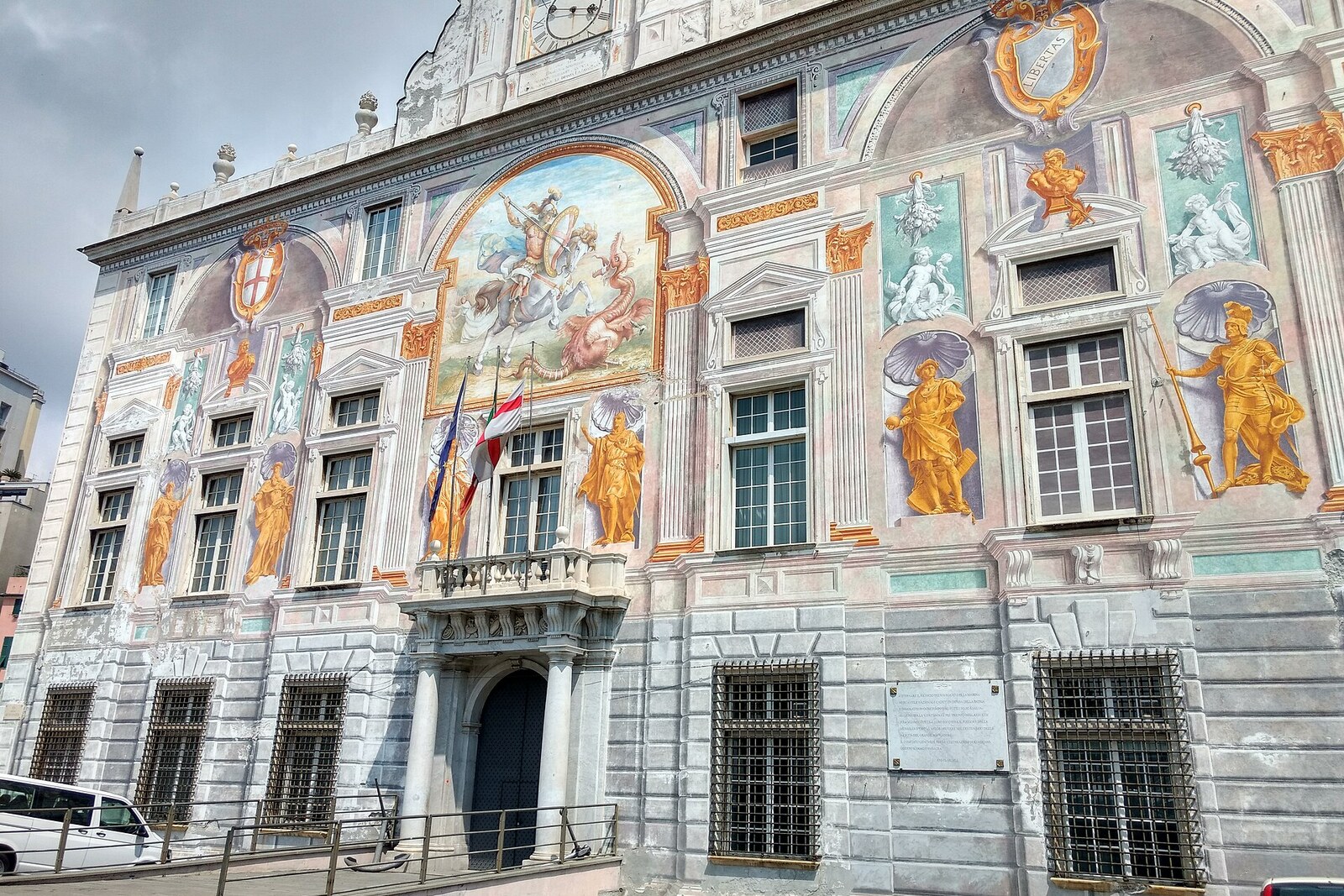
Look around first
What to notice
- Painted facade
- Figure of Saint George
- Dragon
- Medieval part of the palace
The story of the place
The history of today's Palazzo San Giorgio is closely connected with the city's debt: at the beginning of the fifteenth century, Genoa owed its own citizens so much that the old system of loans could no longer fit within the city treasury. The republic borrowed money from merchants and other wealthy townspeople and, in return, allowed its creditors to collect certain taxes until the debt was repaid. Each such association was called a compera. Loans multiplied, revenues had already been promised to different people, and interest on some debts reached eight, nine, and ten percent.
In fourteen oh seven, Genoa was governed on behalf of the French king by Marshal Jean II Le Maingre (Boucicaut). He needed to make the city treasury solvent again. At his insistence, the elders and financial officials appointed a commission that consolidated numerous loans into a single debt at seven percent. Those who disagreed were repaid the money they had invested. The remaining creditors accepted a lower return and formed their own association, the Bank of Saint George. Saint George was the city's patron; the palace received its present name from this institution.
For the creditors, this meant family capital invested in debt shares that could be sold and passed on to heirs. In exchange for the lower interest rate, they received the right to keep their own accounts and collect the taxes assigned to the debt. The protectors they elected—the managers of the Bank of Saint George—checked the revenues and distributed payments. Later, the republic entrusted them with financing public works, minting coinage, and administering certain overseas possessions.
Their offices were established here. The building already stood by the medieval harbor and was called Palazzo del Mare. It had been commissioned in the middle of the thirteenth century by Guglielmo Boccanegra, Captain of the People—that is, Genoa's elected civic leader. He wanted a permanent public residence instead of meetings in the archbishop's palace and private palaces, and chose a site beside the port trade.
After Boccanegra was deposed, officials adapted the palace for other purposes. From thirteen forty onward, the customs house operated here: goods awaiting payment of duty were stored in the courtyard, while disputes over charges and exemptions from them were settled upstairs. The republic's creditors found themselves in the building where goods were recorded and the taxes that brought them income were assessed. In fourteen fifty-one, the entire palace was handed over to them.
The leaders of the Bank of Saint George extended it toward the sea and commissioned the painting of its facade. The present frescoes were recreated, but the central figure repeats the subject they chose: Saint George in armor strikes down a dragon.
At the beginning of the twentieth century, Stefano Canzio, the first president of the Autonomous Port Consortium of Genoa, insisted that the new port administration occupy this palace and complete its restoration. Since nineteen oh four, the port has once again been managed from here. Now, behind the facade with Saint George, are the offices of the Port System Authority of the Western Ligurian Sea.
Useful on site
The facades are accessible at all times; the interior opens for tours and special programs on a separate schedule.
Checked: date not specified. Check the official source before visiting.The finale can be experienced entirely from outside. As you look at the different sides of the palace, cross the streets carefully and do not enter service areas.