 Guide On Map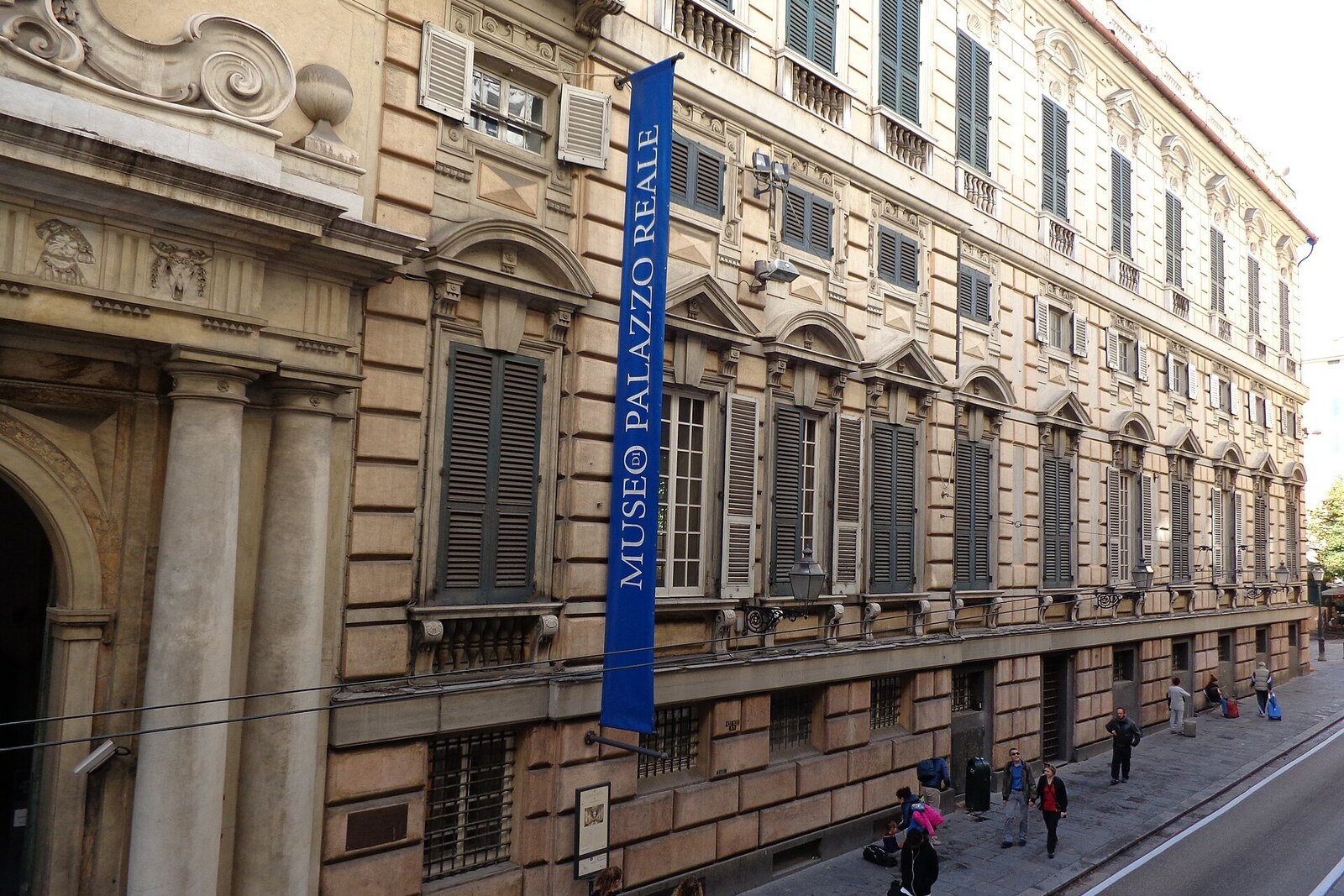
Look around first
What to notice
- Gallery of Mirrors
- Throne Room
- Audience Hall
- Apartments of the Hereditary Princes
The story of the place
The state rooms here follow one after another: the Gallery of Mirrors, the Throne Room, and the Audience Hall, while the apartments of the heirs to the throne are preserved to one side. In this great Genoese residence by the harbor, the court and servants lived almost in step with the port: a covered passage across Via Pré once led directly to the Royal Dock and the arsenal. The passage is gone, but inside the layout of court life remains—from public ceremonies to separate family rooms. These spaces now belong to the state museum.
On April fifth, eighteen twenty-four, Marcello Durazzo, the last member of the family to live in this palace, signed the sale agreement. The king was not acquiring an empty building: the house came with furniture, ancient and modern statues, paintings, and other objects accumulated by several generations.
For Marcello, this was a forced sale. His ancestors had bought the residence from the Balbi family in sixteen seventy-nine. The financier and senator Eugenio Durazzo expanded it to cover an entire city block; his heirs created the Gallery of Mirrors and received the highest-ranking guests there. The family's standing rested on capital, real estate, and collections. By the end of the eighteenth century, the Durazzo income had declined, the heirs had begun selling paintings, and Marcello had to give up the family's principal home, which had belonged to the family for almost a century and a half. Marcello died two years after the sale.
The buyer was Carlo Felice of Savoy, king of the Kingdom of Sardinia, a state whose capital was Turin. After the decision of the Congress of Vienna, Genoa and Liguria were annexed to his kingdom. The monarch needed a residence for the court in a city with a port of paramount importance, and on Via Balbi he acquired an enormous, already furnished palace near the harbor. It was after this purchase that it began to be called the Royal Palace of Genoa.
Carlo Felice ordered the former Durazzo home adapted for court life. His successor Carlo Alberto brought this work to completion: craftsmen created the Throne Room, the Audience Hall, the ballroom, and the king's and queen's apartments. In eighteen forty-two, Carlo Alberto ordered separate rooms prepared for his eldest son, heir to the throne Vittorio Emanuele, and his young wife Maria Adelaide. These rooms are still called the Apartments of the Hereditary Princes.
On the harbor side, a covered passage was built on the orders of the House of Savoy. It crossed Via Pré and connected the palace with the Royal Dock: family members and courtiers could walk directly from the living quarters to the ships and the arsenal. This is how the harbor's proximity became part of the residence's daily arrangement.
After the capital was moved first to Florence and then to Rome, the royal family came here less and less often. In nineteen nineteen, Vittorio Emanuele III, who was cutting the crown's expenses after the First World War, transferred the building to the state. It is now a state museum. Inside remain the Durazzo Gallery of Mirrors, the Savoy Throne Room and Audience Hall, and the heirs' apartments. The covered route to the dock no longer exists: it was dismantled in nineteen sixty-three.
Useful on site
Tuesday 13:30–19:00; Wednesday–Saturday 09:00–19:00; the first Sunday of the month 13:30–19:00 and free. Closed Monday; check the official calendar for other Sunday openings.
Checked: date not specified. Check the official source before visiting.The Gallery of Mirrors, the state rooms, and the sea terraces are part of the museum visit. Check access to individual parts of the palace and gardens separately.