 Guide On Map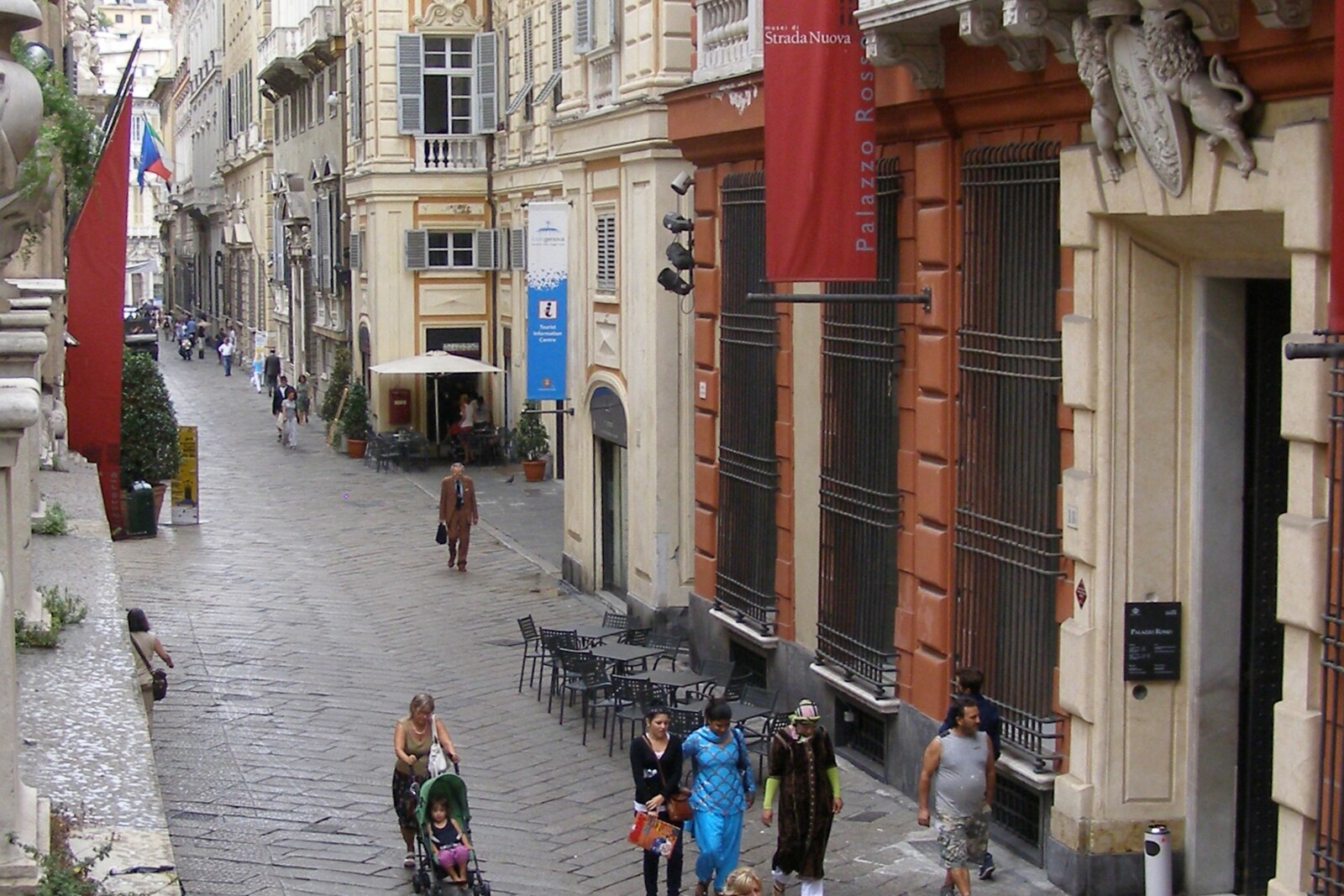
Look around first
What to notice
- The straight line of Via Garibaldi
- The street-name sign
- Palace portals
The story of the place
From Piazza delle Fontane Marose, Via Garibaldi runs between palaces in an almost straight line. This beginning preserves the street's original layout: for more than two centuries, it could be entered only from this side. The opposite end ran into a slope and private gardens.
In fifteen fifty, the doge—the elected head of the Republic of Genoa—and the government boards commissioned the city fathers to prepare new development at the foot of Castelletto. Here stood the homes of less affluent residents and a public brothel. The city fathers intended to clear the area, sell building plots, and raise money for other works. The project was carried out by Bernardino Cantone, the city's staff architect.
The expropriation of the land and relocation of the public brothel took almost nine years. The brothel was set up higher up, beyond the city limits of the time, and the old buildings were demolished. During modern excavations, the first street surface was found beneath the paving of Via Garibaldi. Builders laid it on a compacted mixture of sand, crushed mortar, and fragments of those medieval houses.
On both sides of the road, the city fathers divided the land into eight plots and sold them at auction. Part of the proceeds went toward work at San Lorenzo Cathedral. The buyers were families involved in trade, maritime ventures, and lending: Spinola, Grimaldi, Pallavicini, Lomellino, and Lercari. In the narrow lanes of old Genoa, there was no longer enough room for their new residences. Here they gained space for grand staircases, courtyards, and gardens rising up the slope.
The street was intended as housing for these families, not for through traffic. In fifteen fifty-eight, the authorities officially named it Strada Maggiore—the Great Street. The name did not last: Genoese people called it Strada Nuova, the New Street, and that name passed into official documents.
Eighteen years later, the Senate of the Republic of Genoa ordered that the palaces already built also be used for state receptions. They were entered in the Rolli—lists of private houses suitable for accommodating popes, kings, princes, and ambassadors. Before a guest arrived, a residence of the appropriate rank was chosen by lot. The owners had to provide rooms and arrange the reception; the expenses and reimbursement depended on the visitor's status. The Republic gained a network of ceremonial hotels without building a royal palace of its own.
Strada Nuova remained a dead-end residential district until the end of the eighteenth century. Then Piazza della Meridiana and a continuation along the new Via Cairoli were opened at its western end. Now pedestrians move freely along the street, while the palaces house museums, institutions, banks, and the city hall.
The name Garibaldi appeared here much later. Giuseppe Garibaldi was a commander of volunteers seeking the unification of Italy. On May fifth, eighteen sixty, he sailed with the Thousand from the Genoese shore at Quarto, captured Sicily and Naples, and handed the conquered territories over to King Victor Emmanuel II. They became part of the Kingdom of Italy.
Garibaldi died on June second, eighteen eighty-two. Three days later, Genoa's city council unanimously dedicated the former Strada Nuova to him. Above the entrance from Piazza delle Fontane Marose now stands his name, and beneath it begins the same straight line that Cantone drew between the eight plots sold.
Useful on site
The street and façades are accessible at all times; each palace has its own schedule for interiors.
Checked: date not specified. Check the official source before visiting.View the street in short sections: there is almost nowhere here to step back from the façades. Do not stand in the doorways of active buildings.