 Guide On Map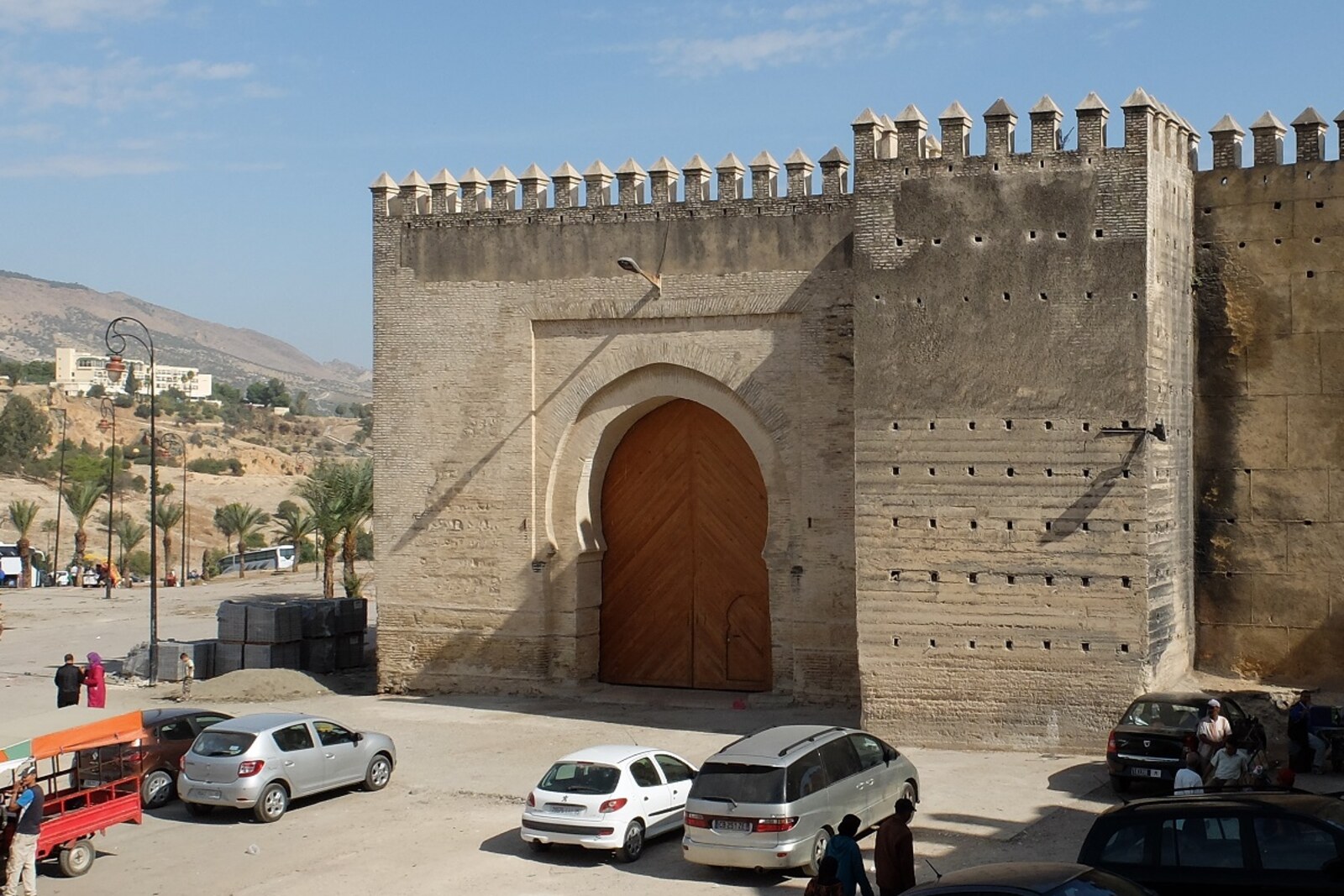
Look around first
What to notice
- Gate arch
- Gate passage
- Line of the city wall
- Beginning of Tala'a Kebira
The story of the place
An arched passage survives in the line of the city wall, through which people entered the medina from the west. Tala'a Kebira, the great street leading through the old city, begins here. When builders finished the gate in twelve oh four and hung its doors, it was still called Bab ash-Shari'a, the Gate of Sharia.
“Mahrouk” means “burned” in Arabic. The gate's name preserved a person's fate, but not his name. His name was Muhammad al-'Ubaydi. At the beginning of the thirteenth century, he led a revolt in the Ouergha Mountains near Ouezzane and declared himself a claimant to the caliphal throne.
Al-'Ubaydi derived his right from his lineage: chroniclers called him a descendant of the last Fatimid caliph of Egypt. The Fatimids had lost the throne about thirty years earlier, but his descent gave al-'Ubaydi grounds to claim the highest title—the caliph was regarded as both sovereign and head of the community of believers. His claims rested on this lineage, and the entire revolt rested on the people who believed it.
The Almohad caliph Muhammad al-Nasir was already on the throne. He sent an army into the mountains to destroy his rival. Al-Nasir's men defeated al-'Ubaydi's detachment and killed him. They then took his body to Fez. Such a journey was not needed for burial: the caliph needed an act the townspeople would see.
The medina's main western entrance was then called Bab ash-Shari'a—the Gate of Sharia. Tala'a Kebira, the great street running through the entire old city, began here. In twelve oh four, builders finished the new gate and hung its doors. That same day, al-Nasir's men burned al-'Ubaydi's body in the passage itself, and displayed his head above the gate. Anyone entering Fez from the west passed beneath the outcome of an unsuccessful claim to the throne.
The reprisal did not end this story at once. About ten years later, al-'Ubaydi's son led a new uprising among the Ghomara Berber tribes and repeated the Fatimid claim. Al-Nasir ordered him killed as well. At the gate itself, after the execution of the first al-'Ubaydi, the heads of other rebels continued to be displayed.
Al-'Ubaydi's remains are not here, and no separate monument was erected for him. What remains are the gate, completed on the day of the burning, and a singular name: Bab Mahrouk—the Gate of the Burned Man.
Useful on site
Free access; the gates do not close.
Checked: June 22, 2026. Check the official source before visiting.Examine the gate without obstructing passage into the functioning city; treat the neighboring burial sites with restraint.