 Guide On Map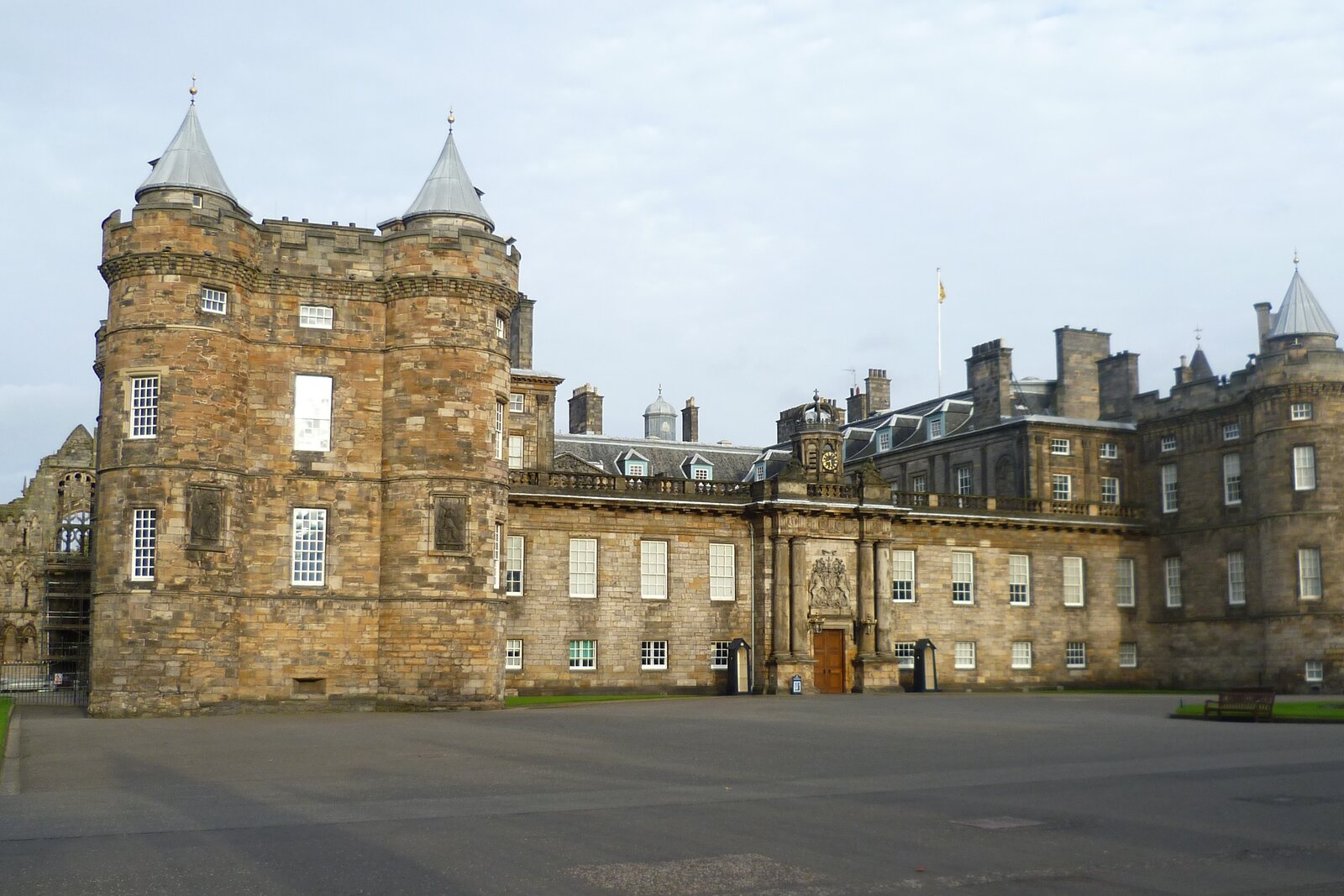
Look around first
What to notice
- Palace gates
- Northwestern tower
- Windows of the upper rooms
- Ruins of Holyrood Abbey
The story of the place
Beyond the palace gates of Palace of Holyroodhouse, the northwestern tower survives; it alone remains from the early palace. On its upper floor, the tiny dining room and adjoining reception room from the palace's residential quarters remain. Behind the buildings rise the ruins of the abbey that gave both this street and the whole place their name.
Abbey Strand is the short final stretch of the Royal Mile before the palace gates. It takes its name from Holyrood Abbey: “Holyrood” means “Holy Cross.” At first, Scottish kings stayed in the monastery's guesthouse. In the early sixteenth century, King James IV ordered these rooms to be turned into a separate palace. Today, Palace of Holyroodhouse remains the British monarch's official Scottish residence.
The northwestern tower, on the left side of the façade, survives from the early palace. On its upper floor lived Mary Stuart, Queen of Scots, who returned from France in fifteen sixty-one to rule in her own right. While she was growing up at the French court, Scotland became a Protestant country; Mary herself remained a Catholic.
That same year, the Italian David Rizzio came to Edinburgh with the ambassador of the Duke of Savoy. The embassy left, but Rizzio stayed: the queen's court musicians lacked a bass. Rizzio earned a living by singing, then Mary entrusted him with foreign correspondence and made him her personal secretary. A Catholic foreigner who had recently stood among the musicians now read the queen's letters and attended private meetings.
Mary's husband, Henry Stuart, Lord Darnley, sought a special right to the crown. It would have made him an independent king and allowed him to keep the throne even after his wife's death. Mary refused him. Darnley considered Rizzio a rival because the queen trusted and listened to her secretary. Protestant nobles were angered by his influence over the Catholic queen. A rumor of an affair between Mary and Rizzio helped justify the conspiracy, although there is no reliable evidence for it.
On the evening of March ninth, fifteen sixty-six, Mary, who was six months pregnant, was dining with Rizzio and several close associates in a tiny room beside the bedroom. Darnley came up from his own rooms by a private staircase. Armed conspirators entered after him.
Rizzio tried to shelter behind the queen and clung to her clothes. He was dragged into the adjoining reception room and struck more than fifty times. The nobles carried out the killing; Darnley gave them access to his wife's private rooms and took part in the conspiracy. Mary was kept under guard in the palace.
Forty-eight hours later, she persuaded Darnley to abandon his accomplices and flee with her to Dunbar Castle. There, supporters joined the queen. The main conspirators fled Scotland, while Darnley disavowed his own involvement and was left without their support. He did not receive the right to the crown that he wanted.
Less than a year later, Darnley was found murdered near a blown-up house in another part of Edinburgh. Who exactly ordered his murder remains disputed. His body was brought here and buried in the royal vault of Holyrood Abbey.
Mary's tiny dining room and the adjoining reception room survive in the old tower. A dark stain on the floor has long been shown as Rizzio's blood, but this is a palace legend, not confirmed evidence. Behind the palace stand the ruins of the abbey that gave Abbey Strand its name; in its vault lies Darnley, who led the killers up the private staircase to these rooms.
Useful on site
Palace of Holyroodhouse is open year-round by timed entry; a standard 2026 ticket costs £22 when bought in advance and £26 on the day of the visit. Actual opening hours depend on the season and on use by the royal family.
Checked: June 15, 2026. Check the official source before visiting.The palace can be fully explored with a separate ticket; without entering, the gates, exterior volumes, and the historic threshold itself remain visible.