 Guide On Map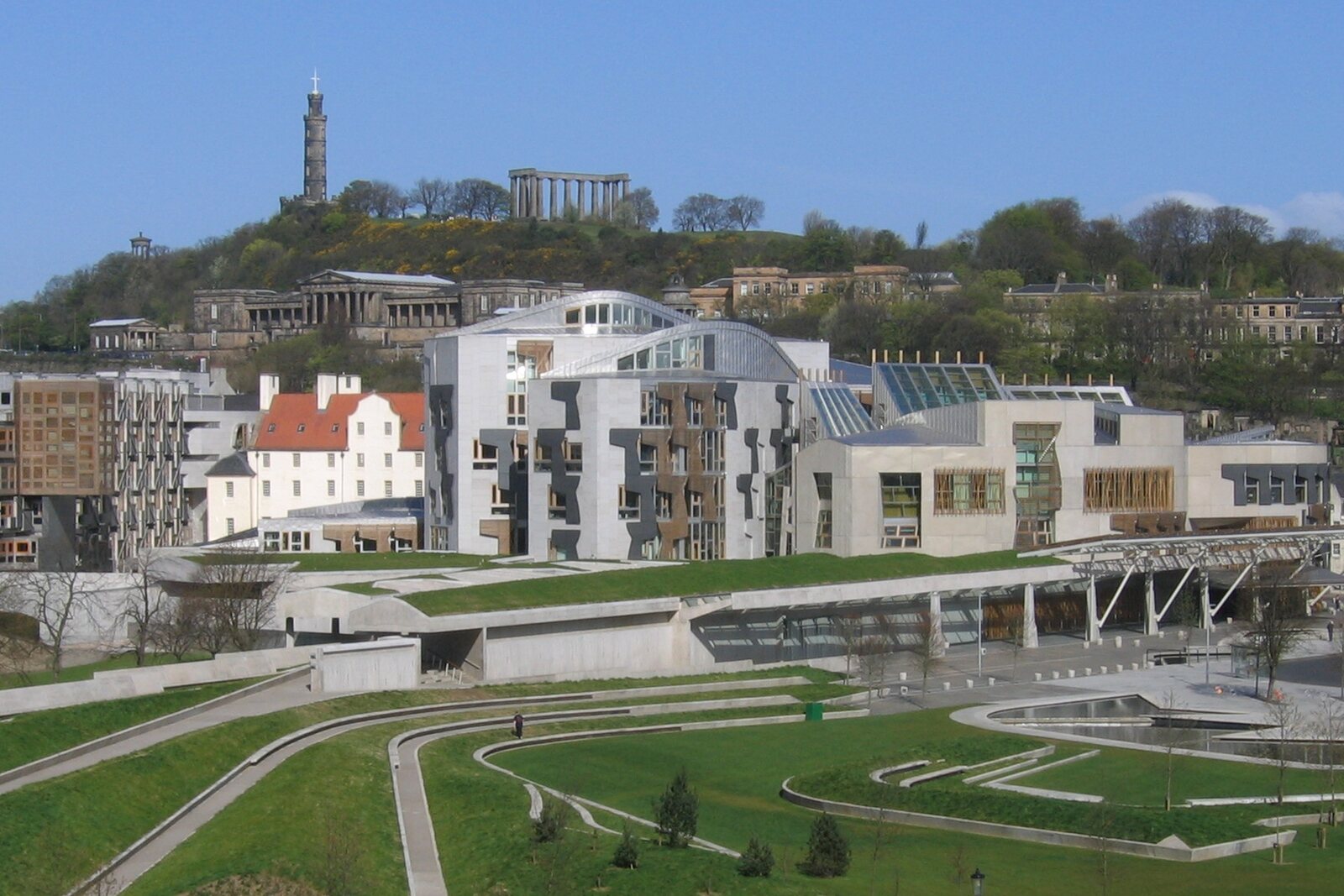
Look around first
What to notice
- Queensberry House
- Modern Parliament facades
- Stone wall along Canongate
- Entrance from Horse Wynd
The story of the place
A stone wall along Canongate separates the old city mansion, surrounded by the modern facades of Parliament, from the street. After its owners left, the mansion was rented out, and then its rooms successively housed barracks, a military hospital, a shelter for the poor, and a hospital for the elderly. The old house now contains the office of the chair of Parliament, while nearby Members pass laws on matters devolved to Scotland.
The oldest part of the parliamentary complex is Queensberry House. Its name comes from the Douglas family. In sixteen eighty-six, William Douglas, 1st Duke of Queensberry, bought the mansion as his Edinburgh residence. It was his son, James Douglas, 2nd Duke of Queensberry, who linked it to Parliament.
In the autumn of seventeen oh six, James was preparing to carry out an assignment from Queen Anne. She appointed him Lord High Commissioner to the Parliament of Scotland—her personal representative in the unicameral Parliament of Scotland. The commissioner was to secure a union with England. The two countries already shared a king, but remained separate states with separate laws and parliaments. The proposal was now to create Great Britain with a single Parliament in Westminster.
Queensberry House became the commissioner's city base. James enlarged it, created a sequence of ceremonial reception rooms, and before the decisive session ordered furnishings from his London house to be brought here. His family, numerous servants, and political allies were housed in the mansion. The duke needed to lead people with him, although petitions against the union arrived at Parliament from across Scotland, and opponents of the treaty gathered at Parliament House.
Queensberry sought votes through speeches, appointments, honorary titles, pensions, and the repayment of old debts. For Scottish merchants, the union promised access to English colonial markets; for the ruined participants in the Darien Company, compensation for their losses. Opponents replied that, together with its separate Parliament, the country would lose the ability to decide such matters independently.
On January sixteenth, seventeen oh seven, the queen's supporters gained a majority. Queensberry touched the text of the act with the royal scepter: this was how the monarch approved the decisions of the Parliament of Scotland. On March twenty-fifth, the duke closed its final session. On May first, England and Scotland formed Great Britain, and Scottish representatives went to sit in Westminster.
For Queensberry himself, success brought a reward and departure. He received an annual pension of three thousand pounds, a place on the British Privy Council, and the new title of Duke of Dover. In Edinburgh, he was considered the man who had sold Parliament. The family left the city, and by seventeen twelve the vast mansion was already being rented out. It later housed barracks, a military hospital, a shelter for the poor, and a hospital for the elderly.
In nineteen ninety-eight, Donald Dewar, Secretary of State for Scotland, chose a site near Holyrood for the new Parliament: he was drawn by the city center and its historical connection with the earlier institutions. Queensberry House was preserved and incorporated into the complex, which opened in two thousand four. Today, Members here pass laws on matters devolved to Scotland and scrutinize the work of the Scottish Government. The office of the chair, who conducts the sittings, is in the house of the family whose head closed the final session of the former Parliament of Scotland.
Useful on site
Mon, Fri, and Sat 10:00-17:00, last entry 16:30; Tue–Thu 09:00-18:30, last entry 18:00. Self-guided visits are free, and tours are free, but it is best to book in advance.
Checked: June 15, 2026. Check the official source before visiting.The complex is striking from outside; entering Parliament requires separate time for access rules and screening.