 Guide On Map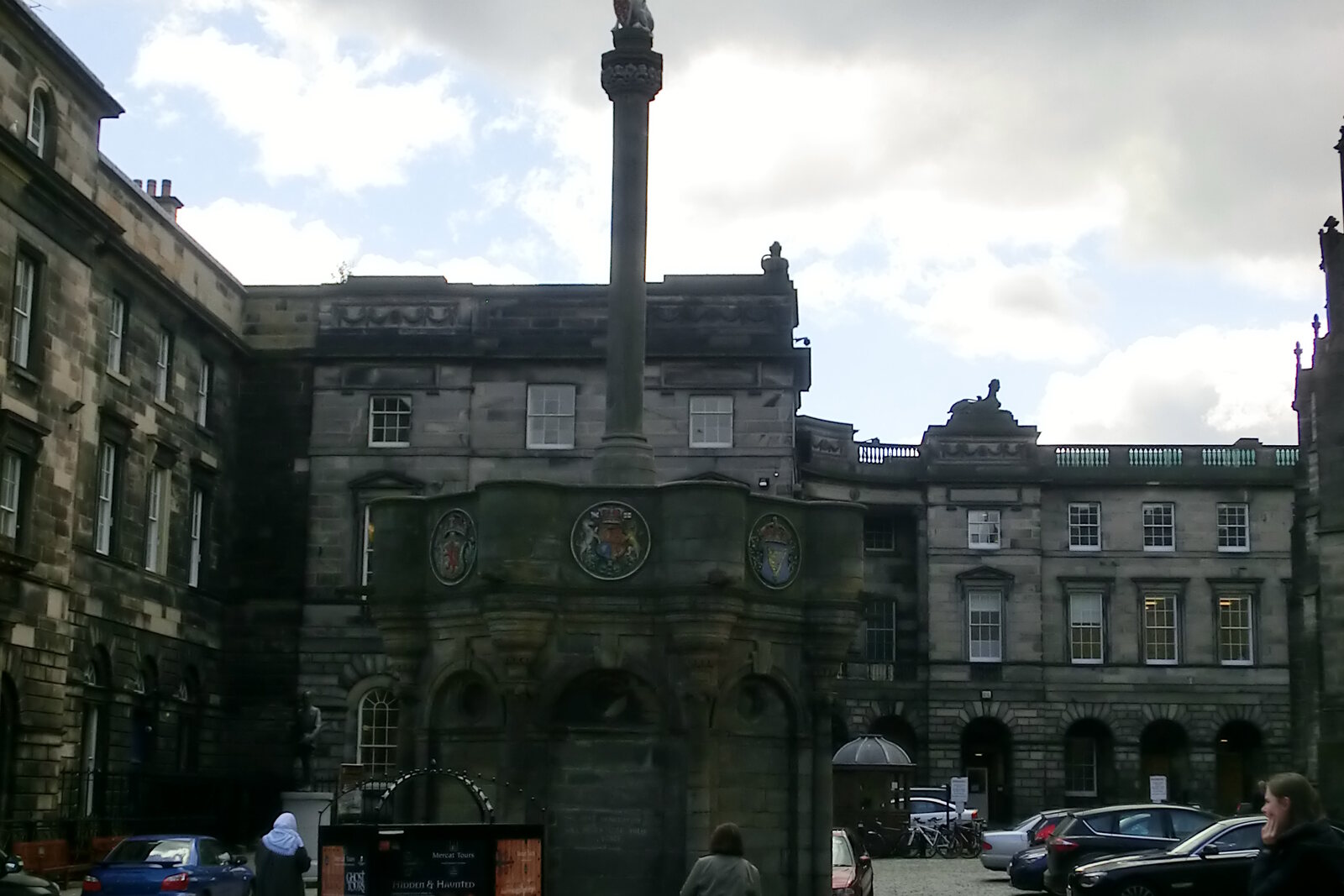
Look around first
What to notice
- The octagonal base of Mercat Cross
- The outline of the old cross in the paving
- The equestrian statue of Charles II
- The Parliament Hall building
The story of the place
The octagonal stone pedestal by the church recalls that the town's market cross once stood here. The Scots word “mercat” is connected with the market: from its raised platform, heralds announced the authorities' decisions so that the whole town could hear them and could not claim to know nothing. The old cross disappeared in the eighteenth century, but its former location is still traced in the paving; nearby stands an equestrian figure of a king in Roman armor, cast in lead.
On February fifth, sixteen forty-nine, the leader of the Scottish Covenanters, Archibald Campbell, 1st Marquess of Argyll, stood by the old Mercat Cross. He sought a monarch who could not alter the structure of the Church of Scotland at his own discretion. Heralds proclaimed the eighteen-year-old exile Charles II king: he needed recognition and a Scottish army to regain his father's thrones.
Charles himself did not see the ceremony. Six days earlier, the Parliament of England had executed his father, King Charles I, who had tried to direct the Church of Scotland, and had refused to recognize the heir. The Parliament of Scotland recognized Charles, but attached a condition to the title. Before he could be allowed to govern the country, he had to secure a church settlement and peace on the basis of two agreements—the National Covenant and the Solemn League and Covenant. Through them, Scottish Presbyterians bound the king to obligations in church affairs. By then, the dispute over the prayer book that had begun at the neighboring altar had grown into wars and the execution of the previous monarch.
Argyll was also the head of Clan Campbell. His income came from rents on vast lands in western Scotland. Because of wartime devastation, almost no money had come from there for several years, while his debts kept growing. The political outcome determined the fate of his title, estates, and his own head.
Charles accepted the terms. In the summer of sixteen fifty, he signed the covenants and came to Scotland. On January first of the following year, at Scone, Argyll placed the Scottish crown on Charles's head with his own hands. By then, the army of the English republic had already defeated the Scots at Dunbar. In September, Charles led the surviving forces into England, was defeated at Worcester, fled to the Continent, and spent another nine years there.
Argyll remained in the occupied country. Creditors pursued him, and he submitted to the republican government, then worked with General George Monck, who governed Scotland on behalf of the republic. It was Monck who, in sixteen sixty, led the army to London and helped restore Charles to his thrones. Argyll appeared at the court of the restored king. Charles ordered him arrested and sent to Edinburgh.
Members of Parliament tried the marquess in the building behind St Giles' Church. Among the evidence were Argyll's letters from the years of the republic, handed over by Monck. On May twenty-fifth, sixteen sixty-one, he was found guilty of treason. Two days later, at Mercat Cross, the marquess placed his head beneath the Maiden—a wooden frame with a falling iron blade. His title and estates were confiscated, and his head was displayed on the Old Tolbooth, the city jail beside the church. The Old Tolbooth itself has long been gone.
“Mercat” means “market” in Scots. The cross marked the town market, and its raised platform was where heralds proclaimed decisions so that no one could plead ignorance. Public punishments were carried out here as well. Parliament Square takes its name from Parliament Hall: members of Parliament once met there, and it now houses the Supreme Courts of Scotland.
The seventeenth-century cross where Charles was proclaimed and Argyll was executed was demolished in seventeen fifty-six; its location is marked by an outline in the paving. The present octagonal base was built in eighteen eighty-five. The equestrian statue at the back of the square is older: it was erected in sixteen eighty-five, the year Charles died. The lead king sits in Roman military dress, with a scepter in his hand. Nearby, the paving still bears a marker for the platform where Argyll attended Charles's proclamation and, twelve years later, lay beneath the blade.
Useful on site
Parliament Square and Mercat Cross are open outdoor sites. Signet Library is available to non-members by prior arrangement, with no regular walk-in visiting hours.
Checked: June 15, 2026. Check the official source before visiting.The square is best read in a circuit: traffic and pedestrian flows may obstruct a single viewpoint.