 Guide On Map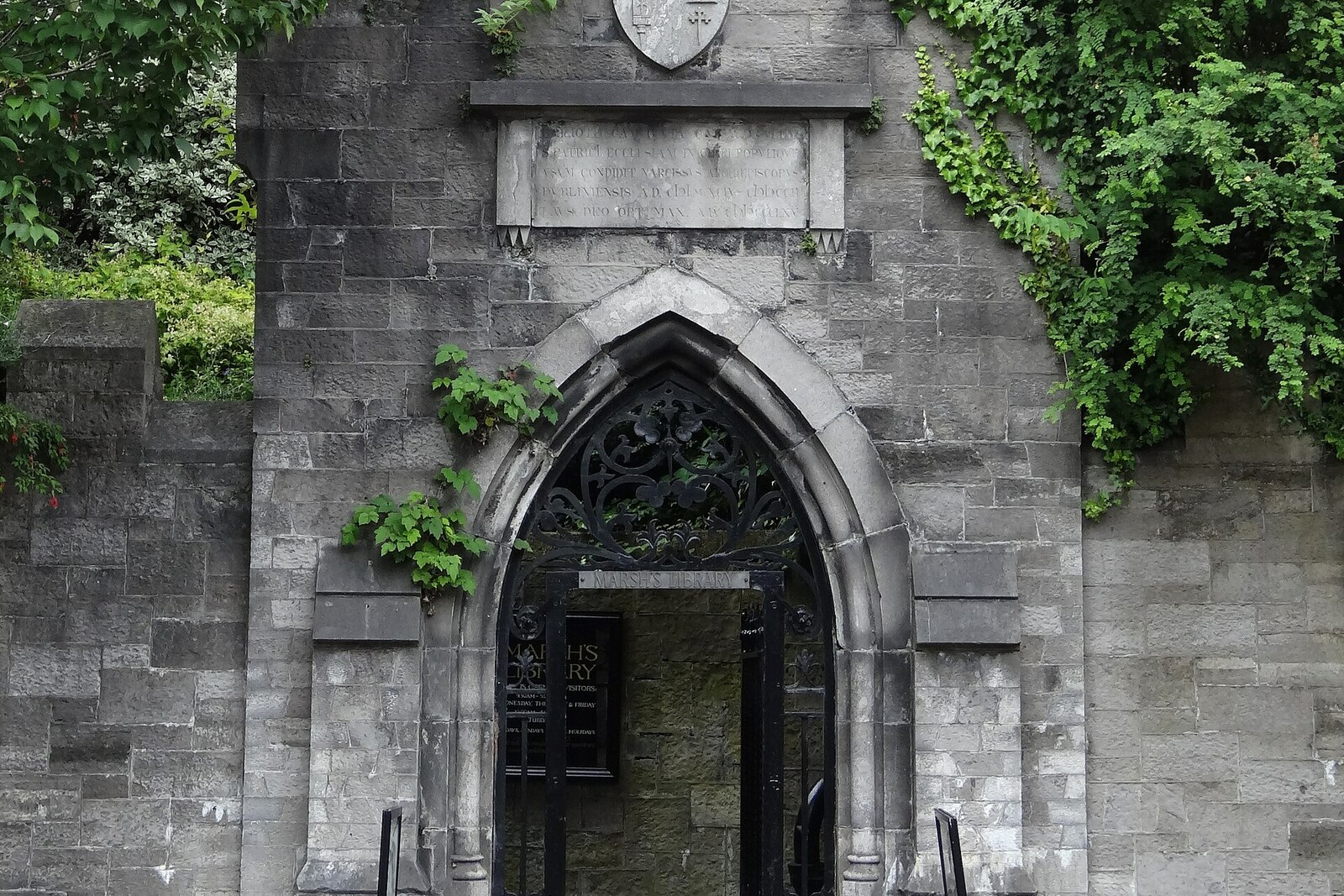
Look around first
What to notice
- Wooden shelves
- Old reading tables
- Barred reading cages
- Books in the first gallery
The story of the place
Narcissus Marsh, whose name is written on the library, was the Anglican Archbishop of Dublin. He himself provided the money and land for it, but the idea had come earlier, when Marsh headed Trinity College Dublin.
In sixteen seventy-nine, even students found it difficult to use the college library: books went missing, and the collection was poorly supervised. Other residents of Dublin were not admitted at all. In Dublin's bookshops, Marsh complained, mainly minor works and pamphlets were sold. He decided to establish a place for reading for anyone who could read. His friends replied that there were no such public libraries in either Oxford or London.
After becoming archbishop, Marsh settled in a palace next to St Patrick's Cathedral and set aside part of the palace garden for construction. That is how the library came to be here. By seventeen oh three, the building was ready. Marsh then paid two thousand five hundred pounds for the collection of a deceased English theologian—about ten thousand volumes. The books were brought to Ireland, but Marsh did not transfer them to the library until the Parliament of Ireland secured its legal standing.
Marsh needed a keeper capable of sorting and managing such a collection. Élie Bouhéreau, a French physician, scholar, and Protestant Huguenot, fled La Rochelle with his wife and seven children after religious persecution. During the escape, he managed to preserve his own library, worth about five hundred pounds. Marsh offered him a salary and an apartment on the first floor of the new building. The condition was that Bouhéreau transfer these books here. Bouhéreau received permanent employment and housing for his family, while his collection became part of the library and is still kept in the old reading room.
In October seventeen oh seven, the Parliament of Ireland passed an act on the establishment and perpetual preservation of a public library. The building and books were transferred to a board of trustees, and visitors were allowed to read here at tables. Marsh's intention to give access to every literate person was fulfilled with qualifications: as early as seventeen thirteen, the trustees restricted the group of readers to university graduates and gentlemen.
Even this selected public took books away. By the middle of the seventeen sixties, more than a thousand volumes were missing. The trustees forbade readers to enter the spaces between the shelves on their own. A book could be read at a table under the keeper's supervision or in a lockable barred cage.
Today, researchers work with the collection in the protected reading room by prior appointment. The ten thousand books bought by Marsh stand in the first gallery in the same order in which they were arranged three centuries ago. At the end of the second gallery, the cages remain: a reader sat inside with the issued book, and the keeper locked the door.
Useful on site
Officially: Tue.–Fri. 09:30–17:00, Sat. 10:00–17:00; closed on Sundays and bank holidays. The galleries of the historic building are not accessible to wheelchair users.
Checked: June 26, 2026. Check the official source before visiting.The collection and the historic booths cannot be seen from the street, so do not substitute a visit with guesses based on the facade. Inside, follow the rules for handling books and the photography restrictions.