 Guide On Map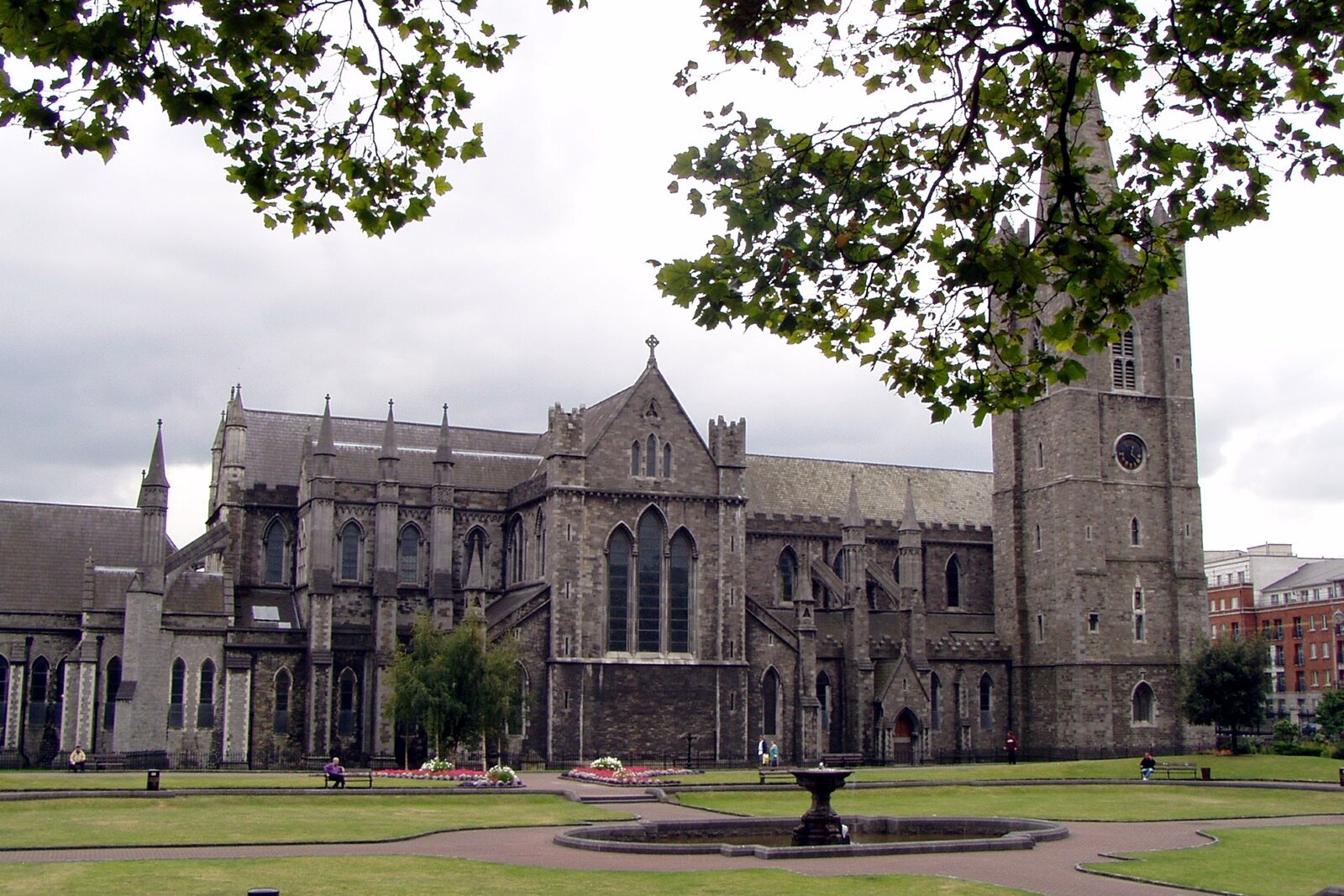
Look around first
What to notice
- A medieval door with a rectangular opening
- Stone tombstones
- The cathedral's stone facade
The story of the place
The cathedral bears the name of St Patrick, a fifth-century Christian missionary and patron saint of Ireland. According to church tradition, he baptized new converts at a well near this spot. This very tradition explains the dedication of a small church that stood here before the present building. The stone cathedral began to be built in the early thirteenth century. Today it is the national cathedral of the Church of Ireland, an Anglican community. Services are held here, the choir sings, and among the tombstones and church monuments stands a medieval door with a rectangular opening.
In the late fifteenth century, the English king governed his Irish possessions through a deputy. Two Anglo-Irish families competed for royal offices and land. Gerald FitzGerald, 8th Earl of Kildare, represented the king in Ireland for many years and sought preeminence for his family. James Butler managed the Irish possessions of the absent Earl of Ormond and tried to edge out the FitzGeralds. Both maintained armed supporters on income from their estates; losing office deprived their men of wages and each family of the ability to defend its lands through the courts and royal appointments.
According to the cathedral's accepted account, in fourteen ninety-two the retinues of the two families came to blows near Dublin. Butler's men were losing and retreated into the cathedral. James locked himself in with them in the chapter house—the room where the clergy gathered to decide cathedral affairs. The pursuers came in after them, but the heavy door stopped them.
FitzGerald proposed ending the fight. Butler refused to open the door: the promise of peace could have been a way to lure him out of his refuge. FitzGerald then ordered an opening cut in the door and put his hand through it. While the door remained locked, Butler could strike the hand with a weapon before FitzGerald's men could intervene.
Butler shook the outstretched hand. The opponents made peace, and the siege of the room ended without reprisals against those who had taken refuge there. This episode is associated with an Irish expression that literally means “to risk one's hand,” although no proven origin of the expression specifically from this episode exists.
The door was later removed from its original place by the south transept and put on display inside the north transept. The opening was not filled in. It is now officially called the Door of Reconciliation.
Useful on site
Official as of 2026: Mon.–Fri. 09:30–17:00, Sat. 09:00–18:00, Sun. in separate windows 09:00–10:30, 13:00–14:30 and 16:30–18:00. Hours change because of services and events; check the day of your visit.
Checked: June 26, 2026. Check the official source before visiting.The architecture and courtyard are accessible from outside, but the details associated with Swift are inside. If you enter, remember that this is an active church, and do not play audio through a speaker.