 Guide On Map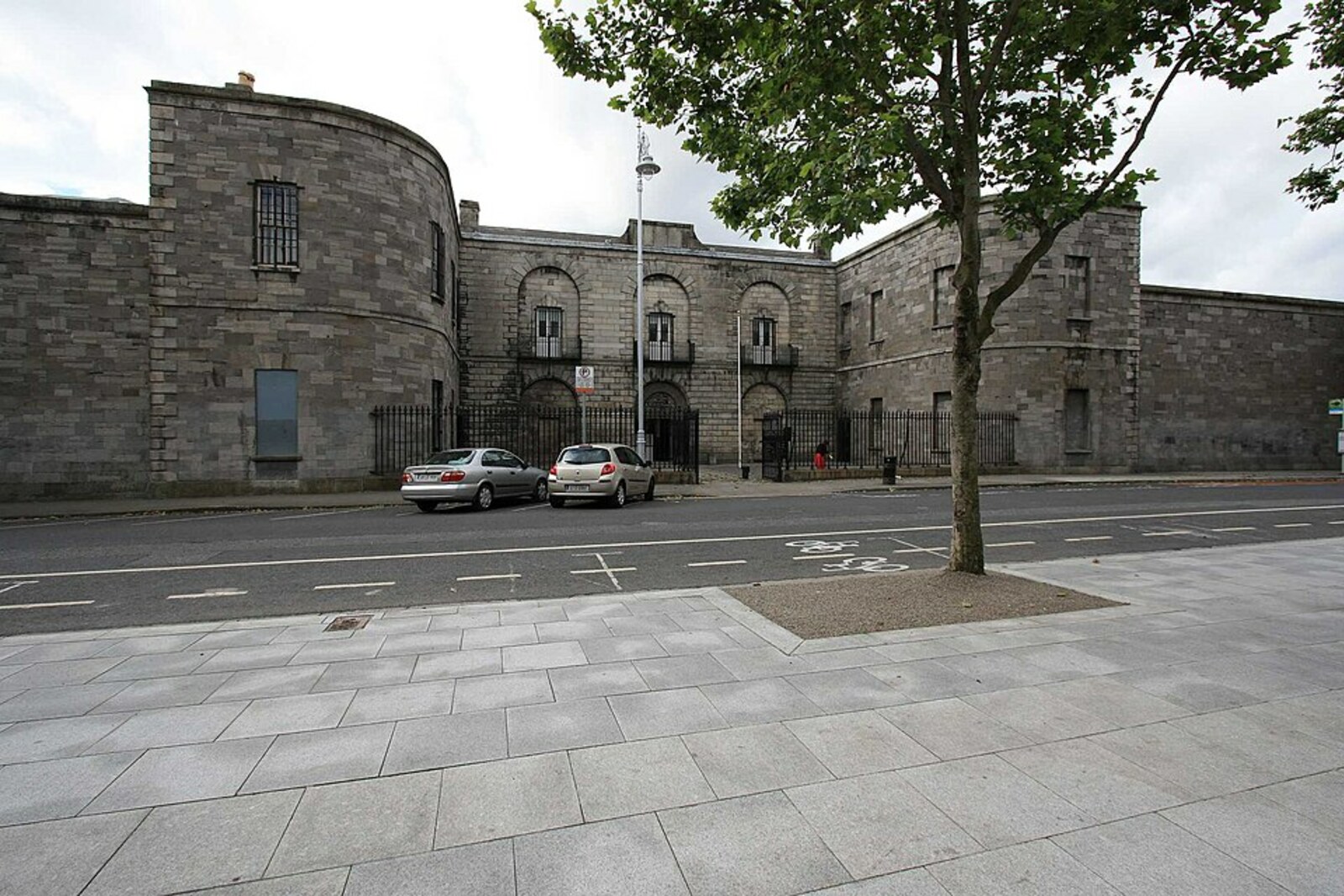
Look around first
What to notice
- Two plain crosses
- A wall with fourteen names
- The stone-crushing yard
The story of the place
Kilmainham Gaol now operates as a museum, but its yard has preserved a trace of the former order. Here, prisoners sent to hard labor crushed stone by hand; the high walls still cut this area off from the street. Two plain crosses stand by one wall, with fourteen names listed between them. In this way, the old prison yard became a place of memory, arranged without pomp.
By the spring of nineteen sixteen, Kilmainham had already not functioned as an ordinary city prison for several years. It opened in seventeen ninety-six as a county prison for Dublin, but was then closed to save money and handed over to the British army. The military quartered recruits here and held arrested soldiers. That is why, after the Easter Rising, the condemned were brought here: the army already had ready cells, guards, and a yard hidden from the street at its disposal.
Ireland was then part of the United Kingdom. The parliamentary self-government promised to it was postponed for the duration of the First World War, and radical republicans decided to achieve complete separation. On April twenty-fourth, armed units occupied several buildings in Dublin and proclaimed the Irish Republic.
One of the uprising's leaders was forty-seven-year-old James Connolly. He earned his living as a trade-union organizer and journalist; at home remained his wife Lily and six children. Connolly commanded the Irish Citizen Army, a small armed unit of the trade-union movement, and sought an independent republic. He signed the Irish Republic's proclamation and led fighters from the General Post Office.
Six days later, the rebels surrendered. Connolly had been seriously wounded in the leg and was taken to the Dublin Castle hospital. There, three officers held a closed field court-martial—an expedited military trial without a lawyer, the public, or an effective opportunity to appeal the sentence. Connolly was sentenced to be shot.
By then, executions at Kilmainham were already under way. From May third to May twelfth, the military shot fourteen leaders of the uprising here. The condemned were held in the western wing, allowed final letters and brief meetings with loved ones, and then led into the yard where prisoners sentenced to hard labor had once crushed stone by hand.
Connolly was brought to the prison in an ambulance. He could not walk: soldiers carried him into the yard on a stretcher and tied him to an ordinary chair. The other thirteen men were shot at the opposite wall; for Connolly, the firing line was set up near the gate through which the stretcher had been carried in. On May twelfth, he became the last of the fourteen executed here.
After the shooting, a doctor certified the death. A tag with his name was attached to his clothes, his body was loaded into an ambulance, and he was taken to the military prison, Arbour Hill Prison. There, Connolly was laid beside the others in a common unmarked pit and covered with quicklime.
At first, many Dublin residents condemned the uprising because of the dead and the destroyed city center. Nine days of closed trials and successive shootings changed attitudes toward the prisoners; the execution of the seriously wounded Connolly caused an especially strong reaction. It was one of the main reasons for the shift in public opinion. Most of the remaining death sentences were commuted to imprisonment, released participants in the uprising were welcomed as heroes, and in the nineteen eighteen elections the republican party Sinn Féin won.
Kilmainham Gaol is now a museum. In the yard where prisoners crushed stone stand two plain crosses: one marks the place where thirteen men were shot, and the other the place where James Connolly was carried in on a stretcher. The wall between them lists all fourteen names.
Useful on site
Officially: Courthouse visitor center 09:30-17:15, museum 10:30-17:15; access to the Gaol only on a guided tour with online booking; closed December 24-27.
Checked: June 27, 2026. Check the official source before visiting.The interior is visited separately; if you have not planned a tour, you can listen to this account beside the facade without obstructing the entrance.