 Guide On Map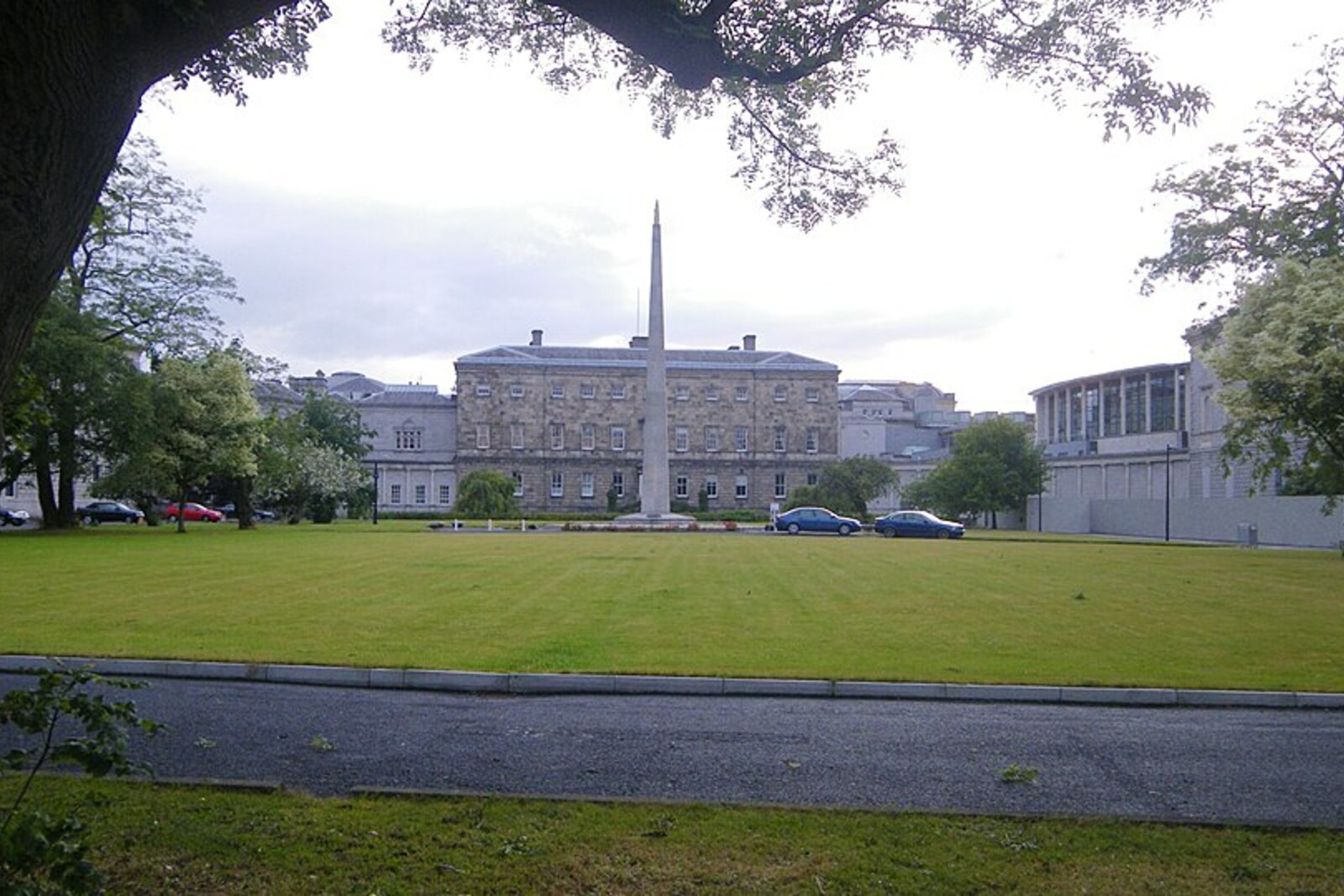
Look around first
What to notice
- Main façade of the former earl’s house
- Former lecture theater
- Former picture gallery
The story of the place
The name Leinster House remained from James FitzGerald, Earl of Kildare, who owned extensive ancestral lands. In seventeen forty-five, he decided to display his wealth through a town house. For it, FitzGerald chose Dublin’s then still sparsely built-up southeastern outskirts, far from the neighborhoods where the nobility lived.
According to tradition, an acquaintance warned the earl that the location was completely unfashionable. FitzGerald replied: they would follow him. And so it happened: other wealthy Dubliners began moving to the south side after his family. In seventeen sixty-six, the king granted FitzGerald the title of Duke of Leinster, after the name of Ireland’s eastern province. The house, previously called Kildare House after its owner’s former title, became Leinster House.
The family sold the mansion to the Royal Dublin Society in eighteen fifteen. This voluntary association worked in science, art, and agriculture; it lived on membership dues, donations, and income from its exhibitions. The Society established a library, a museum, laboratories, and a large lecture theater seating about seven hundred here.
It was this hall that Michael Collins, head of the Provisional Government, chose in nineteen twenty-two, seeking to convene an elected chamber amid the civil war between supporters and opponents of the Anglo-Irish Treaty. The old building of the Irish parliament on College Green had long been occupied by a bank. Collins inspected several premises, but the lecture theater on Kildare Street was in the city center and required almost no alterations. He arranged to rent it for eight months and assured the Society that the inconvenience would be short-lived.
Dáil Éireann—the House of Representatives—had already been elected in June, but its first meeting was postponed five times because of the fighting. Collins was killed in an ambush on August twenty-second. On September ninth, the deputies finally gathered in the lecture theater he had chosen; Collins himself never took a seat in this hall.
Two years later, the Royal Dublin Society was already asking for its premises back. Its library, collections, and staff had been scattered across several addresses, and more than six hundred fifty long-standing members had refused to pay their dues. The parliamentary commission nevertheless decided to stay: moving to Royal Hospital Kilmainham required major expense, while Dublin Castle had been occupied by the courts after the destruction of the Four Courts building. The Irish state bought the complex, and the Society moved to Ballsbridge.
Behind the façade of the former earl’s house, Dáil Éireann still meets in the lecture theater that Collins had intended to occupy for eight months. Seanad Éireann, the Irish senate, is housed in the FitzGeralds’ former picture gallery, which had served the family as a ballroom.
Useful on site
Exterior viewing is available from the street. Public tours of Leinster House are limited and must be arranged through official Oireachtas channels.
Checked: June 25, 2026. Check the official source before visiting.This is a working parliament, so plan an ordinary stop as an exterior visit. An interior visit is possible only under official rules and should not be assumed to be part of an independent walk.