 Guide On Map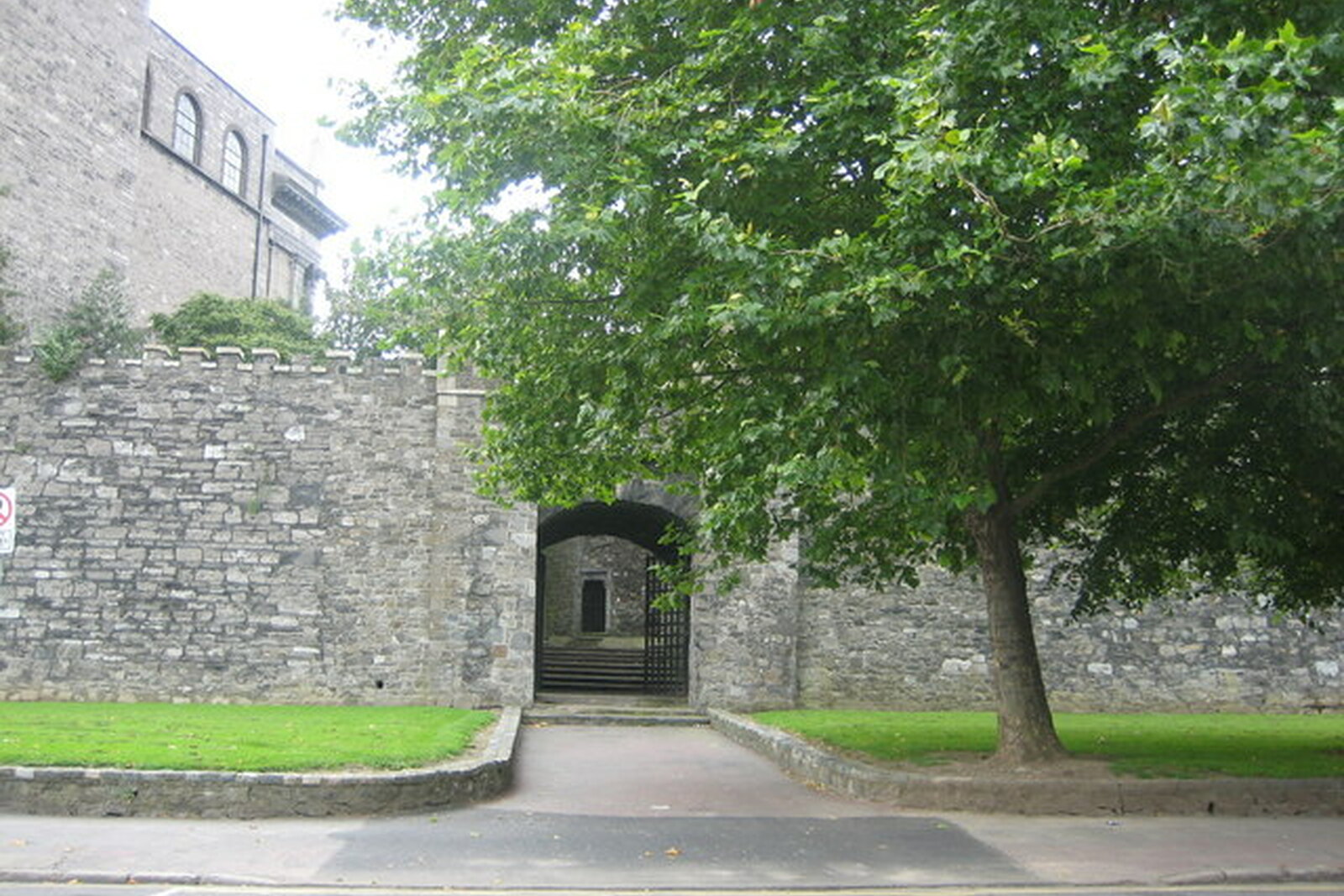
Look around first
What to notice
- Stone arch
- Passage through the city wall
- Upper edge of the masonry
The story of the place
The arch took its name from the neighboring church, dedicated to Saint Ouen of Rouen, a bishop and the patron saint of Normandy: he was especially venerated by Dublin's Anglo-Norman residents. The stone arch cuts through the old city wall, and the upper edge of the masonry can still be made out above it. The tower over the passage has disappeared, and the battlements and top of the wall were altered later. Blocks from a dismantled Dominican church were once brought here, but no single one of them can now be confidently recognized in the present masonry.
In the middle of the thirteenth century, Dublin's mayor and city community ordered this opening to be cut through the old stone wall. By then, the townspeople had already built up the reclaimed bank of the River Liffey, established quays there, and enclosed the new quarter with another wall farther north. The former boundary ended up inside the city, and the arch linked the upper streets with the riverbank. Documents called it the Water Gate; a tower stood above the passage. Of all Dublin's medieval city gates, only these survive.
Its modern name comes from the neighboring church. Saint Ouen of Rouen was a seventh-century bishop and the patron saint of Normandy. He was venerated by the Anglo-Normans who settled in Dublin; the name passed from the church to the arch.
In February thirteen seventeen, the Scottish king Robert the Bruce and his brother Edward encamped at Castleknock, within sight of the city walls. Allied Gaelic rulers had proclaimed Edward king of Ireland, and now the brothers wanted to take Dublin, the center of English rule on the island.
Mayor Robert de Nottingham was responsible for the defense. By then, the walls were poorly maintained: towers were rented to private tenants, access routes to the fortifications were blocked, townspeople dismantled the masonry, and the moat was filled with rubbish. Nottingham ordered the vulnerable section by the river to be reinforced immediately.
They decided to take stone from the Dominican Order. On the north bank of the River Liffey stood St Saviour's Priory, recently rebuilt after a fire. The townspeople dismantled its church, and masons used the blocks by St Audoen's arch, at the gate on Wine Tavern Street, and along the quay. The Dubliners then destroyed the bridge across the River Liffey. Nottingham ordered the western suburb burned: wooden houses and shops stood along present-day Thomas Street, so the residents lost both their homes and their trade.
The Bruce brothers abandoned the siege and led their army south. Dublin escaped an assault, but it paid for its own defense for many years afterward. About three quarters of the city's tribute to the English Crown had previously come from the suburbs; after the fire, the townspeople asked for lower payments, and relief was granted beginning in thirteen nineteen. The English king also required them to rebuild the church for the Dominican Order, at the city's expense.
No recognizable trace remains of the emergency masonry of thirteen seventeen: no visible block can confidently be identified as stone from the priory. The tower above the gate disappeared, while the top of the wall and its battlements were rebuilt later. The passage itself survives—the one to which Dublin's masons hauled the dismantled church.
Useful on site
The site can be read from outside at any time. The St Audoen’s Visitor Centre complex is officially open daily 09:30–17:30, with last entry at 16:45; for the church section itself, the date of its full reopening has not yet been confirmed.
Checked: June 26, 2026. Check the official source before visiting.View the gate from the sidewalk, and do not linger in the passage. The whole story can be read from outside.