 Guide On Map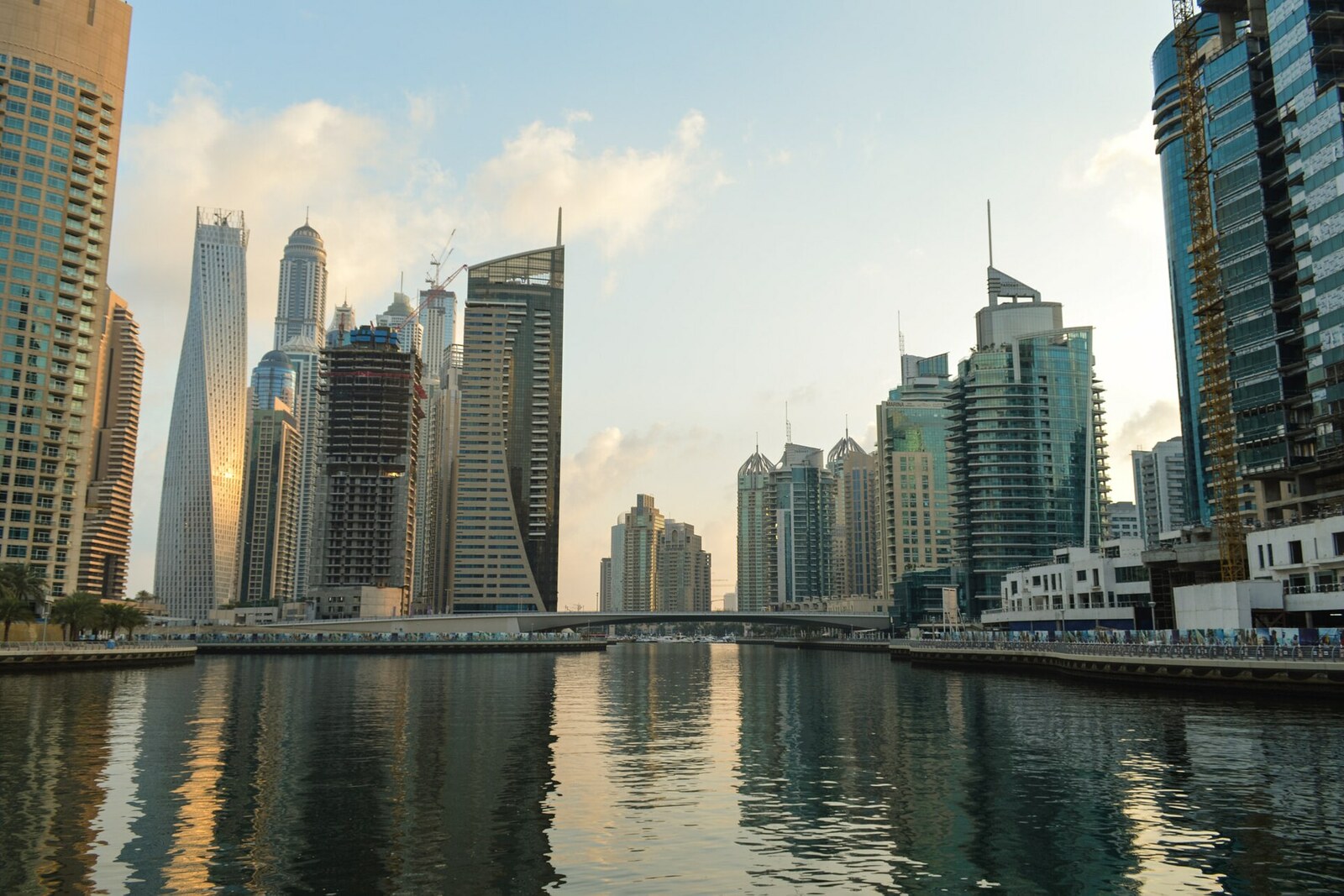
Look around first
What to notice
- Wide canal
- Uninterrupted waterfront
- Railings by the water
- Towers on podiums
The story of the place
Between the residential towers and the canal runs a waterfront open to everyone, with restaurants, berths, and walking paths by the water. The district was designed so that dense development would pay for the expensive waterfront, while the passage along the water would not become part of private residential buildings. Before the canal appeared, this was a sandy basin and construction roads; now broad water, bridges, and towers on low podiums gather the district's everyday life around them. On the first sections by the water, railings remain from the same manufacturer that worked on the False Creek waterfront in Vancouver.
On October seventeenth, two thousand, Mohammed bin Rashid Al Maktoum, then the Crown Prince of Dubai, turned a large iron disc. The disc opened the gates separating the bay from a basin excavated in the sand. For the first time, water flowed into what would become Dubai Marina. People stood along the canal and on the bridge; a construction site still lay all around, and the residential towers were only about to be built.
Over two years, workers removed about five million cubic meters of sand from here. The canal was made between seventy and three hundred meters wide, and pumps kept the water in place. It could have been excavated much narrower—just wide enough for yachts to pass. Stanley Kwok, the architect and developer invited to devise the layout of the new district, opposed this. He argued that the water should become the center of city life, rather than a technical passage for boats.
Kwok brought here a solution tested in Vancouver. In nineteen ninety-seven, Mohamed Ali Alabbar, chairman of the recently established company Emaar, traveled around North America in search of a model for a huge residential project in Dubai. A mistake would have struck at the company itself: the apartments still had to be sold, while the area around the future construction site consisted of highways, the shore, and an empty plot with no established city around it.
In Vancouver, Kwok took Alabbar and his staff out by yacht into False Creek. Railway lands had once stretched along it; Kwok had helped transform the shore into a district of slender residential towers set on low podiums. A publicly accessible waterfront ran between the buildings and the water. From the yacht, he showed Alabbar the entire calculation at once: high residential density pays for the expensive waterfront, while an uninterrupted passage by the water makes that waterfront attractive to buyers.
Alabbar hired Kwok and began recruiting to Dubai people who had worked on the Vancouver district. One of them was Blair Hagkull, a specialist in coordinating and selling large residential projects. He and several colleagues were given a week to decide whether they were ready to move their families here. They made their living by creating and selling new districts; now they were being offered the chance to repeat a familiar model in a place where there was not even water yet.
Kwok insisted on a wide canal. The Canadian design team brought here from False Creek a network of walking paths, bridges, and berths, towers on podiums, and an uninterrupted edge by the water. Then engineers cut the basin through to the bay, and the turn of the iron disc completed their work: seawater filled a space that had previously been dry land.
Before the ceremony, the project had the working name West Marina. At the last moment, Alabbar announced the final name—Dubai Marina, Dubai's marina. The first sales opened a few weeks later. The first six towers helped Emaar establish itself as a major commercial developer; later, more than two hundred buildings rose around the canal, and the district's population reached about one hundred twenty thousand.
The seven-kilometer Dubai Marina Walk emerged from the same calculation Kwok used to persuade Alabbar from the deck of the yacht: apartments and restaurants face the water, but the waterfront itself was left open for passage. Nothing remains of the former basin or the construction roads. What has remained is the wide expanse of water, the uninterrupted waterfront, and even the railings on the first sections, commissioned from the same manufacturer that supplied the False Creek waterfront in Vancouver.
Useful on site
Open around the clock; restaurants and cafés follow their own hours
Checked: June 22, 2026. Check the official source before visiting.Stay on the waterfront: the story does not require finding a commemorative marker or entering any buildings.