 Guide On Map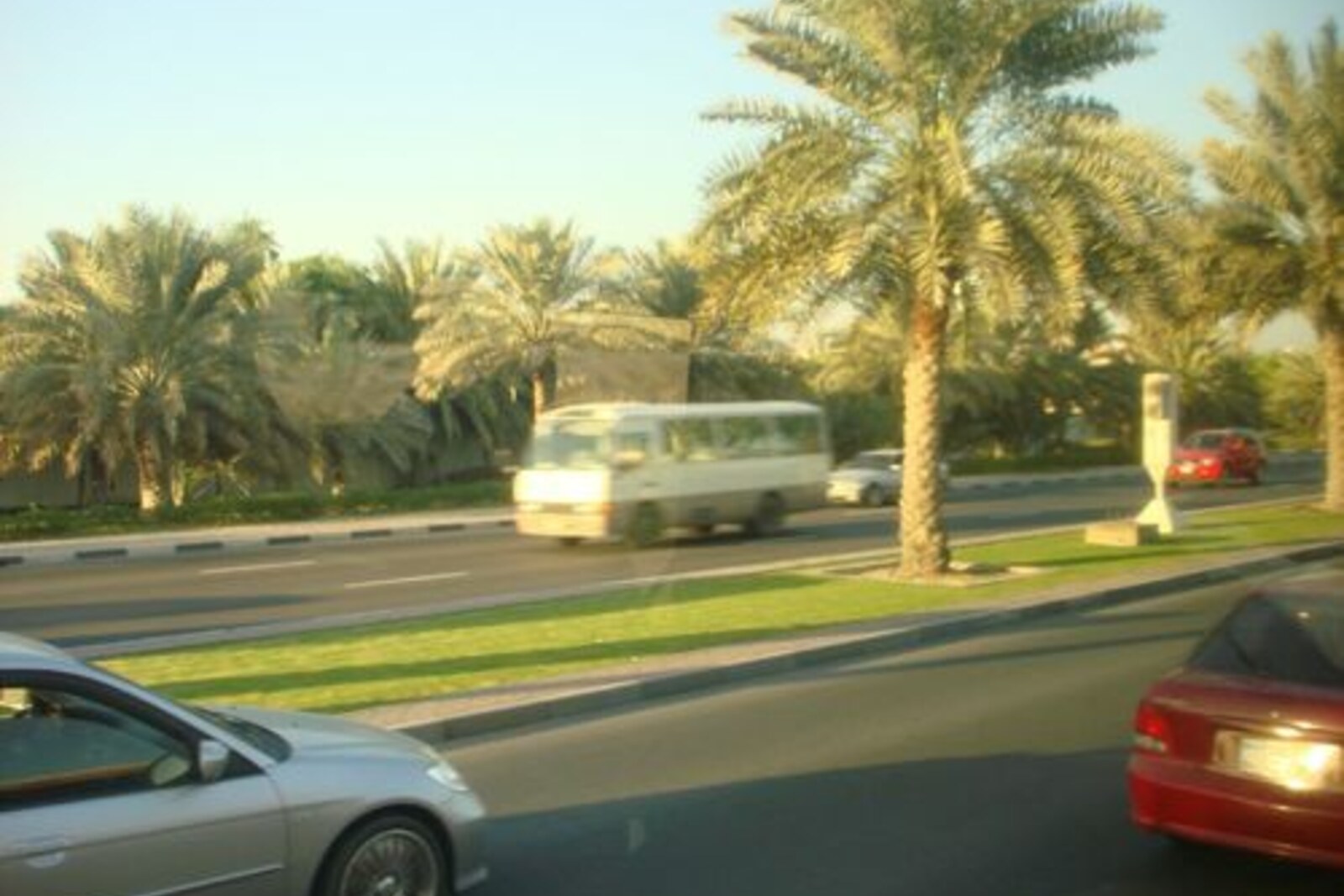
Look around first
What to notice
- Low villas behind walls, palms, patches of shade, and turns toward the beach.
The story of the place
Jumeirah Beach Road easily feels like a modern city thoroughfare: traffic, greenery, villas, cafes, and turns toward the sea. But not long ago, there was almost nothing here to cast a shadow. Between the shore and the desert lay sand, scattered houses, and trails known to people not by signs but by memory.
In 1933, Ubaid Humaid Abid Al Muhairi was born in Jumeirah. His childhood took place by the sea, opposite the plot where his own home would appear many years later. The shore was for him simultaneously a courtyard, a pantry, and a school. Here he played, fished with his father, and learned to read the water by wind, color, and wave movement.
In summer, Ubaid's father became a nahood — captain of a pearl-diving boat. Under his command worked a team of forty people. On such a vessel, the captain was responsible not only for navigation. He decided where to search for pearl shells, monitored supplies of water and food, distributed work, and made decisions that determined whether the entire team would return. Divers went underwater without modern equipment, with a nose clip, a basket for shells, and a rope tying them to the boat.
In winter, life changed. The father hired fishermen and then sold the catch. The sea provided work year-round, but each season required its own craft. Pearl promised rare luck; fish brought daily earnings. Between these two lay the family's livelihood.
However, Jumeirah was not cut off from the interior land. At eight or ten years old, Ubaid already went into the desert with his uncles Mubarak and Saif. Their small household traveled with them: eight camels, goats, and collected firewood. The uncles taught the boy to distinguish suitable wood, tie branches correctly, and load cargo so it would not injure the camel or scatter along the way.
Then the wood was taken to the Shindagha market. For a whole camel load, one could receive about two Indian rupees. It was the rupee that served as the familiar currency in trade on both sides of the Gulf at that time. In those two coins met the desert, caravan, city market, and sea routes.
The journey from Jumeirah to Al Ain took five days in summer. It passed through space that seemed empty from the outside but was full of landmarks for an experienced traveler. One dune pattern spoke of wind; another indicated proximity to a familiar path. Important became animal tracks, wells, sparse vegetation, and the place where one could pitch a tent in the evening.
As a teenager, Ubaid several times met an unusual traveler near Nad Al Sheba. It was Wilfred Thesiger, the British explorer who would later author "The Arabian Sands." But in those meetings, he looked not like a writer gathering material but like a man of the road. Thesiger wore a red kandura, spoke Arabic perfectly, walked with a camel and a rifle over his shoulder. He slept outside the family's tent and ate hare with rice together with the hosts.
Ubaid particularly remembered how naturally the foreigner held himself among locals. According to him, it was impossible to guess that they were not dealing with an Arab. In this brief encounter seemed to converge two views of the desert: for one, it was the native space of childhood; for the other, a chosen life for which he left his familiar world.
Further along the coast remains another trace of old Jumeirah — Gurfat Umm Al Sheif. This summer house was built in 1955 for Sheikh Rashid. Among the palms, it served not only as a place of rest. Here the Sheikh received advisors and discussed Dubai's affairs during the years when the city prepared for enormous changes.
The house was assembled from materials reflecting the geography of local trade. Coral stone was quarried in the Gulf. Walls were bound with sarooj — a durable traditional mixture. For roofing and shading, palm leaves were used, and beams were made from qindil wood, timber delivered from East Africa. Even a small building turned out to be part of a vast world of maritime connections.
In the courtyard stood a well, irrigation channels, and a garden. In the summer heat, water here was true architecture: it determined tree placement, air movement, and the very possibility of living among sand. Palms provided shade; walls kept coolness; raised openings helped catch wind from the Gulf.
The name Umm Al Sheif comes from pearl diving. It referred to a famous harvesting site where one hoped to find especially pure and round pearls. Thus, the house's name linked the ruler's councils with Dubai's former foundation of well-being — the sea and divers' labor.
Later, the summer residence served as a police station. After restoration in 1994, it regained its historical appearance. The rooms retained items that composed daily life of that time: coffee burners, copper buckets, carpets, clocks, and radios. Nearby lie rifles, daggers, and other reminders that hospitality and readiness to defend the home never contradicted each other here.
Only sixteen years had passed since the construction of Gurfat Umm Al Sheif when engineer Len Chapman drove along this same coastal road for the first time. He arrived in March 1971 to work on the new Rashid Port. Formalities at the airfield took him about thirty seconds. Then a car carried the family through Jumeirah.
Around them were sand, sparse roads, and almost complete absence of trees. Chapman's wife asked if they had made a mistake. He himself calculated he would spend two years in Dubai but stayed for more than thirty.
Thus, the coastal road connects several Dubais that existed almost simultaneously. For boy Ubaid, it was the edge of the sea and the start of a caravan route. For Sheikh Rashid — a road to a summer house where the city's future was discussed. For the Chapman family — their first journey through a place that still looked desert-like but had already begun building a port, changing its shore, and attracting people for decades. Modern Jumeirah grew quickly, yet beneath its asphalt remains discernible the old route — between boat, market, palm garden, and desert.
Deeper into the story
Fishing Village
As late as the early 20th century, the Jumeirah shore was occupied by barasti — houses made of palm leaves. Fishermen and pearl divers lived here; no one dreamed of the wealth of future oil times. Archaeological finds indicate settlements existed here already in the 10th century, during the Abbasid era.
The 1960s and Expats
After initial oil revenues, Jumeirah became a suburb for Western specialists. Spacious villas were built here without dense development or skyscrapers. Ownership rights remain restricted for foreigners, so the district stays green and low-rise.
Useful on site
Open around the clock — it is a residential street. Most pleasant in the morning and evening.
Checked: June 17, 2026. Check the official source before visiting.Listen where you do not obstruct passage, and account for heavy traffic. Historical houses may require a separate visit; the narrative works even when viewing from the street.