 Guide On Map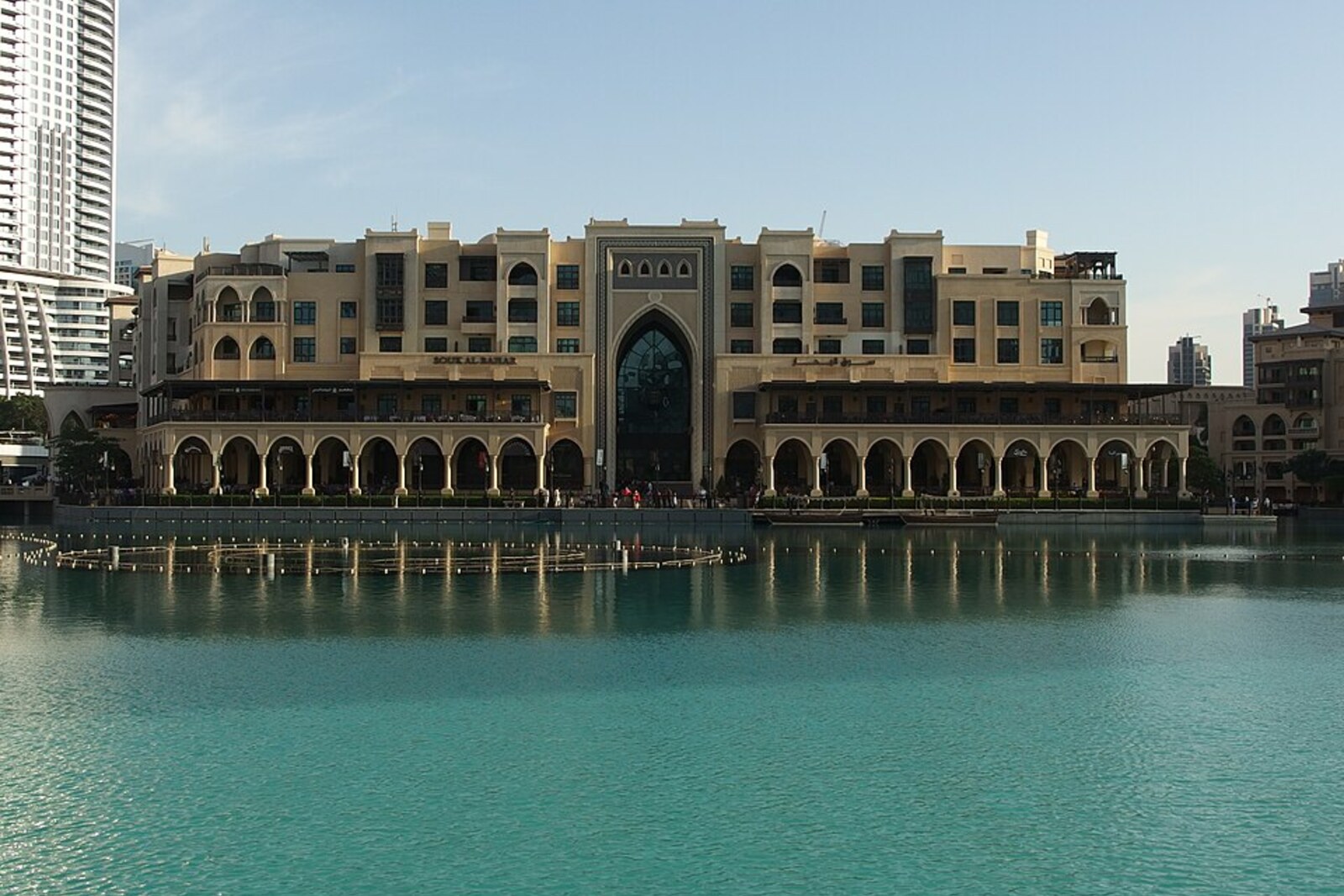
Look around first
What to notice
- The low railing by the water, reflections of the facades, sightseeing boats, terraces, and the bridge to Souk Al Bahar.
The story of the place
The waterfront path along the lake runs between the mall and restaurants on the opposite side; a bridge from here leads to the Souk Al Bahar complex. The low railing keeps the water almost right beside the flow of pedestrians, while sightseeing boats pass across its surface and reflections of the facades tremble there. On weekdays, people walk past shop windows and cafes here, but on holiday evenings nearby restaurants sell waterfront tables together with the view. The lake also served as the site for a light artwork made of three hundred boats, which formed changing figures on the water for several weeks.
There is always a front row by the water. On this promenade, it runs along a low railing, very close to the lake. From here, it is especially clear that the fountain does not exist on its own. Every evening, a temporary theater takes shape around it: some people choose a spot in advance, others arrive at the last minute, children settle in ahead of the adults, and phones rise above people's heads. A few minutes of music and water bring strangers together into one audience, then release them just as quickly back into the mall, the restaurants, and the city.
But once, waiting for the show itself became a separate spectacle. In the autumn of two thousand eighteen, an installation called Voyage appeared on the lake. Three hundred small boats carried no passengers and were in no hurry to go anywhere. They floated on the water like glowing dots that formed figures. The pattern changed, the lights shifted through different colors, and the dark surface of the lake turned into a huge moving screen.
This scene had no familiar boundary between artist and spectator. Visitors connected to a dedicated wireless network and could change the patterns and colors themselves. A person on the promenade touched a phone screen, and the response appeared on the water. Three hundred boats rearranged the light pattern, and a personal choice became part of a panorama seen by hundreds of people at the same time.
There was something very Dubai about it. Here, people like not merely to show a spectacle, but to involve the viewer in making it work. For several weeks, the lake became almost a public canvas, though the brushes were boats, the paint was electric light, and the artist's gesture began with a touch on a phone. The installation operated until December second. In the evenings, the audience first watched the glowing figures, and then the usual fountain show began. The boats did not disappear: their lights added another layer to the music, the jets, and the reflections.
The promenade easily changes roles in general. On an ordinary evening, it is a publicly accessible waterfront. On a special night, every meter by the water suddenly acquires a price. This became especially clear on December thirty-first of that same year, two thousand eighteen. Restaurants around the lake were selling not so much food as the right to spend the evening in the front row before the New Year's fireworks.
At Five Guys, a table by the water cost one thousand five hundred dirhams per person. For that amount, unlimited burgers, hot dogs, French fries, milkshakes, and soft drinks were offered. An ordinary burger then cost about forty dirhams. So dinner was not the main rarity at all. What people were buying was a chair, a view of the lake, and the assurance that they would not have to defend their place in the crowd until midnight.
At Tim Hortons, a five-course dinner was priced at two thousand dirhams. A newspaper reporter translated that price into terms more familiar to a coffee shop and arrived at two thousand two hundred twenty-two small Timbits doughnuts. On the other bank, in the Souk Al Bahar complex, the terrace at Karma Kafe offered a place for one thousand eight hundred ninety-nine dirhams. At Serafina, the price reached three thousand five hundred.
Such sums turned New Year's Eve into a strange auction of visibility. The lake remained the same, the fireworks display was one for everyone, but the cost of a few meters of space differed by tens of times. Behind glass or on a terrace, a table, food, and an assigned place were included. On the promenade itself, it was still possible to welcome the New Year for free. Only instead of a bill, people had to pay with a long wait and crowding. The reporter warned in advance that the crush here would be extremely dense.
The front row has one more characteristic: it exists only because of anticipation. Viewers come to still water and believe that after some time it will come alive. That is why, when the fountain closes, even a familiar landscape seems unfinished. That was the case during the five-month reconstruction that ended in the autumn of two thousand twenty-five.
On October first, the fountain was due to return. By about four in the afternoon, people had begun claiming places along the mall side, although there was still plenty of time before the evening show. Cleaners' boats moved across the lake. Security guards directed families, and police officers patrolled the promenade on bicycles with sirens. The preparations felt less like the ordinary start-up of a city attraction than a premiere the public had had time to miss.
Among the first spectators was Bety from Peru. She had arrived with a group of twenty-one tourists over sixty years old. At first, the guide said that the fountain was closed. For the group, this was a real disappointment: many had previously seen it only online and had traveled a long way to a place they knew from other people's photographs and videos. Then the guide returned with new information: the first show would take place that very evening. After the performance, Bety said that the whole group was delighted.
In the same crowd stood Dubai resident Sama Khalid with relatives who had come from Alexandria. Sai arrived after work and spent an extra half hour by the water: he was sure that the start was scheduled for six, although the show began at half past six. An ordinary mistake about the time became a small price to pay for a place at the fountain's return.
There are almost no celebrities or ceremonial speeches in these stories. What matters here is something else: twenty-one older travelers, relatives from another city, a person after a workday, places claimed by the railing, and cleaners' boats on water that is still calm. It is from such details that the life of the promenade takes shape.
Once, a visitor could control glowing boats from a phone. On New Year's Eve, restaurants turned a view of the lake into an expensive commodity. After a long break, the public arrived several hours before the first show, as though greeting an old acquaintance. Water remained at the center every time, but the real action took place on the shore as well. This promenade is not merely a convenient point in front of the fountain. It is a place where Dubai comes together, takes the front row, and for a few minutes becomes part of the show itself.
Deeper into the story
The free view is designed too
The promenade seems like a simple public edge of the water, but it works as a carefully designed system: free viewing, paid close-up options, restaurants with views, and a bridge to the market distribute the same fountain among different scenarios.
Useful on site
The promenade is open as an outdoor area; restaurants, Dubai Mall, and events have their own hours and crowd management.
Checked: June 27, 2026. Check the official source before visiting.Do not block the passage for filming, and keep your belongings with you in a dense crowd. A good view does not necessarily require a place right by the railing.