 Guide On Map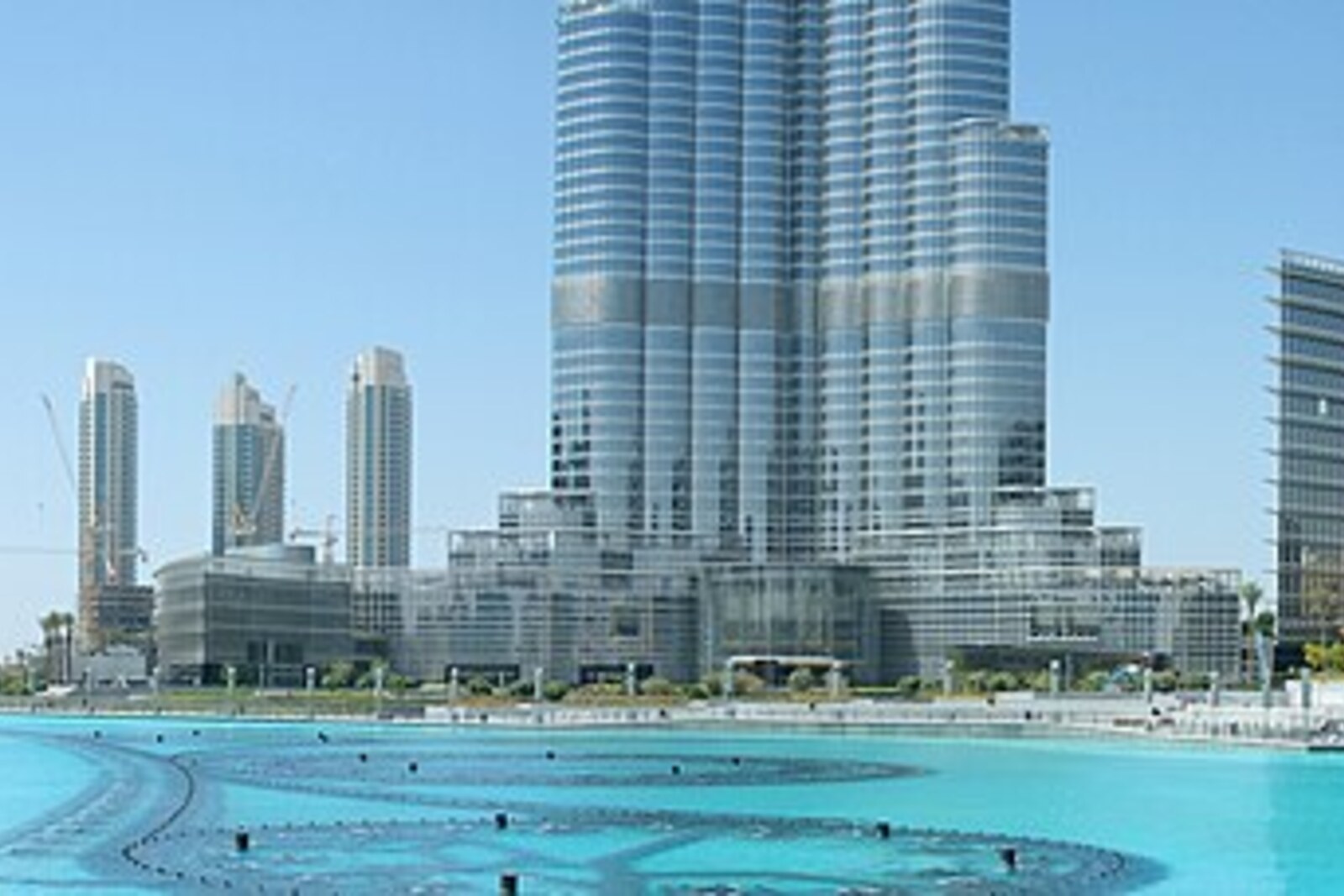
Look around first
What to notice
- The bronze feathers, the iron frame, three steps, and Burj Khalifa in the gap between the panels.
The story of the place
At the foot of Burj Khalifa lies Burj Park: a small green area beside the business district that remains calm on ordinary days and becomes a concert venue during celebrations. Amid this greenery, two tall bronze panels are fixed to a metal framework, and three low steps lead to the opening. The Dubai work belongs to an international series that began with thirteen street sculptures on Paseo de la Reforma in Mexico City. Similar wings later appeared in cities on different continents, and here they are surrounded by glass, greenery, and an enormous tower.
Against the backdrop of Burj Khalifa, even large objects easily lose their sense of scale. The tower draws the eye upward, and the bronze wings at its foot may at first seem like nothing more than a beautiful frame for a photograph. But this sculpture is designed more cleverly than that. It has no central figure—until a person appears between the wings.
The work by the Mexican sculptor Jorge Marín is called "Wings of Mexico." It is neither an angel nor a monument to a particular person. Two bronze panels are raised on an iron frame, with just three steps in front of them. A person finds themselves at the center of the composition, and the empty space suddenly becomes its most important part.
Marín explained the idea simply: the viewer seems to put on the wings and give them meaning. One person sees freedom in them, another travel, a third the success they pursued for a long time. For some, it is a lighthearted game with a camera; for others, almost a personal portrait. The sculptor creates only half the work. A new person brings the other half each time.
In Dubai, another participant was added to this formula—Burj Khalifa. The tower stands directly behind the back of whoever climbs the steps. As a result, the bronze feathers, the human figure, and the world's tallest skyscraper join into a single image. The wings promise flight, the tower shows height, and the person between them looks for a few seconds as though all of this had been built around them.
The story of this work began far from here, on Paseo de la Reforma in Mexico City. There, Jorge Marín presented the Wings of the City project: thirteen monumental bronze sculptures appeared directly in the urban space. They stood not in museum halls, but amid the traffic of a great avenue, alongside cars, passersby, and the everyday life of the capital.
Of the entire series, it was the wings that the public made their own especially quickly. Tourists and workers, photographers and newlyweds came to them. In Mexico, a girl's fifteenth birthday is often celebrated as a major family occasion, almost like a transition into adulthood. Dressed-up birthday girls also climbed the steps and stood between the bronze feathers. Each person created their own version of the same sculpture.
This happened again and again, until the work in effect ceased to belong only to its author. The city's residents embraced it so persistently that the wings were eventually given to Mexico City. A rare case: a monument found its place not because it had been dedicated in advance to a great event, but because thousands of ordinary people found a place for themselves in it.
Later, Jorge Marín began creating versions of the wings for other cities. They became an international chain stretching across different countries and continents. The list of permanent locations came to include Mexico City, Berlin, Los Angeles, Singapore, Tel Aviv, Quebec, and Dubai.
In every city, the background changes the meaning of the work. In some places, an old street remains behind the feathers; elsewhere, there is a modern business district, water, or greenery. Here Burj Khalifa rises behind them, and the Mexican sculpture unexpectedly begins to speak a very Dubai-like language. It is the language of grand ambition, a conspicuous gesture, and confidence that an impossible height can nevertheless be reached.
But the wings have an important difference from the surrounding architecture. The skyscraper emphasizes distance: its summit is almost beyond the reach of the eye, and its true scale is difficult to feel even at its very base. The sculpture, by contrast, is designed for closeness. You can approach the bronze, the steps match a human stride, and the entire composition is completed only at the level of the human body.
That is why a small shift of roles is constantly taking place here. Usually, people photograph a landmark. At the wings, the person themselves becomes the landmark for a moment. Not the tower, not the park, and not even the work of a famous sculptor, but whoever has taken the empty space between the panels.
There is a slight irony in this, too. Wings are associated with freedom, yet for the right shot you have to stand precisely at a rather narrow point. The bronze promises movement, though it remains motionless. And the feeling of flight is created by three low steps, an iron frame, and a chosen angle. The sculpture hides nothing, yet readily takes part in the illusion.
Burj Park itself also knows how to change its role quickly. On an ordinary day, it serves as a calm green space beside the tower. But in December two thousand twenty-one, for one evening, the park turned into the concert venue for the opening of the twenty-seventh Dubai Shopping Festival.
The Emirati-Yemeni singer Balqees Fathi and the Egyptian pop singer Mohamed Hamaki took the stage. By one reporter's count, more than five thousand spectators gathered in the park. The space, where you would usually hear the conversations of people strolling and camera shutters clicking, filled with music, stage lighting, and a dense crowd.
Food trucks stood between the stage and the audience. Among them was the truck of Burak Özdemir, a Turkish restaurateur who became famous through videos featuring enormous dishes and a completely motionless smile. His online persona is hard to mistake for any other: frying pans seem incredibly heavy, portions seem designed for an entire square, and the chef himself keeps looking into the camera as though preparing a giant dish required not the slightest effort.
That evening conveys the character of this park well. It can be a frame for a personal photograph, a venue for a major concert, and part of a citywide celebration at the same time. After the opening, the festival continued for another forty-seven days: performances took place throughout Dubai, markets operated, and fireworks appeared in the sky. But the beginning of this long festive chain fit precisely here, on a small patch of greenery at the base of an enormous tower.
Wings of Mexico exist in a similar way. They, too, begin a long chain—only not of festival events, but of human stories. One person marks a journey, another a wedding, a third a birthday, and a fourth simply preserves a chance walk. The photographs travel to different countries, while the bronze panels remain in place and wait for the next hero.
This is how an international sculpture becomes remarkably personal. It came from a project that began on a Mexican avenue, acquired a Dubai skyscraper instead of a backdrop, and found itself in a city where people from all over the world constantly cross paths. Here, the wings belong to several places at once—and at the same time to everyone who, even for a moment, fills the emptiness left by the sculptor.
Deeper into the story
A park without silence
Burj Park does not become a "green escape" from Downtown. It remains part of the staging: people come here for the view, the angle, a brief respite, and the expectation of water that will begin according to a schedule.
Useful on site
An open-air area; access and walkways may change during events, setup, and shows.
Checked: June 27, 2026. Check the official source before visiting.For the intended angle, you need to climb up between the wings; let those already taking photographs go first, and do not occupy the platform for long.