 Guide On Map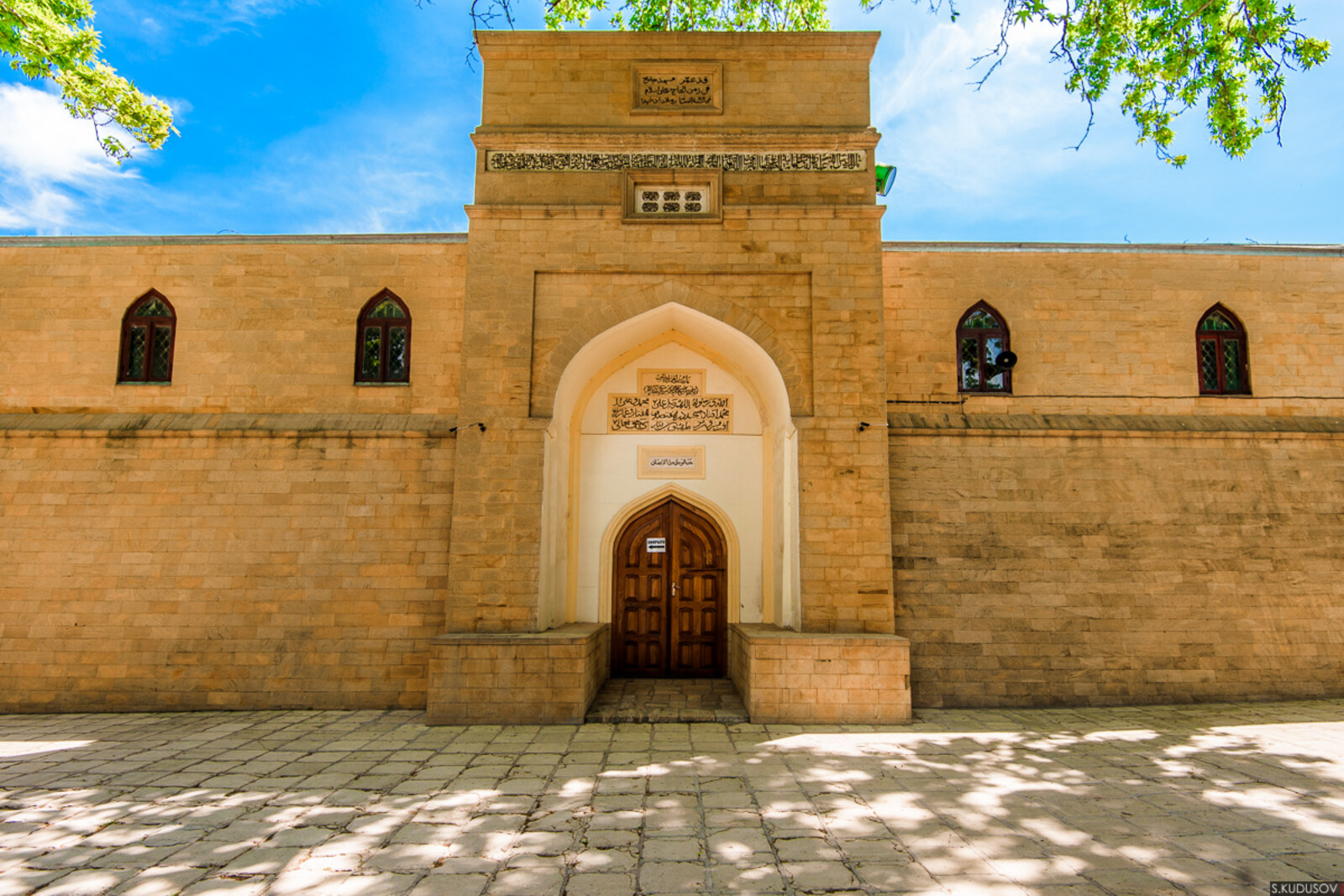
Look around first
What to notice
- Paved courtyard
- Plane trees
- Long prayer hall
- Madrasa cells
The story of the place
In seven hundred thirty-three or seven hundred thirty-four, the Arab commander Maslama ibn Abd al-Malik, having occupied Derbent, divided the city into quarters and ordered a mosque to be built in each one. One congregational mosque, the Juma Mosque, was built for the common Friday prayer. Later, a madrasa was erected opposite it. A large paved courtyard remained between the long prayer hall and the students' cells: amid the close-packed mahallas, it held religious ceremonies, celebrations, and gatherings of townspeople.
In nineteen thirty-eight, the mosque was closed and the complex was handed over to city institutions. The prayer hall and adjoining rooms were partitioned off for official needs. The Friday gathering disappeared from the square for which it had once been created.
In early nineteen forty-three, the Council of People's Commissars of the USSR decided to return the complex to the Muslim clergy. The document immediately named two aims: worship and the collection of donations for the front. Transferring the building did not yet mean opening it. Over the following year, Derbent's believers cleared out and refitted the official-use premises. The work was paid for with private donations: in wartime, the residents themselves raised money to have a common mosque again.
The community then adopted bylaws and elected a board of twenty people. Two imams were appointed: one for Sunnis and the other for Shiites. Thus, the presence of both Derbent communities was established in the organization of the restored mosque.
In December nineteen forty-four, a major religious service was held here again: a Shiite ceremony commemorating Imam Husayn. A few days later, during a sermon, the elected Shiite imam prayed for victory for the Red Army and a long life for Stalin. After reopening, the Juma Mosque remained the only active mosque in all of Southern Dagestan until the early nineteen nineties; people came here to pray from other districts.
On Fridays, worshippers still occupy not only the hall but also the stone slabs between the mosque and the madrasa. Plane trees stand above that very courtyard, which the people of Derbent, with their own money and labor, restored from an official-use courtyard to a shared city square.
Useful on site
An active mosque with no guaranteed tourist schedule; access depends on prayer and restoration. Work was continuing in February 2026; no official confirmation of completion had been found by 24.06.2026.
Checked: date not specified. Check the official source before visiting.Keep the place's prayer function in mind: follow the clothing requirements, silence your phone, and postpone your visit if a service is underway.