 Guide On Map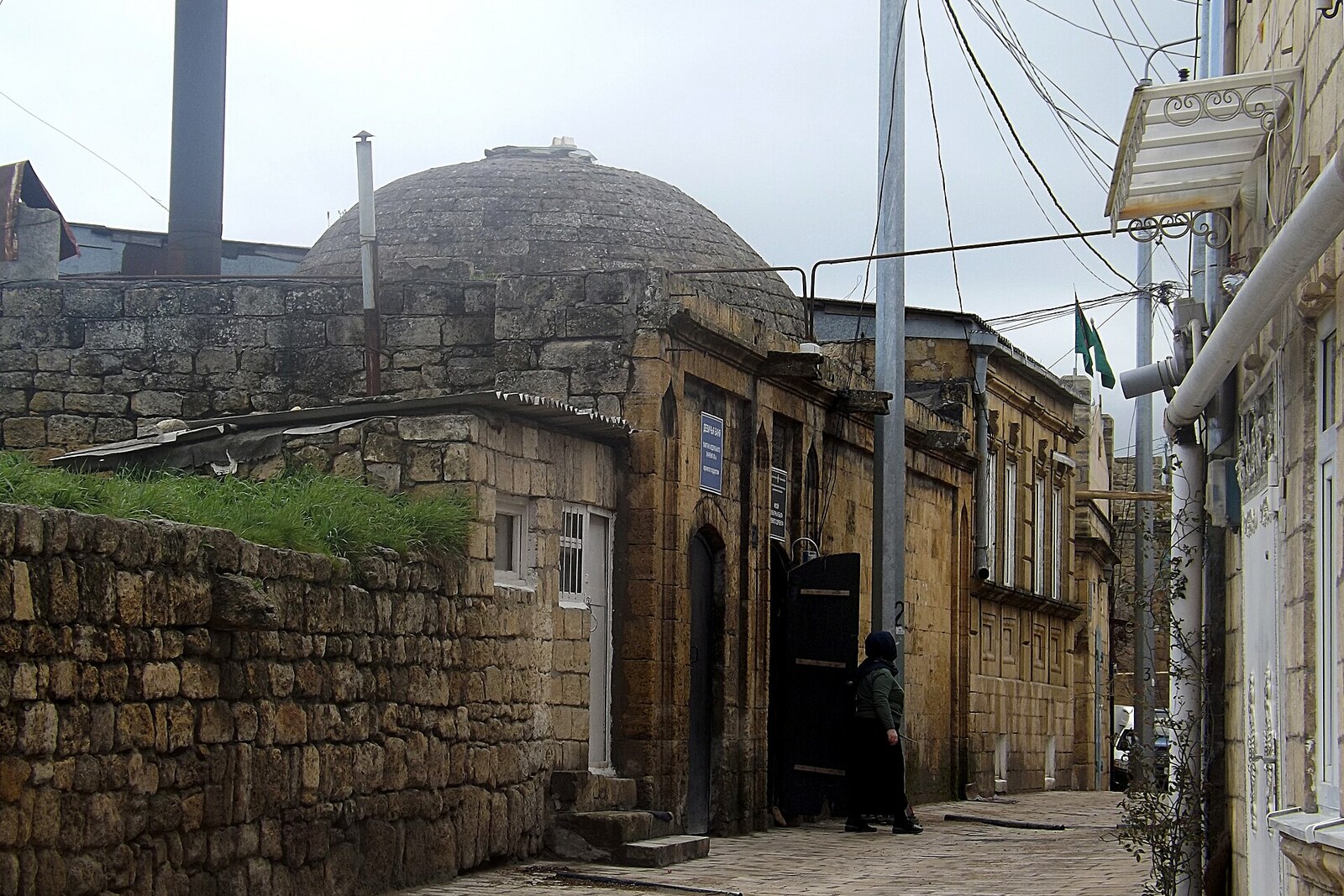
Look around first
What to notice
- Stone domes
- Sunken rooms
- Reservoirs for hot and cold water
- The building of Women's Bathhouse
The story of the place
The stone domes of Maiden's Bathhouse cover rooms sunk into the ground. Clothing was left in the first, washing took place in the second, and cold and hot water were kept separately; the furnace was fired outside, and heat ran through channels beneath the stone floor. The rooms were intended for unmarried girls, while a separate Women's Bathhouse for married women has survived beside it on the north side. In the middle of the twentieth century, the bathhouse stopped serving its intended purpose, and after restoration in nineteen ninety-two, a museum was opened here.
Two days before the wedding, the groom's family rented this bathhouse for the whole day. The groom was not expected here. The bride was brought by the yenge—a woman mentor responsible for her during the wedding rituals—along with her friends and the future husband's female relatives. In wealthy families, they hired a phaeton for the trip.
Before they arrived, the walls and floor were covered with carpets. Sweets, tea, fruit, multicolored candles, and lamps with round shades were brought from the homes of the groom and bride. Three sunken rooms made it possible to hold the entire ritual here: in one they changed clothes, in another they washed, and water was taken from reservoirs of hot and cold water. The furnace stood outside, while heated air passed through channels beneath the stone floor.
The bride's friends bathed her and washed with her, wearing light underclothes. At the end, a mug of sour milk was ceremonially poured over the bride's head. Her friends moistened their own braids with it: they believed that the one who covered her hair more generously would marry sooner. So one girl was being seen off here, while the others were already trying her future fate on for themselves.
After the washing, the bride was dressed in a wedding outfit sewn from fabrics sent by the groom. The women sang songs of praise to her and wished her children. Then the girl was taken home: the henna evening still lay ahead of her, and after the wedding, the move to her husband's home. Her friends returned here as before, but Maiden's Bathhouse was closed to her, along with her former standing in the family.
That is why two distinct bathhouse spaces stand side by side here. This one was intended only for unmarried girls; the adjoining Women's Bathhouse on the north side was for married women. The complex stopped being used for its original purpose in the middle of the twentieth century, and after restoration in nineteen ninety-two, a museum was opened here. The domes, pools, and neighboring Women's Bathhouse preserve the route the bride took once: from Maiden's Bathhouse into married life.
Useful on site
The museum lists general hours of 09:00–18:00 daily; actual access to this section should be confirmed on site.
Checked: date not specified. Check the official source before visiting.If the interior is closed, the exterior volume still shows how the bathhouse was arranged; do not count on entering without confirmation on site.