 Guide On Map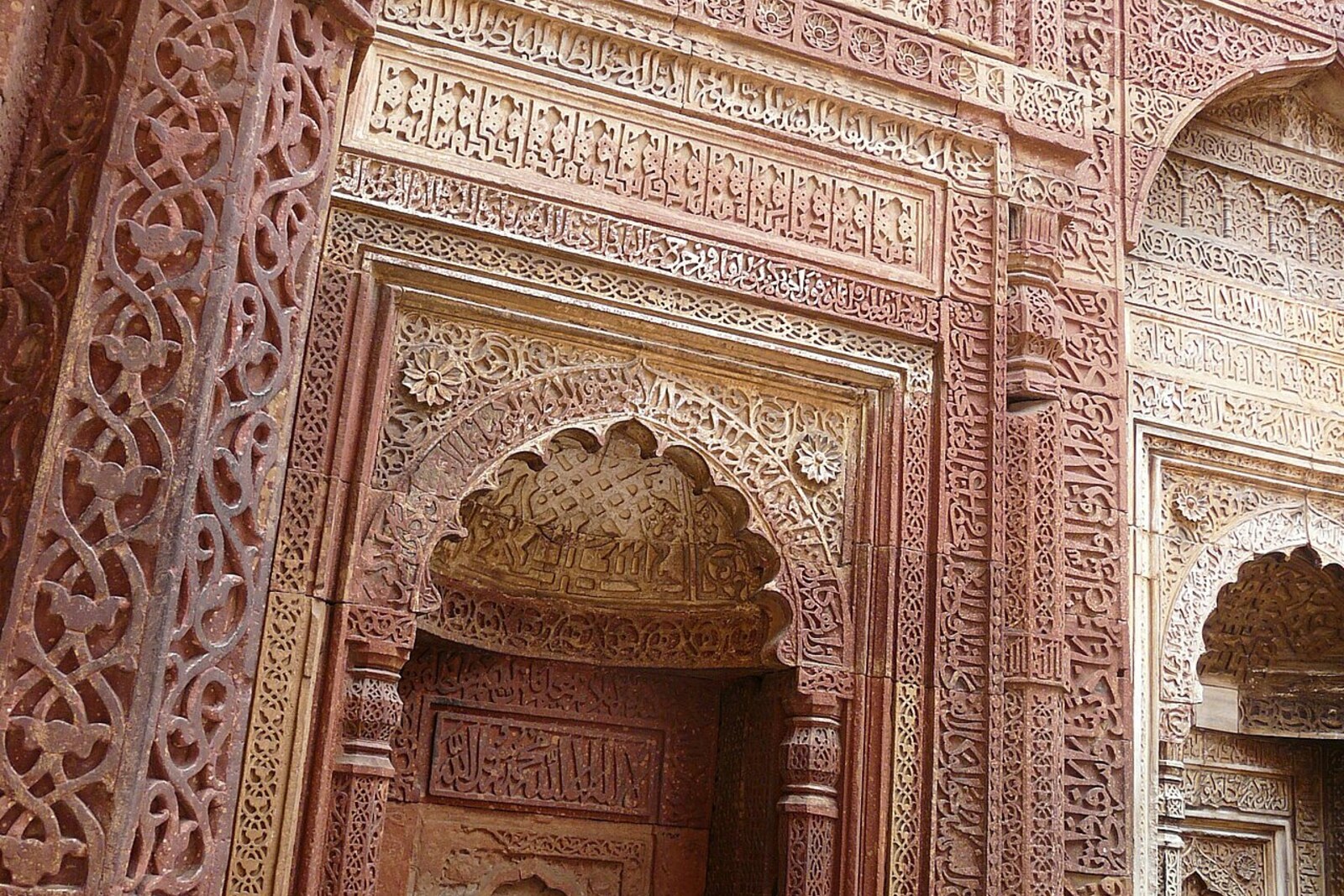
Look around first
What to notice
- White marble cenotaph
- Square tomb chamber
- Eastern wall
- Courtyard of the former mosque beyond the wall
The story of the place
On Fridays, the main mosque of medieval Delhi brought the city's residents together for communal prayer. At its northwestern corner stands the square tomb of one of the sultans, and beyond its eastern wall lies a former mosque courtyard. The mosque was enlarged under the same ruler, so his tomb stood at the edge of a large gathering place. Inside lies a light-colored marble grave marker.
The white marble slab in the center is a cenotaph, a grave marker. The actual burial is beneath the floor. Iltutmish ordered this square tomb built around twelve thirty-five, during his lifetime. A year later, the sultan died and was buried here. That is where the tomb gets its name.
He chose the site at the northwestern corner of Delhi's congregational mosque, which he himself enlarged. On Fridays, such a mosque hosted the khutba, a sermon that named the reigning sultan. That name in prayer, together with the name on a coin, confirmed who had taken the throne. A few months after Iltutmish's burial, his daughter needed this custom.
Iltutmish himself gained the throne through service, not inheritance. In his youth, he was sold into slavery and trained as a mamluk, a military slave whom his master maintained for campaigns and administration. Qutb al-Din Aibak bought him. Iltutmish earned his freedom, a command, and a grant of land, and after Aibak's death he defeated another claimant and became sultan. Such a career could raise a capable military commander very high, but it did not answer the question of who would inherit the throne after him.
At first, Iltutmish prepared his eldest son, Nasir al-Din Mahmud, as his heir. Nasir al-Din Mahmud died before his father. The sultan then entrusted the administration of Delhi to his daughter Razia while he was on campaign in Gwalior. The only chronicler close to the events, Minhaj-i Siraj, wrote that Razia managed better than her brothers and that her father ordered her to be proclaimed heir. The decree itself has not survived, so this is the chronicler's testimony, not a document that has come down to us.
After Iltutmish's death, the court military commanders acted differently. They put his son Rukn al-Din Firuz on the throne, a male heir convenient for them. The new sultan's mother, Shah Turkan, took charge of affairs. Seeking to keep the throne for her son, Shah Turkan began eliminating rivals within the family, including Razia. Razia appealed to the people of Delhi for support. Razia's supporters captured Shah Turkan, the military commanders went over to Iltutmish's daughter, and Rukn al-Din was imprisoned and soon executed.
At the first Friday prayer after the coup, Razia's name was to be spoken in the khutba. The sources do not name the building, but Quwwat-ul-Islam Mosque was then the main congregational mosque, so historians consider this courtyard beside her father's grave the most likely place. Razia was called sultan—not the wife of a sultan, but a female ruler.
She held the throne for nearly four years. Then some of the military commanders rebelled, Razia was captured, and her brother Bahram was made sultan. After being freed and joining forces with the governor who had previously held her captive, Razia tried to retake Delhi. Their army was defeated near Kaithal, and Razia was killed.
Iltutmish's marble cenotaph remains in the center of this tomb, and beyond its eastern wall lies the former mosque where his daughter's name was most likely first spoken in the khutba. Razia herself is not here.
Useful on site
As at the Qutb Minar complex: ASI lists hours from sunrise to 20:00; check the current e-ticket.
Checked: June 28, 2026. Check the official source before visiting.Let your eyes adjust to the dimness, and look not only at the walls but upward as well. After rain, it may be damp inside.