 Guide On Map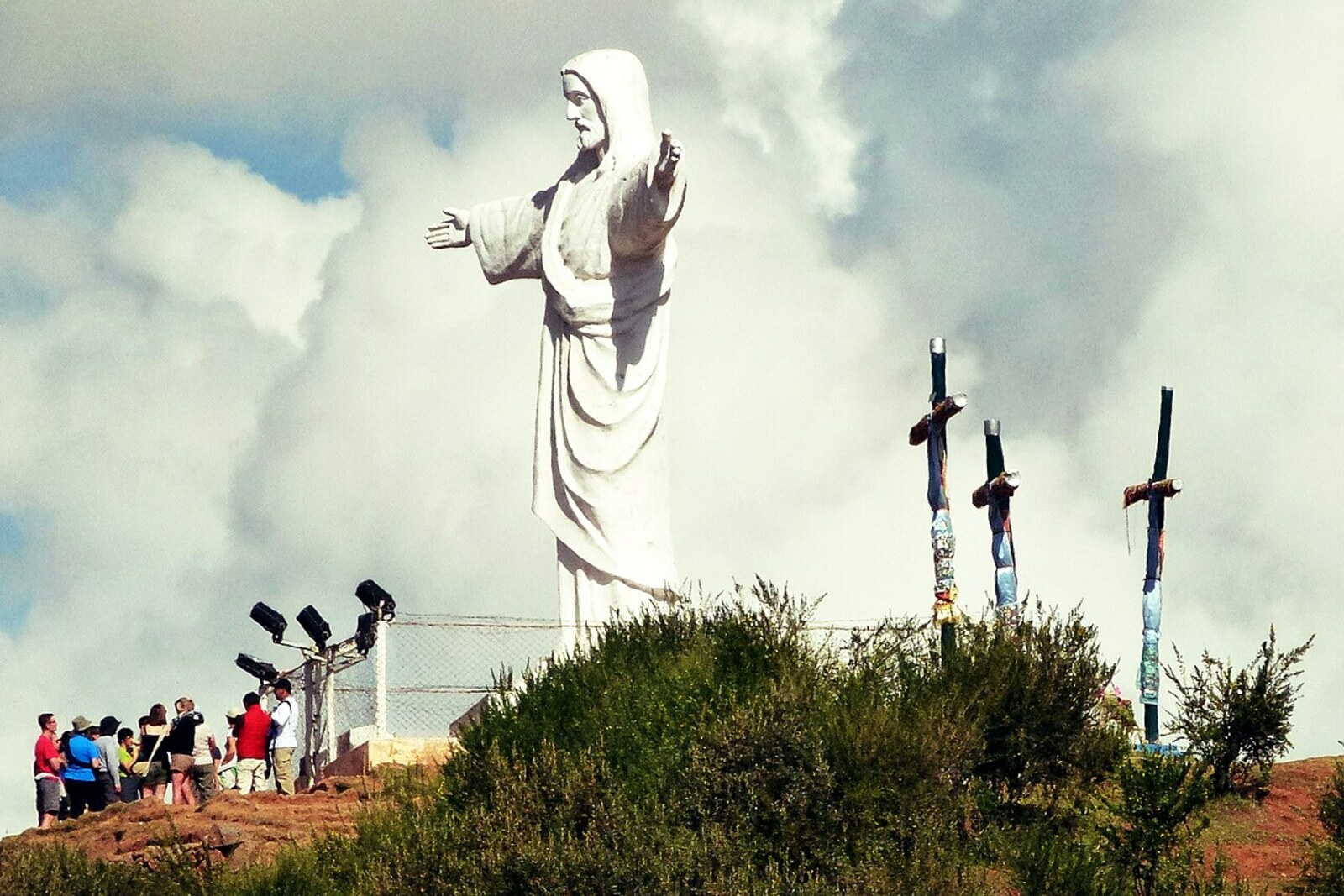
Look around first
What to notice
- White figure of Christ
- Outstretched arms
- Cusco Valley
The story of the place
The white figure above Cusco appeared at the decision of two silk merchants. The brothers Manuel and Federico Jasaui Facuse, Palestinian Christians, ran a successful business here and, before leaving, wanted to thank the city where they had made their fortune.
Their success began with the textile trade. The first Palestinians reached southern Peru through Argentina and Bolivia at the turn of the nineteenth and twentieth centuries. They moved along the railway and opened shops in cities connected with the wool trade: Arequipa, Sicuani, and Cusco. They sold fabrics and ready-made clothing, serving customers from the city and nearby settlements.
Cusco suppliers tried to cut off the new merchants from direct purchasing and urged city residents not to buy from them. Yet the shops held on: the Palestinians set lower prices and allowed payment in installments. Families pooled money and connections, and small sellers gradually became wholesalers and importers. For the Jasaui brothers, this was the work of a lifetime and the source of funds for their farewell gift.
They began collecting contributions from other members of the Arab-Palestinian colony and commissioned the sculpture from the Cusco master Ernesto Olazo Allende. They chose a Christian gift: most Palestinian families in the city practiced Christianity. In nineteen forty-five, during Cusco's festive week, the community presented the city with an eight-meter figure of Christ with outstretched arms.
They chose the summit of Pukamuqu—the Red Hill, a natural viewing point above the valley. The sculpture's arms extend from east to west, and its face is turned toward the city below. The merchants' gratitude was given a precise address: above the neighborhoods where their customers and shops were located, and high enough for the gift to be visible from below.
The name “Cristo Blanco” means “White Christ.” It came from the light layer of gypsum and marmolina that covered the figure. Today, the platform by the statue serves as a city viewpoint: from here, the historic center and the newer neighborhoods stretching along the valley can be made out.
In the nineteen fifties, many Palestinian families left Cusco for Lima. The Jasaui brothers left the city even earlier. On Pukamuqu, the figure they had paid for remained—a white Christ with arms outstretched above the place where the textile merchants found their customers.
Useful on site
Open urban space; go during the day, protect your breath on the climb, and do not block narrow passages.
Checked: June 28, 2026. Check the official source before visiting.Use this stop to rest after the open plateau, but do not limit yourself to a panorama photo: walk around the accessible platform to compare the statue, the hill, and the old complex.