 Guide On Map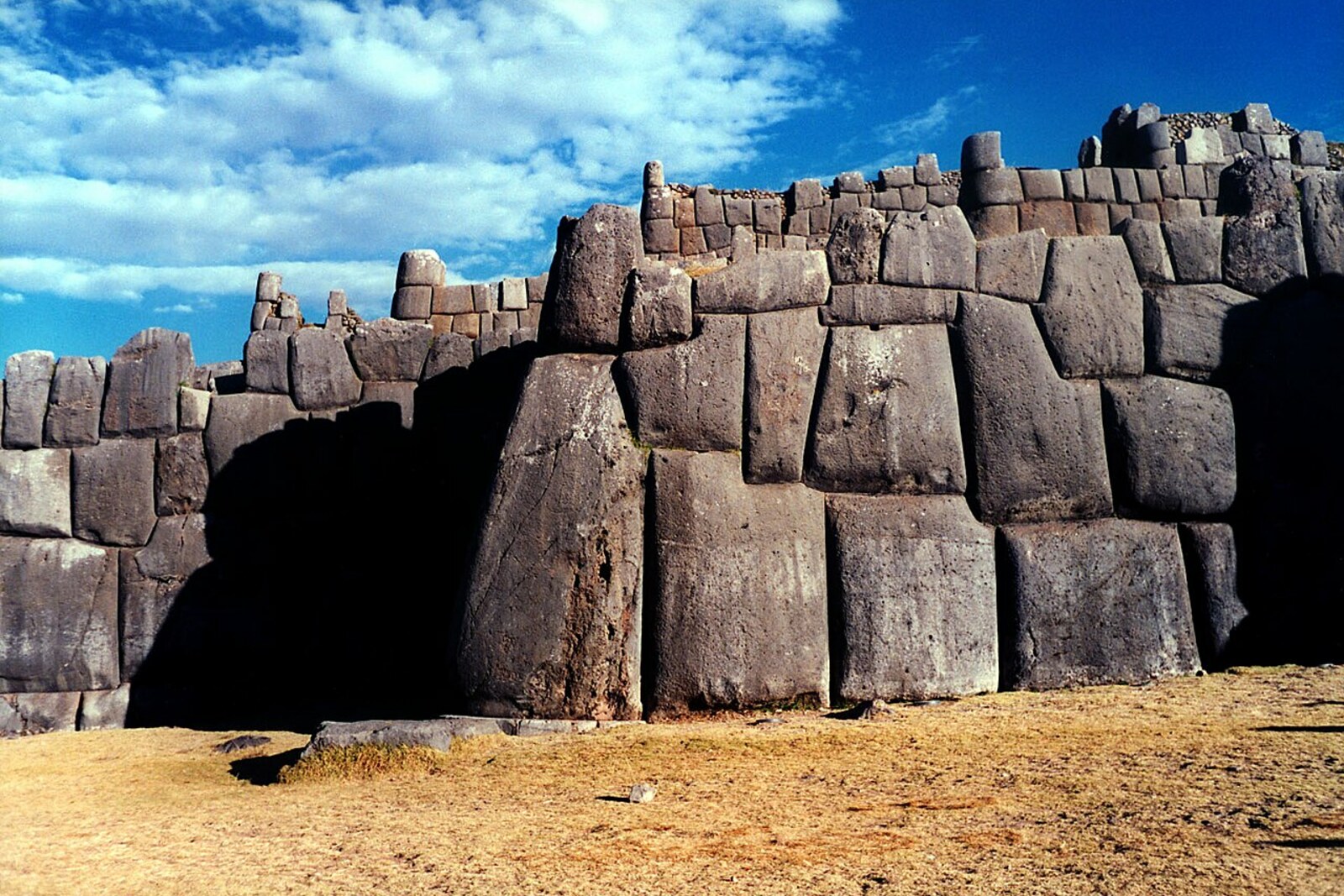
Look around first
What to notice
- Three zigzagging tiers
- Narrow passages
- Upper platform
The story of the place
On the northern ridge above Cusco, stone ledges form three zigzagging lines, leaving narrow necks between them. This was once the sanctuary of the Sun in the upper part of the city: weapons and everything warriors needed were kept here along with offerings. The walls were laid out so that those approaching could not advance in a broad mass: they slowed in the passages, while the defenders could act from several sides at once. Courtyards, buildings, and three towers once crowded the top; their stone later went into Cusco’s churches and houses, so there is now an open, empty platform above the walls.
Juan Pizarro approached these walls with a swollen, broken jaw. The younger brother of the Spanish governor was a captain, a member of Cusco’s city council, and one of the wealthiest participants in the conquest. Contemporaries reported that it was he who had earlier advised against leaving a garrison in Sacsayhuamán. That advice could now doom the entire Spanish detachment trapped in the city.
Before the war, the Incas dedicated the complex as the House of the Sun of Upper Cusco. Weapons, military equipment, and precious offerings were kept here. Three zigzagging walls covered the approach from the north: narrow passages slowed attackers, while projections allowed defenders to strike them from several sides. In May fifteen thirty-six, Manco Inca, the ruler trying to reclaim the capital, occupied the unguarded Sacsayhuamán. From here, his warriors watched Cusco, descended into the city, and hurled red-hot stones wrapped in cotton onto its thatched roofs.
Hernando Pizarro commanded the Spanish defense. He ordered his brother to retake the height. Juan led cavalrymen, infantrymen, and allied Cañari and Chachapoyas warriors along the road to Lima, as though the detachment intended to flee Cusco. Then the men turned into the ravines, went around the hill, and emerged onto the level field before Sacsayhuamán’s northern side—where the cavalry could approach the walls.
Even before this maneuver, Juan had been struck in the jaw by a stone while pulling a fallen cavalryman out of the fighting. The swelling kept him from putting on his steel helmet. Defenders repelled two assaults on the lower wall with stones and arrows. Before the third, Juan tied a leather shield to his arm and personally led the men toward the main passage. The attackers passed the gate and entered the inner courtyard, but stones from a raised platform forced them back again. Juan climbed up there with the foot soldiers. At one point, he did not cover his head with the shield, and one of the defenders split his skull with a stone.
Juan remained in the battle until his men took the platform. Then he was carried down to Cusco. Fifteen days later, he died, having managed to dispose of the enormous fortune he had amassed during the conquest. He was buried at night: the Spaniards feared that news of the commander’s death would encourage those besieging them.
Juan’s brothers continued the attack. On the following night, Hernando’s men climbed ladders onto the three stone tiers and drove the defenders into the buildings and towers above. After the loss of Sacsayhuamán, Manco’s warriors could no longer descend into the city so freely; the siege continued, but became a prolonged blockade.
Today, the best-preserved remains are those very zigzagging tiers that the attackers stormed. The courtyards, superstructures, and three towers have disappeared: in colonial times, residents dismantled them and carried off the stone for Cusco’s churches and houses. The upper platform was left empty, while the three walls that twice repelled Juan Pizarro’s men remained on the slope.
Useful on site
DDC Cusco lists Sacsayhuamán Park hours as 07:00-17:30; check the current schedule and COSITUC ticket before you go.
Opening hours by day
Do not touch the joints or climb onto the blocks. Compare the wall from a distance and up close: the first viewpoint shows the pattern, the second the individual shapes of the stones.