 Guide On Map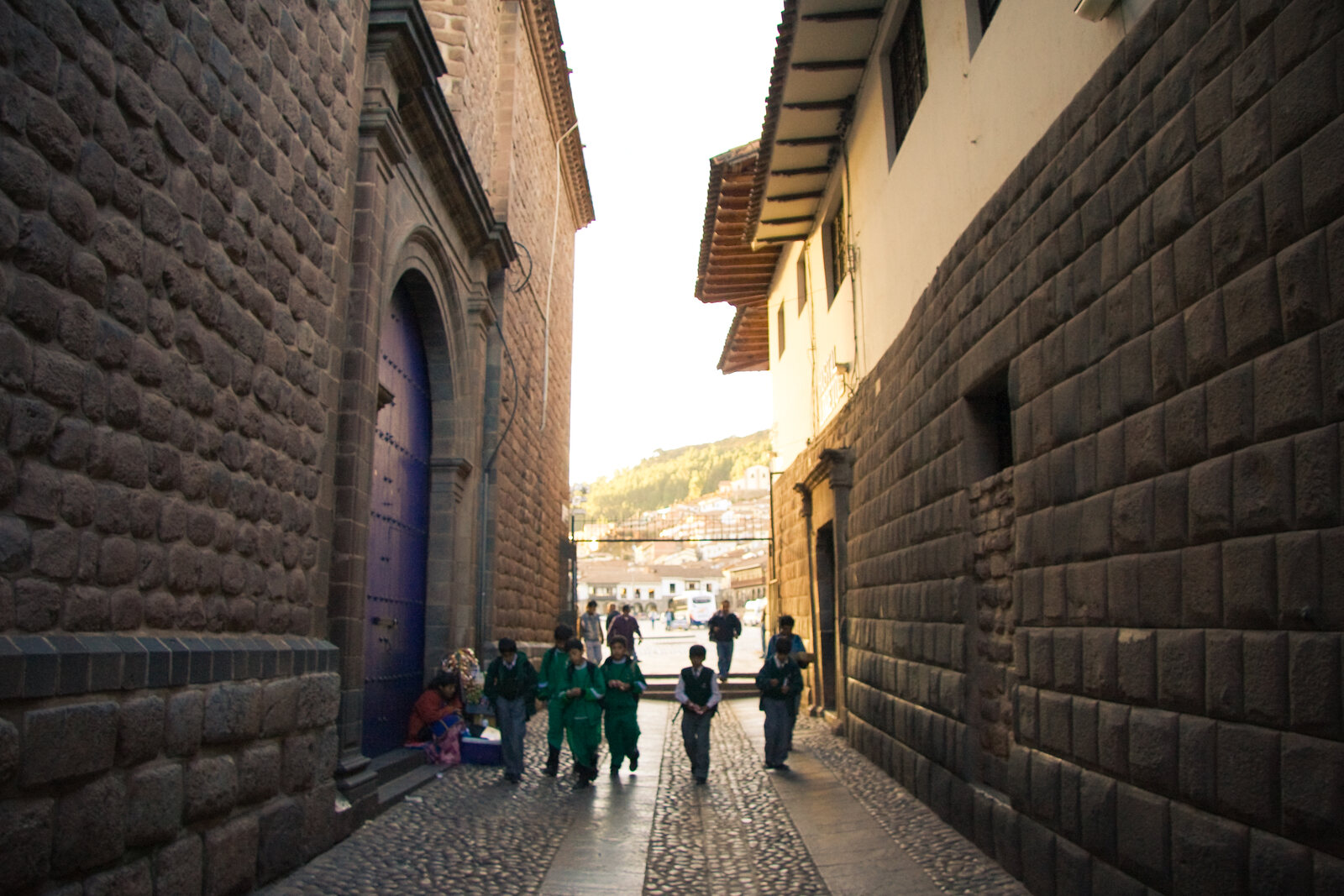
Look around first
What to notice
- Amarucancha Wall
- Acllahuasi Wall
- Chapel of Our Lady of Lourdes
- “Calle Loreto” sign
The story of the place
Calle Loreto appeared long before its present name. The Incas called this passage Inti Q'illu—the Alley of the Sun. During ceremonies, people walked along it from Intipampa to Haucaypata. On one side stood Amarucancha, a residence associated with the Inca Huayna Capac; on the other was Acllahuasi, the enclosed house of chosen women. The two long walls along the street marked the boundaries of these complexes. Shops and a craft gallery now operate between them.
The name Loreto came from the chapel at the exit onto the plaza. The Jesuits built it for the worship services of Indigenous people and dedicated it to Our Lady of Loreto—the Virgin Mary named after the Italian sanctuary of Loreto. It was in this chapel that Juan Sicos Inga sought the recognition on which his family's fate depended.
Sicos belonged to the Ayarmaca and Pumamarca lineages. In the sixteen eighties, representatives of other Inca nobility argued in court that members of these lineages had no right to be considered descendants of the Incas or to wear the mascapaycha—a headband denoting high status. A loss threatened Sicos and his children with being assigned to the tribute-paying estate: they would have had to pay tribute, perform personal compulsory service, and give up their former place among the city's nobility.
In sixteen eighty-seven, the court recognized the rights of Ayarmaca and Pumamarca. Two years later, the electors unanimously chose Sicos as senior alcalde of the Inca nobility, that is, its elected representative. At the same time, in the Loreto Chapel, he received Spanish hidalgo status and permission to wear a sword and a nobleman's clothing.
On August twenty-second, sixteen ninety-two, the banner of Our Lady of Loreto was carried out of the chapel. Sicos walked in front of the litter, holding the banner. He wore, all at once, a pearl-decorated mascapaycha, Spanish ceremonial dress, two gold chains, a sword, and a dagger. Two officials of the Crown walked beside him, and ahead went recognized Inca nobles from the eight city parishes. The very circles that had recently challenged Sicos's ancestry now publicly accepted him as their head.
His father, Diego, hired a notary to record the composition of the procession, his son's clothing, and the names of the participants. Almost a century later, Sicos's descendants attached this record to a petition for exemption from tribute. The parade lasted several hours; the notarized testimony served the family for decades.
In eighteen ninety-four, the chapel was dedicated instead to Our Lady of Lourdes. The alley retained its former name. Sicos's banner is not here, the chapel by the plaza has changed its dedication, and the “Calle Loreto” sign still repeats the name under which the notary recorded his procession.
Useful on site
The pedestrian street is open as a city passageway.
Checked: June 15, 2026. Check the official source before visiting.The street is narrow and busy: view the walls from the accessible side, do not hold up the flow, and do not touch the stonework.