 Guide On Map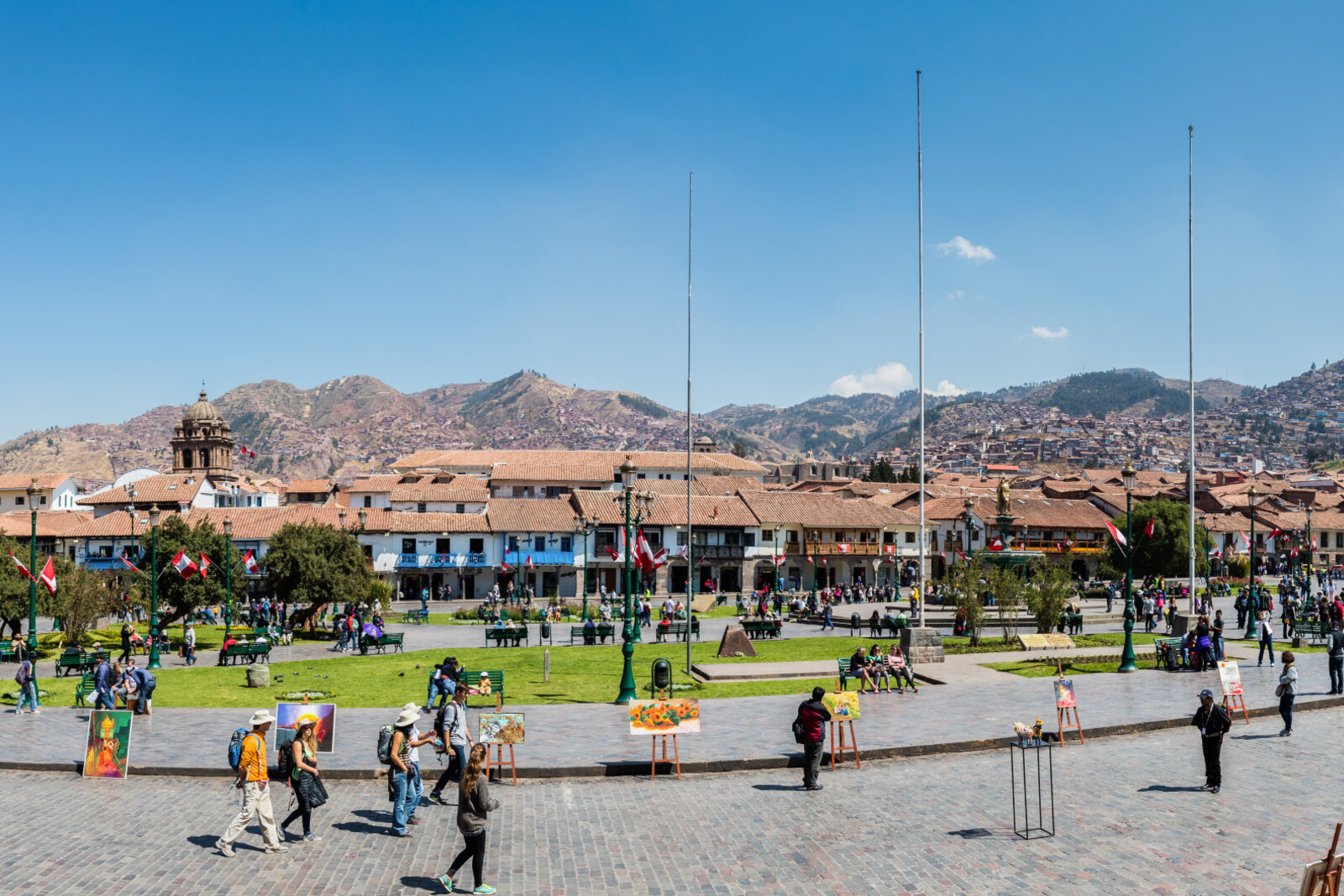
Look around first
What to notice
- Façade of the University Paraninfo
- Memorial plaque with the names of those executed
- Façades of the Cusco Cathedral Complex and the Church of the Society of Jesus
The story of the place
The cathedral and Jesuit façades frame only part of old Haucaypata, which once extended far beyond today’s boundaries. The square took its name from the armed detachments that gathered here. Religious processions passed through this open area, goods were sold here, and the authorities’ decisions were announced. In the very center of Cusco, people came together for matters requiring a shared presence.
A memorial plaque bearing the names of those executed is fixed to the façade of the University Paraninfo, beside the Church of the Society of Jesus. The leaders of the uprising were held in the rooms behind this façade before their deaths. They were brought outside, onto Cusco’s main square, for the execution: the sentence had to be shown to the entire city.
Before the Spanish conquest, the square was called Haucaypata and served the Incas for major ceremonies. It was considerably larger than it is now. Colonial builders divided it with city blocks, and turned the remaining part into Plaza Mayor: goods were traded here, processions were held, orders were proclaimed, armed detachments gathered, and public punishments were carried out. The familiar name Plaza de Armas—square of arms—came from the military gatherings.
In seventeen eighty, José Gabriel Condorcanqui and Micaela Bastidas intended to take it. Condorcanqui was a hereditary cacique—the head of three communities recognized by the colonial administration. He was responsible for tribute payments and for sending people to the mita, compulsory labor far from home. He himself earned money by transporting goods on mules and knew the southern Andean roads, customs duties, and forced trade well, under which officials made communities buy goods at a set price.
At first, Condorcanqui tried to act through the courts. In seventeen seventy-seven, he asked for the residents of his region to be exempted from being sent to the mines of Potosí, but was refused. Three years later, he captured the hated corregidor Antonio de Arriaga, took the name Túpac Amaru II, and launched an uprising against the mita, customs levies, and forced sales.
Micaela Bastidas was the uprising’s second leader. She recruited people, distributed money, food, and weapons, and oversaw communication between the detachments. She could neither read nor write, so she dictated letters. After the rebels’ victory at Sangarará, Micaela demanded that they march on Cusco at once, before the city could prepare its defenses. Túpac Amaru delayed and moved into other provinces. By the time his detachments approached Cusco, the city junta had already assembled a militia. The attempt to take the city failed. In the spring, Túpac Amaru, Micaela, and their relatives were handed over to royal troops.
The royal inspector José Antonio de Areche, sent to suppress the uprising, set a public execution for May eighteenth, seventeen eighty-one. In the square, Micaela, her elder son Hipólito, relatives, and commanders were killed one after another. Túpac Amaru was forced to watch. Then his arms and legs were tied to four horses, and the horses were driven in different directions. The horses failed to tear the prisoner apart, and Areche ordered his head cut off. The bodies were divided into parts and sent to the provinces where the uprising was underway. The younger son, Fernando, was left alive, but was forced to witness the execution of his family and sent into permanent exile in Spain. The uprising itself continued after the deaths of its first leaders.
The scaffold is no longer in the square. The execution is recalled by the plaque on the façade of the Paraninfo, the very building from which the prisoners were brought out into the open space. On May eighteenth, memorial ceremonies are again held here, in front of the former prison and at the site of the public execution.
Useful on site
Open square and city passage; the route point operates at any time, although holiday church and civic events may partly alter the path of travel.
Checked: June 15, 2026. Check the official source before visiting.Start at the edge to take in the square at a glance; in the center and near the churches, be prepared to go around groups and processions.