 Guide On Map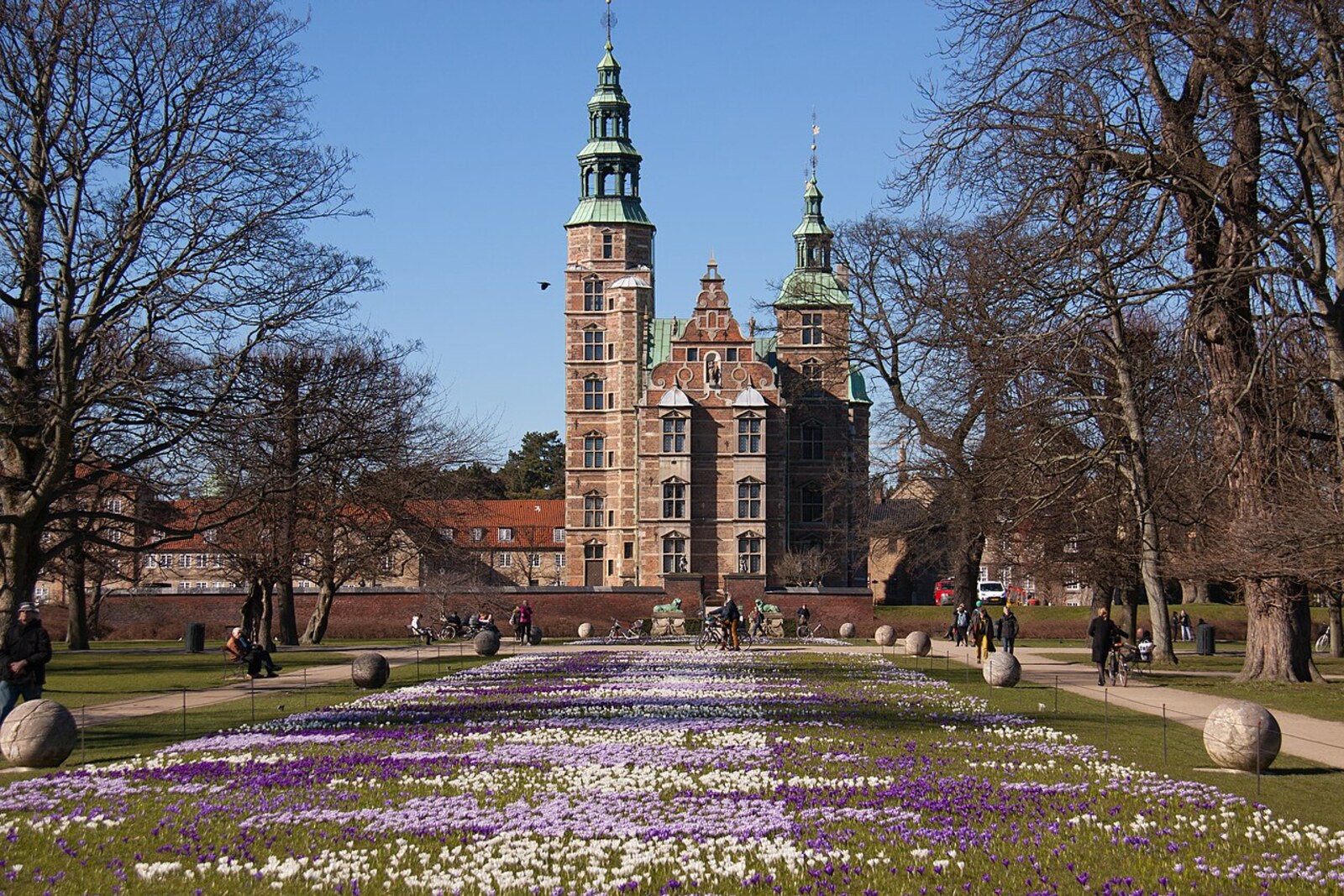
Look around first
What to notice
- Red-brick façades
- Towers with spires
- Castle moat
- Drawbridge
The story of the place
Behind the red-brick façades and towers with spires, a museum of the royal collection has been open since eighteen thirty-eight. Beneath the castle, a treasury with crowns and jewels is kept, while the halls still contain the possessions of the family that lived behind these walls. Outside, beside the drawbridge, the moat still lies where it once separated royal life from the city.
The moat by the brick walls appeared together with the country house of the Danish king Christian IV. In sixteen oh six, he bought up forty plots beyond the city rampart: there was room here for a garden, kitchen gardens for the court, and a private royal residence. The king expanded the small house until it gained its present length, a third floor, and towers with spires. In sixteen twenty-four, Christian recorded its name for the first time—Rosenborg, the “castle of roses.”
On November fifth, sixteen thirty-two, the king held a feast here. Among the guests was Frants Rantzau, a twenty-eight-year-old aristocrat whom Christian was preparing to become his son-in-law and promoting to the highest post in the royal administration.
Rantzau belonged to one of the wealthiest noble families, owned inherited estates, and received income from lands granted to him by the Crown. At twenty-three, he was already sitting on the Council of State and governing Copenhagen. The king betrothed him to his eldest daughter, Anna Cathrine, when the girl was nine years old. The wedding was postponed until she came of age, and Rantzau became the first nobleman who was to enter Christian IV’s family.
That same year, the king appointed him rigshofmester—the head of the court and the kingdom’s highest-ranking official. Rantzau did obtain the post, but he did not have time to exercise it.
After the feast, he left the castle, fell into the moat, and drowned. Why he ended up in the water is not known for certain. Later, people said that Christian himself tried to pull out his future son-in-law and nearly fell in after him; this is a legend, not a confirmed detail. One thing is certain: Frants Rantzau died in the Rosenborg moat, just a few months after his appointment.
Anna Cathrine remained unmarried. In the summer of the following year, she wrote in French in a small prayer book: “God, comfort my soul.” In August, shortly after her fifteenth birthday, the girl died of smallpox. Court legend replaced smallpox with a cause more fitting for a family tragedy—death from grief.
The book was set in a gold enamel binding with a skull, an hourglass, a cross, and an open Bible. For a long time, it was presented as Rantzau’s gift to his fiancée. The date on the first page disproves this version: the entry was made on June twentieth, sixteen thirty-three, more than seven months after the death of her fiancé.
Since eighteen thirty-eight, Rosenborg has been open as a museum of the royal collection; beneath the castle, a treasury with crowns and jewels is kept. The moat remained outside, and Anna Cathrine’s prayer book is among the possessions of the family that lived behind these walls.
Useful on site
Daily 10:00–17:00; last entry 16:30. In winter, reduced hours and Monday closures are possible. It is best to book tickets in advance.
Checked: June 28, 2026. Check the official source before visiting.The historical objects are in the museum display, so plan your entry separately. Without visiting the interiors, focus on the castle’s appearance and its connection to the garden.