 Guide On Map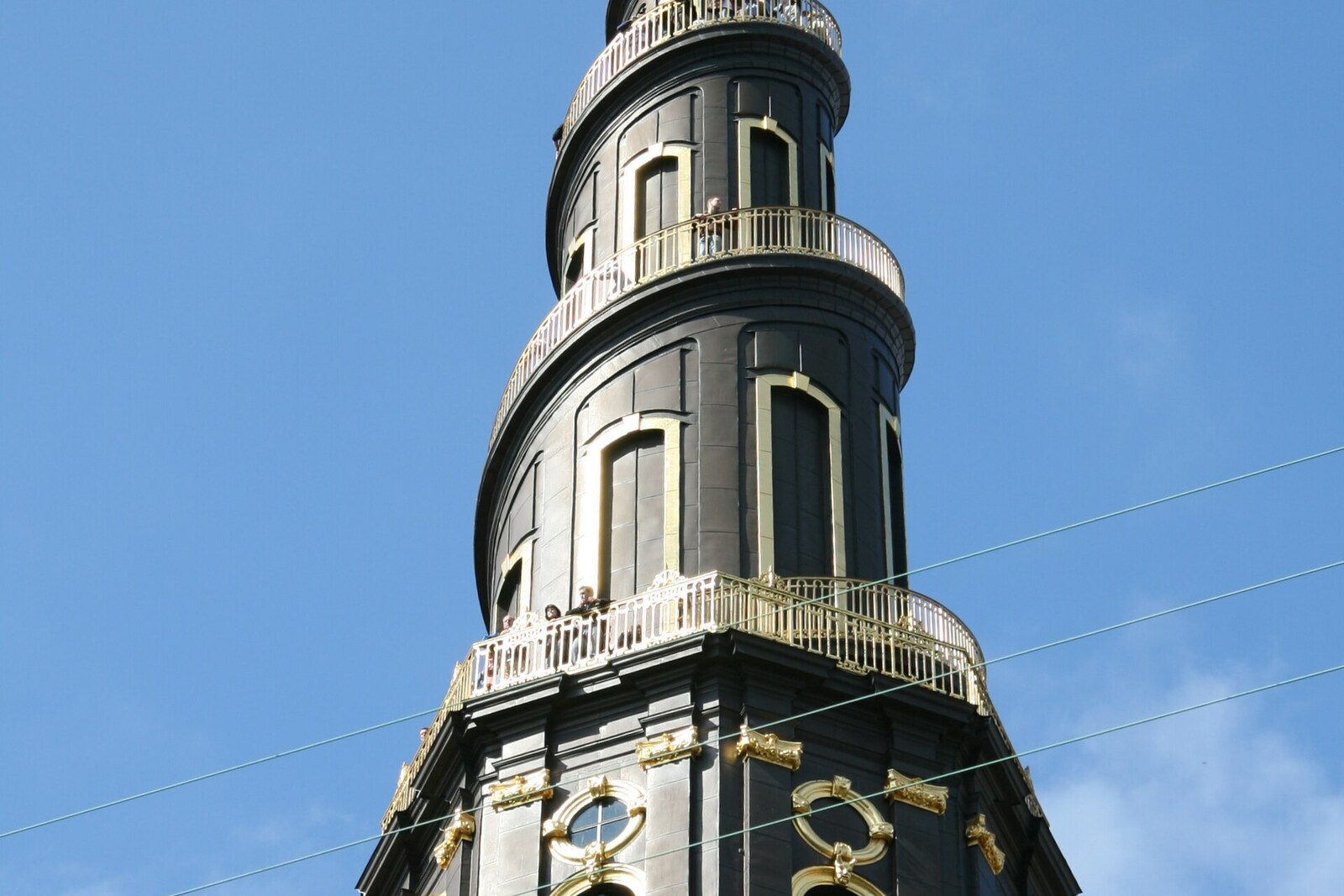
Look around first
What to notice
- Golden spiral spire
- External staircase
- Gilded figure of Christ
- Copper sheathing of the tower
The story of the place
For its first fifty-odd years, the Church of Our Saviour stood without the golden spiral by which it is recognized today. It is an active Lutheran parish church in Christianshavn: services are held inside, and the tower receives visitors.
The new harbor town initially had a small temporary wooden church. It stood a little south of the present one. In sixteen eighty, Christian V commissioned the court builder Lambert van Haven to build a permanent church. Because of the reclaimed ground, the foundation work was delayed, and the church was consecrated only on April nineteenth, sixteen ninety-six. The tower was then left without its intended finishing element.
They returned to the matter in seventeen forty-seven. Lauritz de Thurah, the court architect, sought the commission to complete the tower. He built for the royal court, but by the end of the forties another court architect—his rival Nicolai Eigtved—was increasingly receiving the major commissions. The spire in Christianshavn gave de Thurah the chance to carry out his own design again, from drawing to finished building.
During a study trip, de Thurah saw in Rome the chapel of Sant'Ivo alla Sapienza, with its twisted Baroque lantern. For the Church of Our Saviour, he proposed a genuine external staircase winding around the spire. The design was accepted only on condition that the old tower could bear the addition. The architect then replaced heavy stone with an oak frame and covered it with copper. Construction began in seventeen forty-nine.
On August twenty-eighth, seventeen fifty-two, King Frederick V came to inspect the completed work. Together with his ministers, he climbed the external staircase to the very top platform, while a salute of twenty-seven cannons was fired from the church square. A few days later, a thanksgiving service was held in the church. The spire became de Thurah's principal work and a prominent landmark for ships entering Copenhagen.
A legend later arose that the architect discovered that the staircase had been twisted in a direction displeasing to the king and threw himself from the tower. It is only a legend. The king accepted the spire and himself walked the entire staircase at the ceremonial opening. De Thurah died of illness at home seven years later—burdened by debts, but respected by his contemporaries.
The external staircase makes four turns around the spire. Of its four hundred steps, the final one hundred fifty are outdoors. The church was called Church of Our Saviour even before this tower appeared; above the staircase, de Thurah placed a gilded Christ holding a victorious banner. The figure stands on a globe, directly above the final platform, which Frederick V climbed to on the day of the opening.
Useful on site
The tower is closed in January; in the main season it is usually open daily 09:00–20:00, with separate exceptions. Last entry is 30 minutes before closing. The climb is closed in rain, snow, or strong wind.
Checked: June 28, 2026. Check the official source before visiting.The climb takes place outdoors and is not suitable for people afraid of heights or in bad weather. Check access and tower visiting options separately.