 Guide On Map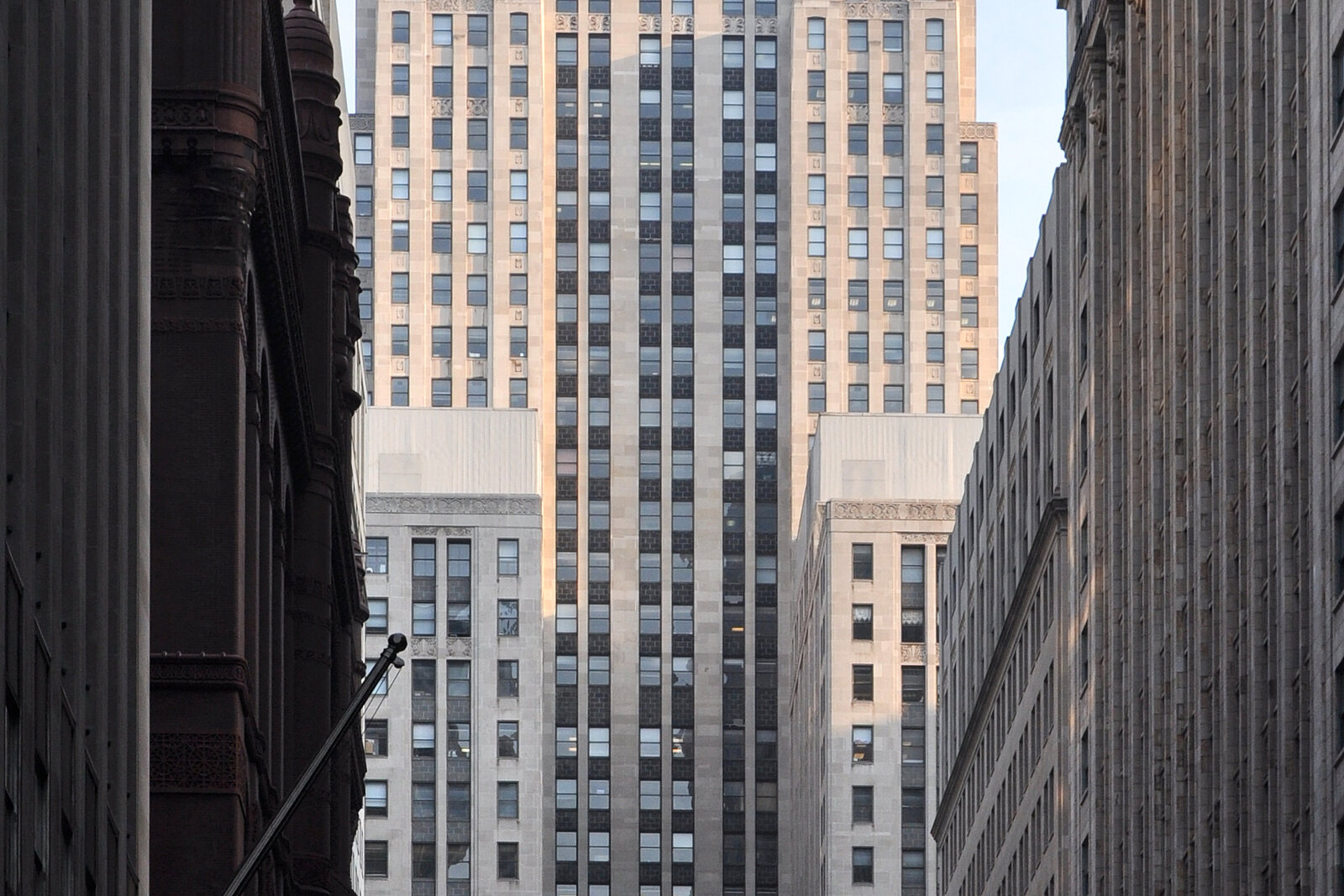
Look around first
What to notice
- Statue of Ceres
- Wheat stalk
- Ear of corn
- Inscription with the name of the Chicago Board of Trade
The story of the place
In nineteen thirty, this tower was built for the Chicago Board of Trade, where the price and delivery of a future harvest were agreed in advance. The Board set the rules for such contracts and brought grain buyers and sellers together in one market. Stepped polygonal pits were built inside for trading; participants shouted orders in them and conveyed terms by gesture. Open-outcry trading ended in two thousand fifteen, but Ceres with a wheat stalk and an ear of corn still rises above the tower.
After trading ended on July eleventh, nineteen eighty-nine, the directors of the Chicago Board of Trade declared an emergency in the soybean market. Formally, the order applied to all large participants. In fact, only one group had to sell—the Italian agribusiness conglomerate Ferruzzi.
The conglomerate was headed by Raul Gardini. Shortly before that, his group had bought the major American processor Central Soya, and its plants now needed huge quantities of beans. The previous summer, the Midwest had suffered a severe drought, and stocks had dwindled. Ferruzzi traders began buying both soybeans in warehouses and contracts for their future delivery. Gardini maintained that he was merely supplying his plants with raw materials.
It was in this building that such contracts were made. The buyer and seller fixed the price in advance, then either closed the transaction or carried it through to delivery of actual grain. Trading took place in stepped polygonal platforms—pits—where participants could see one another and passed orders by voice and gesture.
By July tenth, Ferruzzi held contracts for twenty-two million bushels—almost six hundred thousand tons of soybeans. That amounted to fifty-three percent of all July contracts still open. At the same time, the group controlled more than eighty-five percent of the stocks that could be tendered for delivery through the exchange.
The contract sellers were in a dangerous position. If Ferruzzi demanded all the beans owed to it, there would not be enough soybeans available. To meet their obligations, the sellers would have had to seek grain from a company that itself owned almost all available stocks. Such a market corner allowed the buyer to dictate the price.
For several weeks, the exchange committee asked the conglomerate's managers to reduce the position. They continued to insist that they were lawfully hedging their plants' needs. The directors of the Chicago Board of Trade then ordered holders of large positions to sell part of their contracts each day and leave no more than one million bushels by settlement. Independently, the federal regulator stripped Ferruzzi of the right to treat the entire purchase as an ordinary hedge for a processor.
The forced selling immediately drove the price down by about five percent. By the final day, July soybeans had fallen from seven dollars and twenty-six cents to about six dollars and eighty-nine cents per bushel. Ferruzzi's losses were then estimated at ten million dollars, and the decline in the value of American farmers' crop at about half a billion.
Gardini accused the Chicago Board of Trade of unlawful interference and demanded compensation. Later, the exchange itself dropped the charge of completed manipulation; the parties settled the remaining exchange claims before a decision on the merits. In a separate class action, the group agreed to pay twenty-one and a half million dollars without admitting guilt.
The present skyscraper was built in nineteen thirty specifically for the Chicago Board of Trade—a commodities exchange that created the rules for contracts, brought buyers and sellers together, and could halt a dangerous transaction. That is why Ceres stands at the top with wheat and corn. Open-outcry trading in agricultural futures here ended in two thousand fifteen; soybean contracts are now made electronically. The pits with sellers and buyers can no longer be found in front of the facade, but the name of the institution that forced Ferruzzi to sell off soybeans remains on the tower.
Useful on site
Exterior viewing daily; the museum in the Chicago Board of Trade Building is open 10:00–16:00 on weekdays, except federal holidays, with security screening.
Checked: June 29, 2026. Check the official source before visiting.View the tower from the sidewalk, and do not step into the roadway for a symmetrical shot. The interiors and specialized visits require separate arrangements.