 Guide On Map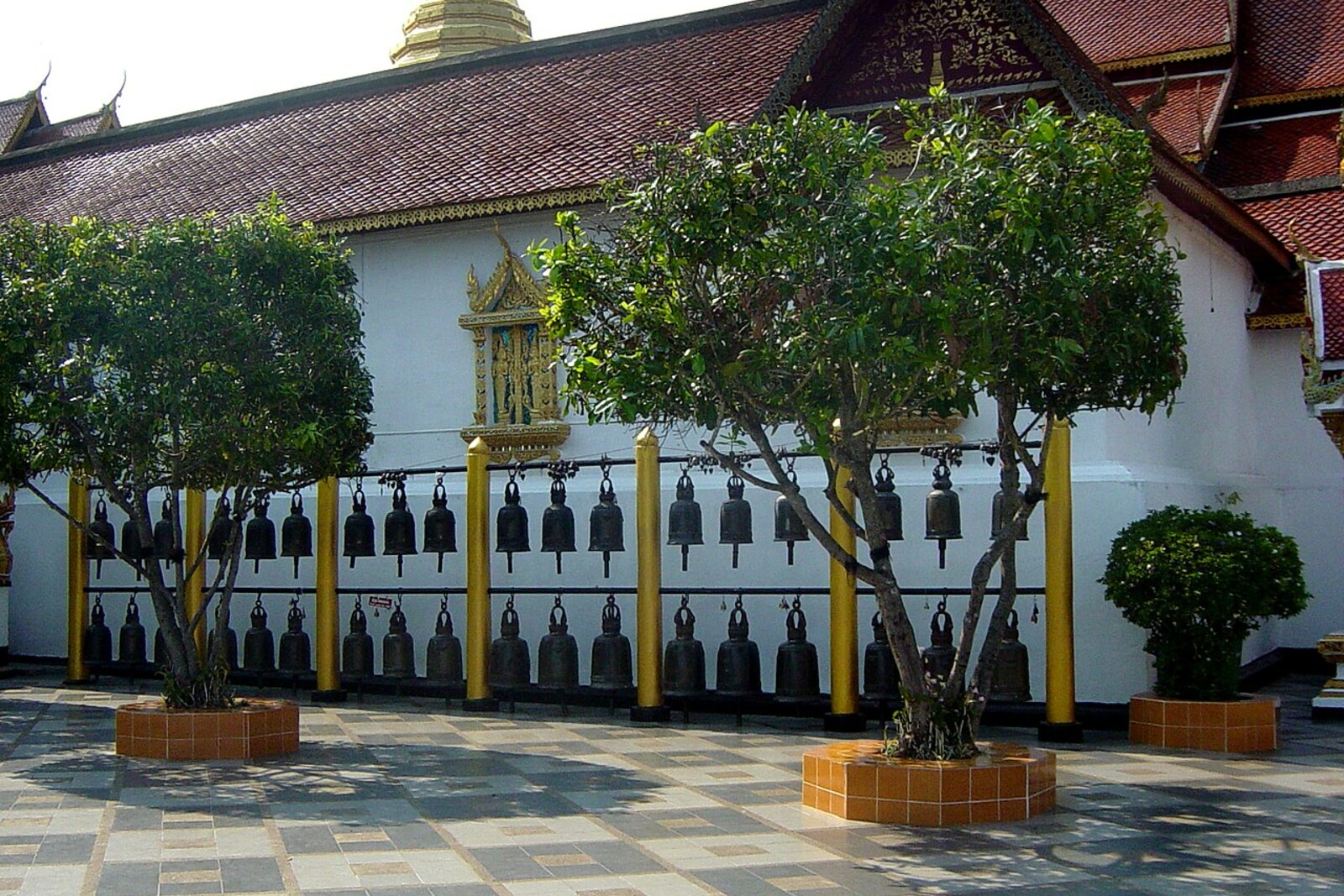
Look around first
What to notice
- Rows of hanging bells
- A large bronze bell
- Inscriptions in three scripts
The story of the place
The avenue of bells occupies one part of Wat Phra That Doi Suthep: temple bells hang here one after another, and a large bronze one stands out among them. Tham script, modern Thai script, and Chinese characters appear side by side on its body. The inscriptions preserve the circle of people connected with this gift to the temple: monks, a princely family, and merchants.
Striking a bell takes a few seconds. The people whose names are cast into the bronze here were counting on a span longer than their own lives: they gave the temple metal and the work of craftsmen so that the offering would remain beside the relic after their deaths.
A large bell in the same part of the monastery has preserved this story. In eighteen sixty-nine, its casting was led by Kawilorot Suriyawong, ruler of Chiang Mai, and his wife. They gave the bell to the Doi Suthep stupa as a religious offering.
Sixty-one years later, the bell was badly damaged. The inscription says this without ceremony: its former sound had become faint and poor. On July second, nineteen thirty, people living in a different Chiang Mai undertook to preserve the offering. Phra Aphaisaratha, head of the local Buddhist community, gathered the monks. The laypeople were led by Chao Kaeo Nawarat, then ruler of the city. They were joined by Dara Rasmi, daughter of a former ruler of Chiang Mai and widow of the king of Siam, as well as Luang Anusarn Sunthorn, a merchant of Chinese descent, his wife Khamtieng, and their children. Anusarn's wealth grew through trade; the family invested part of what it earned in bronze for the temple bell.
The old metal was recast, with copper added in an amount almost equal to a third of its former weight. The new body listed the participants and recorded what they sought: the bell was given to the sacred site for the whole span of its life, and the merit from the donation was to help the donors leave the cycle of rebirths and attain nirvana. History cannot determine whether they received this reward. The verifiable result hangs here: the old bell did not disappear; its bronze became part of the new one.
The inscription was made in Tham script, used in Lanna to record religious texts, in modern Thai script, and in Chinese characters. These lines preserve the composition of the donation more accurately than any later account: monks, a princely family, and a merchant family. All three scripts are still found on the same bell.
Useful on site
Accessible during the temple complex's hours; keep the passage clear for monks and pilgrims.
Checked: June 28, 2026. Check the official source before visiting.If you decide to strike a bell, do so once and without unnecessary force; prayers and ritual circumambulation may be taking place nearby.