 Guide On Map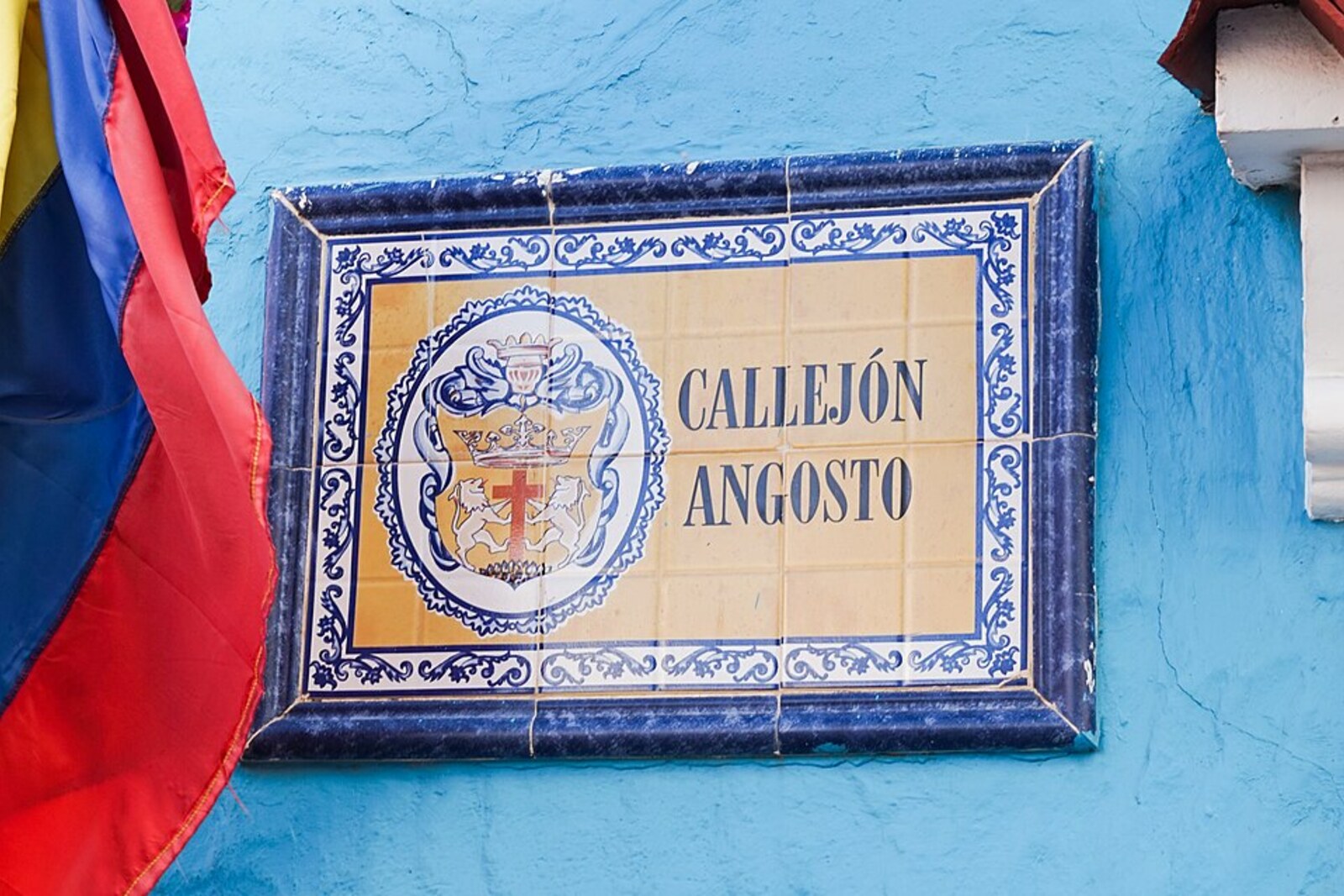
Look around first
What to notice
- Canopy of umbrellas
- Row of one-story façades
- Alternating doors and windows
- Donation box
The story of the place
A canopy of umbrellas hangs above the short passage between residential houses, and a donation box stands at the entrance. Its upkeep rests with the residents of the nearest houses: they collect money to replace the umbrellas and put them back up if one falls. Under this canopy, the alley’s everyday life meets people who come here only briefly.
The name Callejón Angosto means “Narrow Alley.” It connects Pozo and Lomba Streets and was probably the most densely populated place in Getsemaní. Owners divided their plots into small rental dwellings: usually two rooms under a shared roof and a shared courtyard with a kitchen and toilet. A row of identical one-story façades—a door, a window, then another door and window—has preserved this old subdivision. Families lived close together, there were almost no shops, so the alley served as their shared living room.
Marco Antonio Vargas came here as a teenager, married a local woman, and stayed. He is a veterinarian by profession, and his main commitment in this story was the street outside his own home. Marco said that part of his teenage group became involved in drug dealing. One friend ended up in prison; the others managed to walk away from it. But by the end of the two thousands and in the following decade, the consequences were already visible: children stopped playing outside, neighbors hardly came out, and sometimes did not even greet one another.
Marco, his wife Naida Romero Mendoza, and their neighbor Levinton Bustamante decided to bring people back onto the street. Levinton found a Portuguese town online where residents had decorated a similar alley with suspended umbrellas and then began setting out tables by their homes again and opening small businesses. The three went door to door along Callejón Angosto. One family gave thirty thousand pesos, another forty thousand. The money was enough for only a dozen umbrellas.
They hung them in three short rows, reaching only as far as Carmen Pombo’s house. That proved enough: passersby began entering the alley and taking photographs. The neighbors then continued collecting money. On December twenty-ninth, two thousand eighteen, more than two hundred umbrellas were already hanging above the entire street.
After that, children began playing between the houses again, adults brought out chairs, and residents who had previously barely known one another began maintaining the canopy together. Film crews and visitors followed the photographers, and then small businesses appeared. Other streets in Getsemaní asked the residents here for advice and repeated their idea.
The umbrellas above Callejón Angosto belong to the neighbors themselves. They replace them with the money they collect, and a donation box stands at the entrance. If one umbrella falls, residents of the nearest houses pick it up and hang it back above the alley.
Useful on site
Public alley; free passage, but this is a residential street without museum hours.
Checked: June 30, 2026. Check the official source before visiting.Stay in the public part of the alley: do not enter courtyards without an invitation, and do not photograph people through windows and doors.