 Guide On Map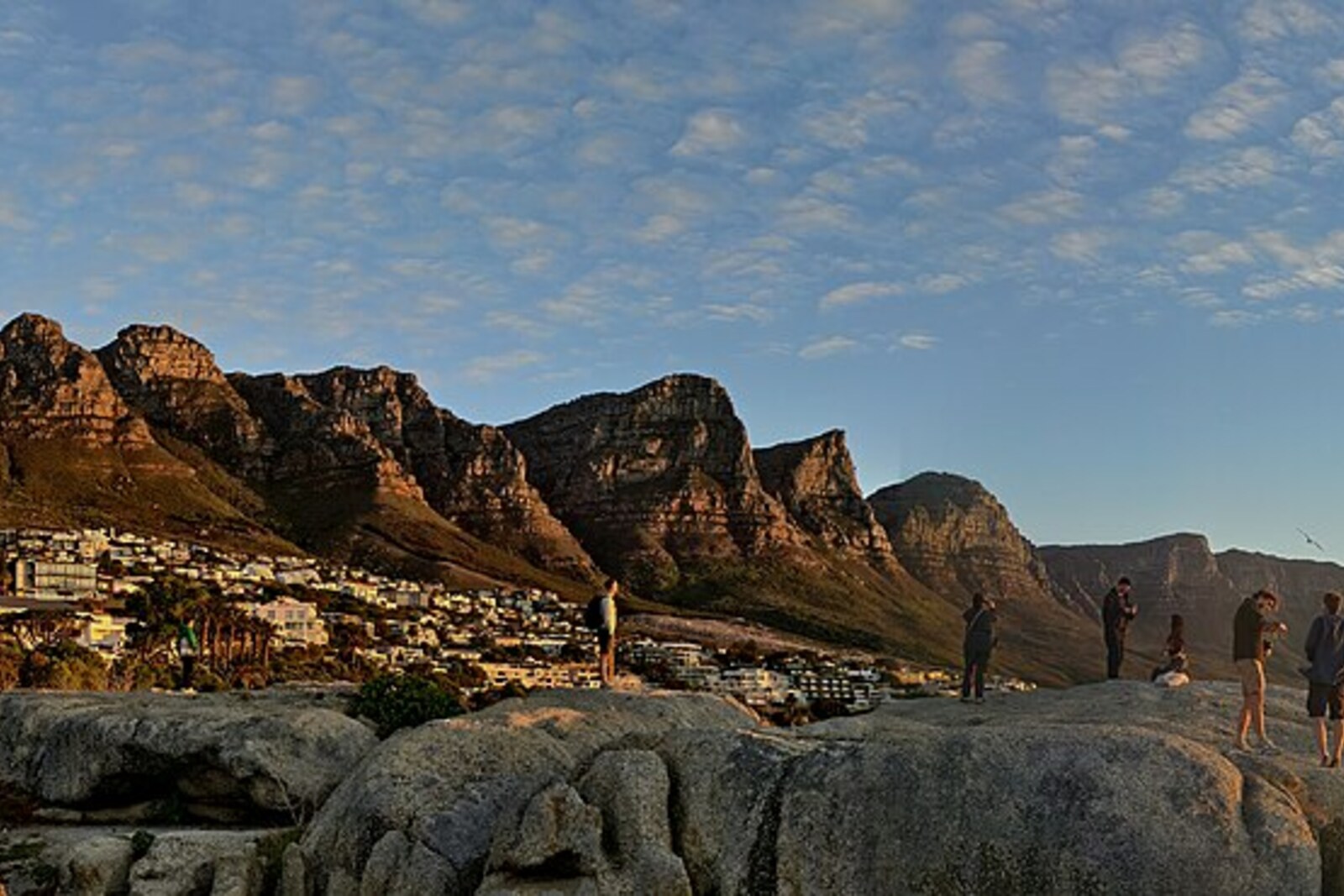
Look around first
What to notice
- Corridor Ravine
- Rock buttress
- Smooth outward-sloping slabs
- Ridges of the Twelve Apostles
The story of the place
Corridor runs as a narrow gully between a rock projection and the neighboring slope on the western side of Table Mountain. It became a landmark on Pipe Track: climbers use gullies and buttresses like these to distinguish lines of ascent on the wall. The smooth slabs slope outward and turn into ridges, so every fold of rock here received its own name. The Dutch once called this entire ridge gable mountains, because the stepped ledges resembled the facades of houses.
Corridor Ravine cuts through the western edge of Table Mountain between Slangolie Ravine and the protruding Corridor Buttress. Hiking groups climb up the gully, while climbers divide the neighboring rock wall into separate routes. Here it is especially clear why the Twelve Apostles have never had a reliable count.
The Apostles in the name are the closest disciples of Jesus. Yet there were no twelve peaks here bearing their names. Local historical tradition attributes the name to Sir Rufane Shaw Donkin. He was a career British general who lived for army service. After his young wife died in India, he was granted medical leave and came to the Cape; in eighteen twenty, he was assigned to govern the Cape Colony temporarily in place of the departed governor Charles Somerset.
Before Donkin, this ridge was called Gevelbergen—“gable mountains”: to the Dutch, the ledges resembled the facades of houses. Donkin gave them the collective name Twelve Apostles. No document has survived in which he assigned the twelve disciples of Christ to twelve crags; it is not even known what exactly he counted as a separate “apostle.” Two years later, Somerset returned, Donkin left office, and the name he had invented displaced Gevelbergen.
When Pipe Track opened a way for people along the western slope, one collective name was no longer enough. Climbers needed to distinguish every gully and every buttress. By the early twentieth century, this wall was already called Corridor.
George Travers-Jackson, a clerk at a trading firm and the best-known Cape climber of his time, wanted to establish a direct ascent up it. He took risks without a modern belay system, chocks, or sticky rubber shoes: the ropes were hemp, and heavy nailed boots remained on his feet.
In nineteen oh two, Jackson and a companion approached the buttress, but smooth slabs sloping outward forced them to retreat. Five years later, he returned with another group. The climbers got much higher, tried several passages, and came up against overhanging rock. To get out, they had to traverse left for a long time until they left the wall into this very Corridor Ravine. In his journal, Jackson recorded only a “partial ascent.”
Seven years later, climbers of a new generation completed the frontal route. It was recognized as the most difficult ascent on Table Mountain at the time. Jackson lost the first ascent he had pursued twice, but later described the new masters as brilliant.
Modern lists count either fifteen buttresses or eighteen summits here: the result depends on whether a projection, its summit, and the neighboring ridge are counted as one object. The old name of Saint Paul has survived as a second name for Corridor Buttress, and the name of Judas remains attached to a summit farther south. The ravine down which Jackson left after his failure is still labeled Corridor on the map.
Useful on site
Open mountain trail; a sensible final point to turn around for the return journey.
Checked: June 28, 2026. Check the official source before visiting.Treat this point as a turnaround place, rather than an invitation to improvise an ascent. Before stopping, check the daylight, weather, water, and your energy for the return distance.