 Guide On Map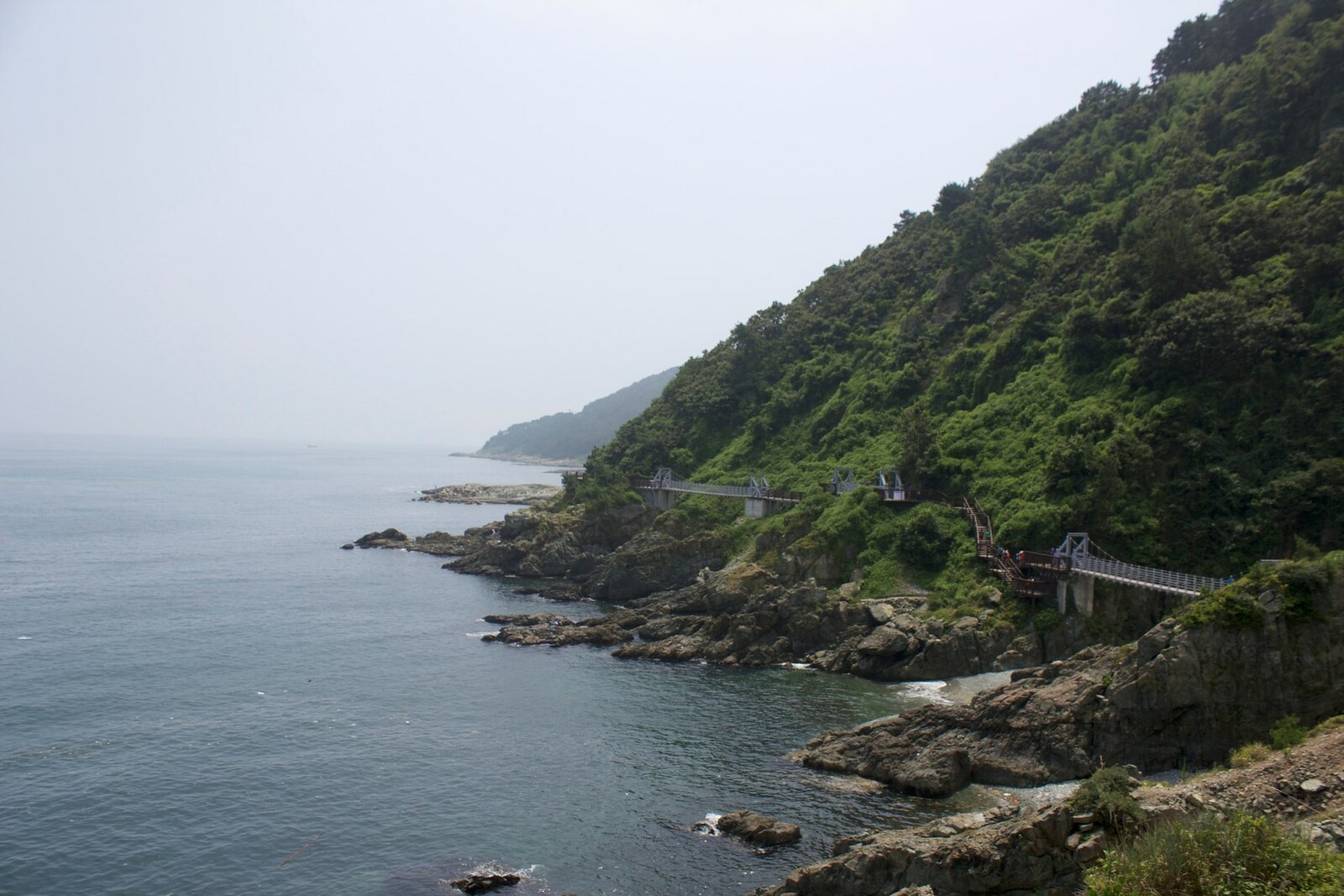
Look around first
What to notice
- Coastal trail
- Yeongdo slopes
- Sea
The story of the place
The old name of the whole island—Jeolyeongdo—has survived in the name of the coastal trail. It is usually translated as “the island of the interrupted shadow”: local horses supposedly ran so fast that even their shadows could not keep up. That speed is a legend. Old records confirm that horses were bred here: researchers date the local royal stud back to the Silla period, and many centuries later, a pasture was still listed on the island.
The most famous Jeolyeong horse entered history at the beginning of the tenth century. At that time, the former kingdom of Silla was falling apart. The military commander Gyeon Hwon founded the state of Later Baekje in the southwest and intended to subdue the remaining lands. Opposing him was Wang Geon, the founder of Goryeo, who sought the same for his dynasty.
In August nine hundred twenty-four, Gyeon Hwon sent his rival a diplomatic gift: a bluish-gray horse bred on Jeolyeongdo. Such a gift conveyed more than the sender’s friendliness. A good horse was military property, a royal reward, and a sign of a ruler’s wealth.
Two years later, Gyeon Hwon heard a prophecy: when the famous horse from Jeolyeongdo came into Wang Geon’s possession, Later Baekje would perish. The prophecy is recorded in a medieval chronicle, but who spread it and why is unknown. Gyeon Hwon regretted the gift and sent men to ask for the horse back. Wang Geon laughed, but granted the request.
The horse’s return changed nothing in the struggle between the two rulers. When Gyeon Hwon decided to pass the throne to his younger son Geumgang, his elder son Singeom rebelled, killed his brother, and imprisoned his father in Geumsansa monastery. Gyeon Hwon fled to Wang Geon—the very man from whom he had once demanded the return of the Jeolyeong horse. He asked his former rival to march against Singeom and joined the campaign himself. In nine hundred thirty-six, the commanders of Later Baekje began to surrender when they saw their former ruler in the Goryeo camp. Singeom capitulated, and Wang Geon annexed his state to his own.
The island’s modern name, Yeongdo, is a shortened form of Jeolyeongdo. The old form was retained in the name of the coastal trail: no visible trace of the royal pasture remains here, but along the present-day coast runs once more the name of the horse that one ruler gave away, took back, and nevertheless outlived his own kingdom.
Useful on site
Open, free trail; local sources indicate year-round access for the main trail, but lower sections may be inconvenient or closed in bad weather and during repairs.
Checked: June 30, 2026. Check the official source before visiting.Stay on the designated route and do not step onto wet rocks, especially in wind and rough water.